
Tour Booking Timeline Calculator
Find Your Perfect Booking Window
Answer a few quick questions to get your personalized booking timeline recommendation based on the latest travel insights.
Recommended Booking Window
Pro Tip: Book directly through the operator's website for better cancellation policies and customer service.
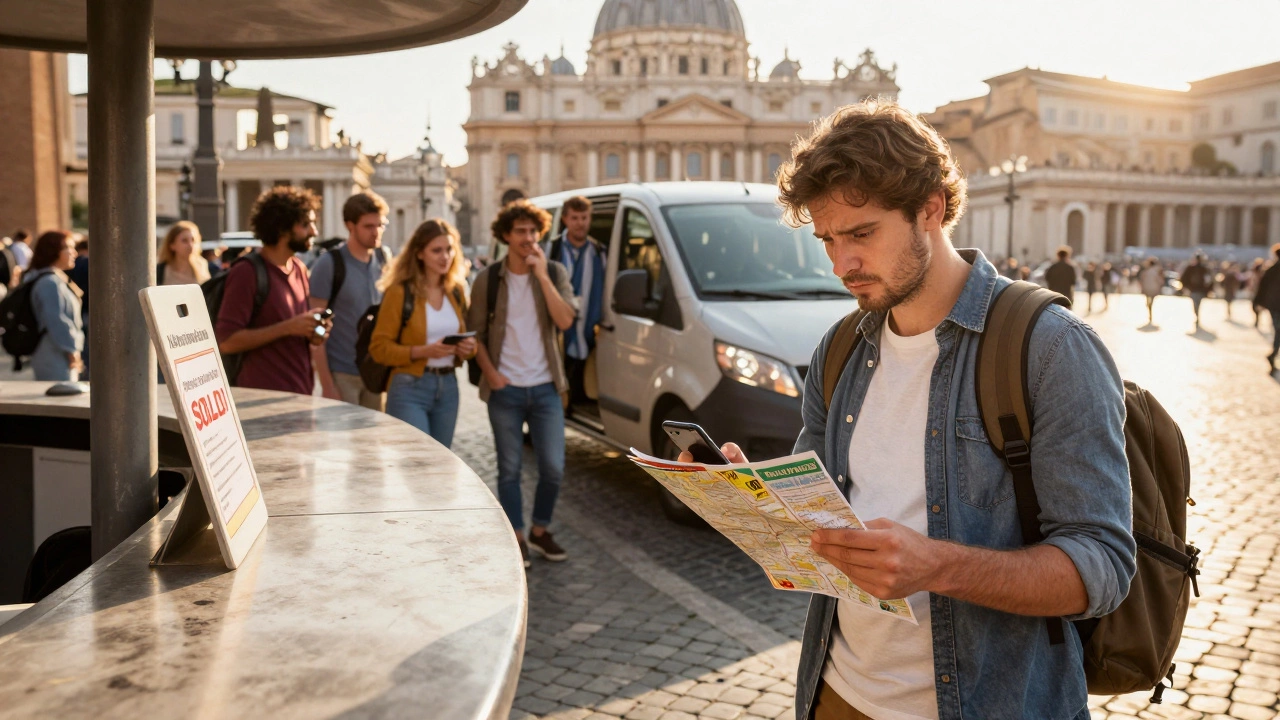
Booking a tour too late can mean missing out on the exact experience you wanted. Booking too early might lock you into a schedule that doesn’t fit your actual travel rhythm. So how far in advance should you really book tours? It’s not one-size-fits-all. The answer depends on where you’re going, what kind of tour it is, and when you’re traveling.
Popular destinations need bookings 3 to 6 months ahead
If you’re planning to visit places like Rome, Kyoto, or the Grand Canyon, you’re not just booking a tour-you’re securing a spot in a limited system. These places get millions of visitors every year. The top-rated walking tours in Rome, for example, often sell out 90 days before departure. A small-group food tour in Kyoto with a local guide? You’ll need to book at least 4 months ahead during cherry blossom season (late March to early April). Even in 2026, capacity hasn’t increased much. Operators keep group sizes small to preserve the experience, and demand keeps rising.
Same goes for national parks in the U.S. The Angels Landing hike in Zion National Park requires a permit, and the lottery opens 120 days in advance. Even if you don’t need a permit, the guided sunrise tours fill up fast. If you wait until you land, you’ll likely end up with a 2 p.m. tour in 95-degree heat-no shade, no water, no fun.
Peak season changes everything
Summer in Europe, winter in Japan, holiday weeks in the U.S.-these aren’t just busy times. They’re booking wars. If you’re traveling between late June and mid-August, you’re competing with families, students, and retirees all trying to lock in the same 20 slots on a Venice gondola tour. Same with Christmas markets in Germany. The best ones, like the one in Nuremberg, have waiting lists that start in October.
Even in places you think are "off-season," like Bali in January, the most popular snorkeling trips to Nusa Penida book up 3 months ahead. Why? Because that’s when the water is clearest. Locals know this. Tour operators know this. You should too.
Small group and private tours sell out fastest
Not all tours are created equal. A big bus tour with 50 people? You might find a spot a week before. But a private food tour with a chef in Barcelona? Or a small-group kayaking trip in the fjords of Norway? Those rarely have more than 8 people. They’re intimate, personalized, and often run by one person who can’t scale up. These sell out months in advance.
One traveler I spoke to in Melbourne booked a private walking tour of Lisbon for her 40th birthday. She waited until two weeks before departure. Every available slot was gone. She ended up with a group tour that felt rushed and impersonal. She said it ruined the whole trip. Don’t make that mistake.
City passes and combo tickets require early planning
Many cities now offer combo tickets: museum entry + hop-on-hop-off bus + guided walking tour. These are great deals-but they’re often tied to specific time slots. In Paris, the Louvre + Seine river cruise bundle includes a timed entry to the museum. Those slots fill up 60 to 90 days ahead, especially on weekends. Same with the CityPASS in New York. If you don’t book early, you’ll be stuck buying tickets separately at full price.
Pro tip: Book the tour part first. Then add the museum or attraction. You can’t always reverse it.
Off-season and local tours? You can wait
Here’s the good news: not every tour needs early booking. If you’re visiting a smaller town in Portugal, or taking a day trip from Melbourne to the Yarra Valley in late autumn, you can often show up and book the same day. Local operators who run wine tasting tours or coastal walks don’t have high demand year-round. They’re happy to fill empty seats.
I’ve taken a 5 a.m. sunrise hike in the Dandenong Ranges with a local guide. We booked it the night before over coffee. The guide had two spots left. No stress, no waiting, just a quiet morning with birds and eucalyptus. These are the hidden gems. But you have to know where to look.
What about last-minute deals?
Last-minute deals exist-but they’re risky. Apps like GetYourGuide or Viator sometimes drop prices 24 to 48 hours before a tour if seats are empty. But here’s the catch: they only drop on tours that are underbooked. That usually means the tour is unpopular, poorly rated, or in a bad location. You might save $20, but you’ll get a guide who’s rushed, a group that’s awkward, or a route that skips the best parts.
I once saved $30 on a Berlin street art tour booked at 11 p.m. the night before. The guide didn’t show up until 15 minutes late. The group had six people who all spoke different languages. We barely understood each other. The tour was half the length promised. Save your money and your time. Book early for the experience you want, not the cheapest option.
How to plan your booking timeline
Here’s a simple rule based on destination and season:
- High-demand destinations (Rome, Paris, Tokyo, NYC): Book 4 to 6 months ahead
- Popular seasonal spots (Santorini in summer, Banff in winter): Book 3 to 5 months ahead
- Small-group or private tours anywhere: Book 2 to 4 months ahead
- City passes or combo tickets: Book 2 to 3 months ahead
- Local, low-demand tours (rural towns, off-season): Book 1 to 7 days ahead
Set a reminder on your phone or calendar. Don’t wait until you’re packing your bags. That’s when you’ll panic.

What happens if you miss the window?
You still have options. First, check the operator’s website directly. Sometimes third-party sites show sold-out tours, but the company’s own site has a few spots left. Second, look for alternative operators. A different company might offer the same experience with a different route or time. Third, consider self-guided options. Many cities now have excellent audio guides or QR-code walking trails. You won’t get the insider stories, but you’ll still see the sights.
And if you’re flexible? Change your dates. A tour that’s full on a Saturday might have openings on a Tuesday. Shift your schedule by a day, and you might unlock a whole new experience.
Booking tips that actually work
- Use Google Alerts for tour names. Type in "Kyoto food tour" + your travel date, and Google will email you when new listings pop up.
- Book through the operator’s own site, not just Viator or GetYourGuide. You’ll often get better customer service and clearer cancellation policies.
- Always check the cancellation policy. Some tours are non-refundable. Others let you cancel up to 48 hours before with a full refund. Know this before you pay.
- Read reviews that mention timing. If people say, "We booked two months ahead and still barely got in," that’s your signal.
- Don’t assume a tour is "always available." Even the most basic walking tour in London has limited capacity. They’re not big buses. They’re small groups with local guides.
Final thought: It’s about control
Booking tours in advance isn’t about being rigid. It’s about having control over your trip. You don’t want to spend your first day in Paris standing in line at a ticket booth while your hotel check-in time creeps closer. You don’t want to miss out on a sunset cruise because you didn’t know it sold out two weeks ago.
Plan ahead. Book smart. Leave room for spontaneity-but not for regret.
How far in advance should I book a tour for a popular destination like Rome?
For popular destinations like Rome, book tours at least 3 to 6 months in advance, especially during spring and summer. Top-rated walking tours, food tours, and Vatican skip-the-line tours often sell out well before the 90-day mark.
Can I book tours the day before I travel?
You can, but only for low-demand, local tours in smaller towns or during off-season. In major cities or during peak travel times, most tours will be fully booked. Last-minute bookings often mean settling for less desirable times, locations, or group sizes.
Are private tours harder to book than group tours?
Yes. Private tours typically have only one or two slots per day and are run by small operators with limited capacity. They often sell out 2 to 4 months in advance, even outside peak season. Group tours with 10+ people have more flexibility and may have last-minute openings.
Is it better to book through a third-party site or the tour operator directly?
Book directly through the tour operator’s website when possible. You’ll get clearer communication, better cancellation terms, and direct access if something goes wrong. Third-party sites are convenient but act as middlemen-you’re not always dealing with the actual provider.
What if I need to cancel my tour booking?
Always check the cancellation policy before paying. Many tours offer full refunds if canceled 48 to 72 hours in advance. Some are non-refundable, especially for small-group or private tours. Avoid those unless you’re certain of your plans.
Do I need to book tours for off-season travel?
Not always. In off-season months, many local tours have plenty of availability and may even offer discounts. You can often book a day or two ahead. But always verify-some places, like Iceland in winter, still have high demand for Northern Lights tours even in low season.