

VR Usage Risk Calculator
How to use this tool
Enter your VR usage details below to calculate your risk level. This tool helps you understand potential physical and mental effects based on research from the article.
Staying in virtual reality for hours isn’t just about losing track of time-it can mess with your body, brain, and sense of reality. People think VR is just a game or a fancy movie, but if you spend more than 90 minutes straight in it, your nervous system starts to notice. And it doesn’t always react kindly.
Your eyes get tired faster than you think
VR headsets force your eyes to focus on a screen just inches from your face, while your brain thinks you’re looking at something far away. That mismatch-called vergence-accommodation conflict-makes your eye muscles work overtime. A 2024 study from the University of Melbourne’s Vision Lab found that users reported blurred vision and headaches after just 75 minutes of continuous use. That’s not just "a little strain." It’s your visual system screaming for a break. Kids under 13 are especially vulnerable. Their eye muscles are still developing, and prolonged VR use can slow their depth perception skills.
Your balance gets confused
Inside VR, you might be walking across a virtual cliff or dodging aliens, but your inner ear and body are still sitting on a couch. That disconnect between what you see and what your body feels is called sensory mismatch. It’s why so many people feel dizzy or nauseous after VR sessions. But it’s not just temporary. After a 3-hour VR session in a controlled test, participants took an average of 18 minutes to fully regain normal balance. Some didn’t stabilize until 45 minutes later. That’s longer than most people spend on a coffee break. Imagine trying to drive or walk down stairs right after a long session. It’s risky.
Your brain starts to blur the lines
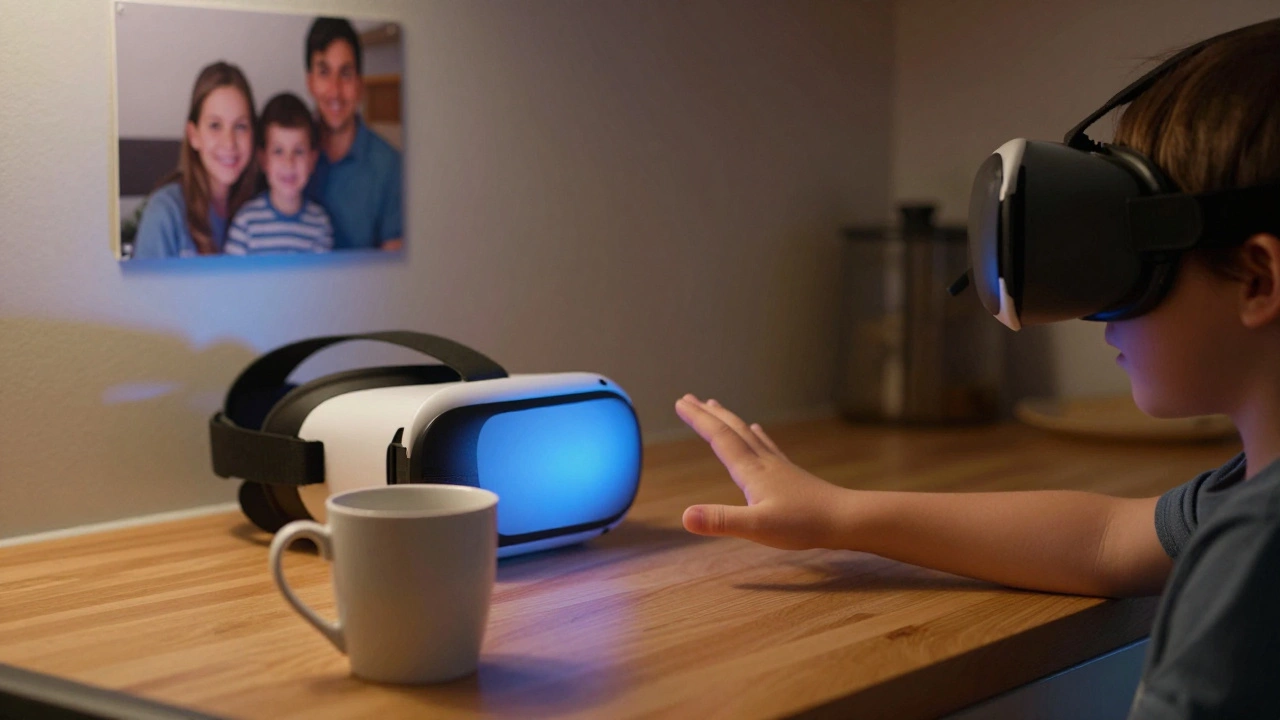
After several hours in immersive VR, people report feeling "out of sync" with the real world. Some say their hands feel lighter. Others describe real objects looking "flat" or "fake." This isn’t just a weird feeling-it’s a neurological response called dissociation. A 2023 paper in the Journal of Neurocognitive Behavior tracked 47 frequent VR users who spent over 10 hours a week in VR. Nearly 60% reported moments where they momentarily forgot where they were. One user said they reached out to grab a coffee mug that wasn’t there, and for three seconds, they didn’t understand why their hand passed through empty air. That’s not a glitch. It’s your brain adapting to the virtual environment so well that it temporarily downgrades the real one.
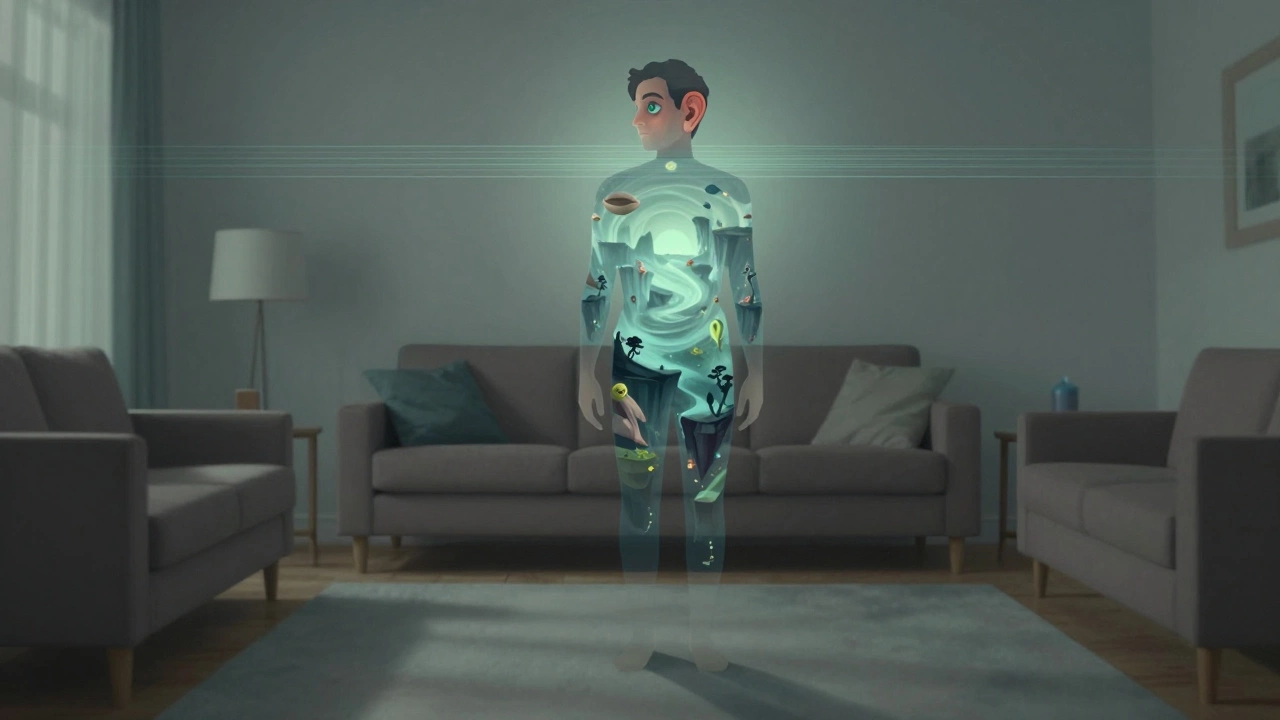
Physical changes you can’t ignore
VR isn’t just a mental experience. It’s physical. People forget they’re standing still while swinging a virtual sword or crouching behind a wall. That means muscles get tense, posture collapses, and joints lock up. A 2025 survey of 2,000 VR users in Australia found that 41% had developed chronic shoulder or neck pain from holding their head in one position for too long. And let’s not forget the sweat. Headsets trap heat. Skin irritation, rashes, and even mild burns from overheating hardware have been reported. One user in Sydney needed medical treatment after wearing a headset for 4 hours straight in a hot room. His face was red, swollen, and blistered.
Emotions don’t turn off when you take off the headset
VR triggers real emotions. Fear, joy, grief-they’re not fake just because they happen in a digital world. After playing a VR horror game for 2 hours, one teen in Brisbane had nightmares for a week. Another user, who lost a loved one and used VR to visit a simulated memorial garden, said they cried for an hour after taking the headset off. Their grief felt real. That’s powerful. But it also means emotional hangovers are real. If you’re using VR to escape stress, you might be building a habit that makes it harder to face reality. The brain doesn’t know the difference between a virtual hug and a real one. It just records the feeling.
What’s the safe limit?
There’s no official medical guideline, but most experts agree: 30 to 60 minutes at a time, with a 15-minute break every hour. Kids should stick to 20-minute sessions with a 30-minute gap between. Adults pushing limits should follow the 20-20-20 rule: every 20 minutes, look at something 20 feet away for 20 seconds. Hydrate. Stretch. Walk around. Look at natural light. Don’t just sit there waiting for the next mission to load.
Who’s most at risk?
- Children under 13-their brains and eyes are still wiring themselves
- People with epilepsy or migraines-flashing lights and rapid motion can trigger seizures or attacks
- Those with anxiety or PTSD-VR can replay trauma in ways that feel too real
- Anyone taking medications that affect balance or perception
If you’re in one of these groups, talk to a doctor before using VR for more than 10 minutes. And if you’ve ever felt disoriented, nauseous, or emotionally drained after VR, that’s your body’s warning. Don’t ignore it.
Can VR be safe? Yes-but only if you treat it like a tool, not a trap
VR isn’t evil. It’s used in therapy, education, and even surgery training. But like any powerful tool, it needs boundaries. Use it for short bursts. Set timers. Turn it off when you feel even a little off. Don’t let the next level pull you in one more time. The real world isn’t waiting for you to finish. It’s already here-and it needs you to be present.
Can staying in VR too long cause permanent damage?
There’s no confirmed evidence of permanent physical damage from VR use alone-but repeated, long-term exposure without breaks can lead to chronic issues like persistent eye strain, balance problems, or posture-related pain. In rare cases, children exposed to daily, extended VR sessions have shown delayed development in depth perception and spatial awareness. The key is moderation. Think of VR like caffeine: occasional use is fine. Daily overuse? That’s where problems build up.
Is VR addiction a real thing?
Not officially classified as an addiction yet, but the behaviors match. People report skipping meals, ignoring family, losing sleep, and feeling anxious when they can’t access VR. A 2024 study in the Journal of Behavioral Addictions found that 12% of heavy VR users met criteria for problematic use-similar to early-stage social media addiction. It’s not about the technology. It’s about what it replaces. If VR is your only escape from stress, boredom, or loneliness, it’s not helping. It’s hiding the problem.
Why do I feel weird after taking off my headset?
That’s called VR aftereffect. Your brain spent time interpreting fake movement and depth. When you return to reality, your senses are still recalibrating. You might feel wobbly, see things as too bright or too flat, or even think your hands look smaller. It’s temporary, usually lasting under 30 minutes. Walking outside, blinking rapidly, and looking at distant objects helps reset your system faster. If it lasts hours or comes with nausea or confusion, stop using VR and see a doctor.
Should I let my kids use VR?
Yes-but with strict limits. The American Academy of Pediatrics recommends no VR for children under 13. If you allow it for older kids, keep sessions under 20 minutes, supervise closely, and never let them use it before bed. Their brains are still learning how to process real-world depth, motion, and social cues. VR shortcuts those lessons. It’s not just about safety-it’s about development. Real play, real movement, and real interaction still matter more than any virtual world.
Can VR help with mental health?
Absolutely-but only under professional guidance. Therapists use VR to treat PTSD, phobias, and anxiety by safely exposing patients to triggers in a controlled setting. But that’s clinical use: 30-minute sessions, once a week, with a trained therapist present. Using VR apps at home to self-treat anxiety or depression is risky. Without support, it can deepen avoidance behaviors. Think of it like painkillers: great when used right, dangerous when misused.