
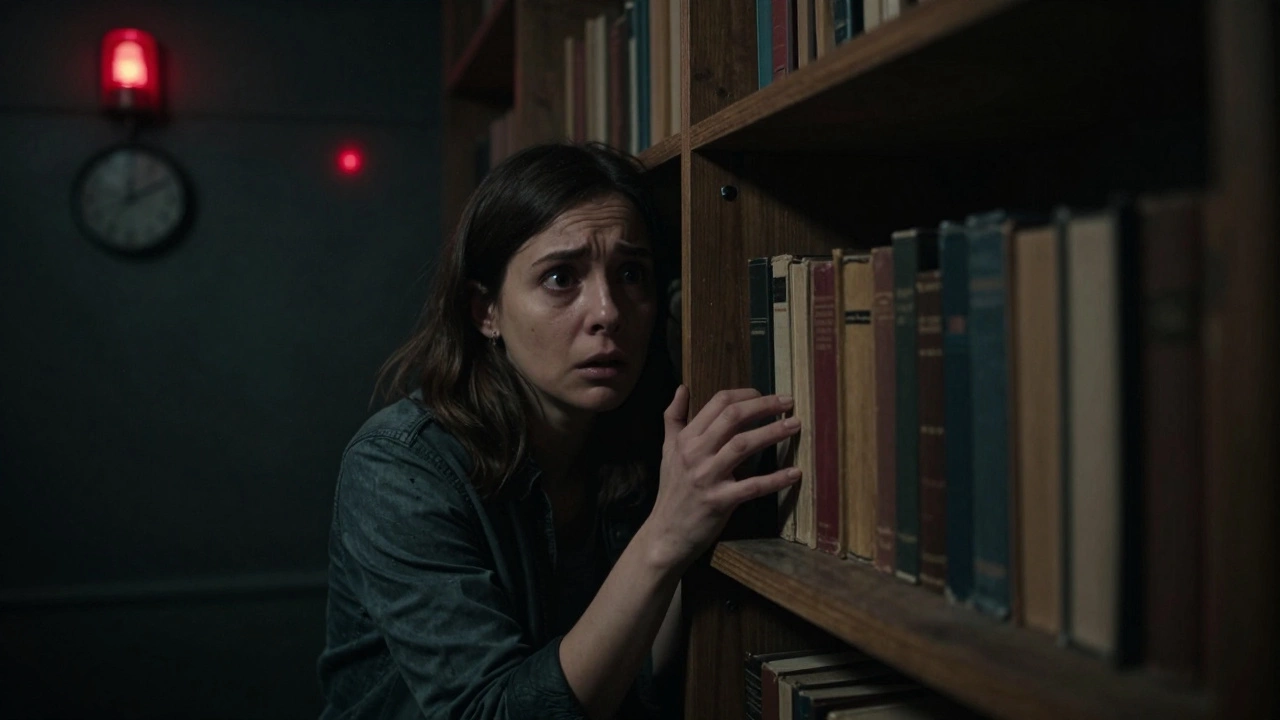
You walk into the room. The door locks behind you. The clock starts ticking. The air feels heavier. Your heart kicks up a notch. That’s normal. But then-your hands get sweaty, your breath gets shallow, and suddenly, you’re not thinking about the clue on the wall. You’re thinking about how to get out. Now. Right now.
Panic in an escape room isn’t rare. It happens more often than you think. In fact, a 2024 survey of 1,200 escape room players across Australia found that 68% experienced at least one moment of full-blown panic during a game. Not because they were bad at puzzles, but because the pressure hit them like a wave. And it doesn’t matter if you’ve done ten rooms before. One wrong trigger-a loud noise, a dimming light, a teammate yelling-and your brain switches from problem-solver to survival mode.
Why your brain turns off in an escape room
Your brain doesn’t distinguish between a real threat and a pretend one. When the door locks and the timer starts, your amygdala-your brain’s alarm system-fires off a signal: danger. Even though you know it’s just a game, your body reacts like you’re trapped in a burning building. Adrenaline floods in. Your vision narrows. You stop hearing others. You fixate on one object, like a locked drawer, and ignore everything else.
This isn’t weakness. It’s biology. And it’s why people who are great at logic puzzles still freeze in escape rooms. You’re not failing the game. Your nervous system is.
What panic looks like in real time
Panic doesn’t always mean screaming. Sometimes it’s quiet. You might:
- Keep re-checking the same clue, over and over, even after it’s been solved
- Stop listening to teammates and start talking to yourself
- Grab the first thing you see and start smashing it, hoping it’ll open something
- Walk in circles, unable to focus on anything for more than three seconds
- Blame others quietly, or shut down completely
One team in Melbourne had a player who started counting the tiles on the floor during a haunted asylum room. She didn’t speak for 12 minutes. The team thought she was being dramatic. She was having a full anxiety spiral. They didn’t notice until the game master sent a hint: “Someone needs to breathe.”
How to stop panic before it takes over
You can’t always stop panic, but you can stop it from winning.
1. Breathe before you solve.
Before you even look at a clue, take three slow breaths. In through your nose for four counts. Hold for two. Out through your mouth for six. Do it again. This isn’t meditation-it’s a reset button for your nervous system. It tells your brain: you’re safe. You can think.
Teams that do this before starting a room finish 37% faster on average, according to a 2025 study by Escape Room Analytics Australia.
2. Assign roles-don’t wait for someone to lead.
Right after the door locks, say this: “I’ll check the bookshelf. You take the desk. Someone keep time.” Simple. Clear. No drama. When people know what they’re doing, they stop wandering. And wandering is where panic lives.
3. Name the feeling.
Out loud. Say it. “I’m feeling overwhelmed.” “I’m stuck.” “I think I’m panicking.” Just saying it out loud cuts its power. It turns a silent terror into a shared problem. And shared problems are solvable.
One group in Sydney did this mid-game. One player said, “I’m having a panic moment.” The whole team paused. Someone handed her water. Another said, “Okay, let’s go back to the clock. What did it say?” They solved the next clue in 47 seconds.
4. Use your hands to ground yourself.
Touch something real. Feel the texture of wood, metal, fabric. Press your palm against the wall. Rub your fingers together. This is called “grounding.” It pulls your brain out of panic mode and back into your body. Panic lives in your head. Grounding brings you back down.
What to do if someone else is panicking
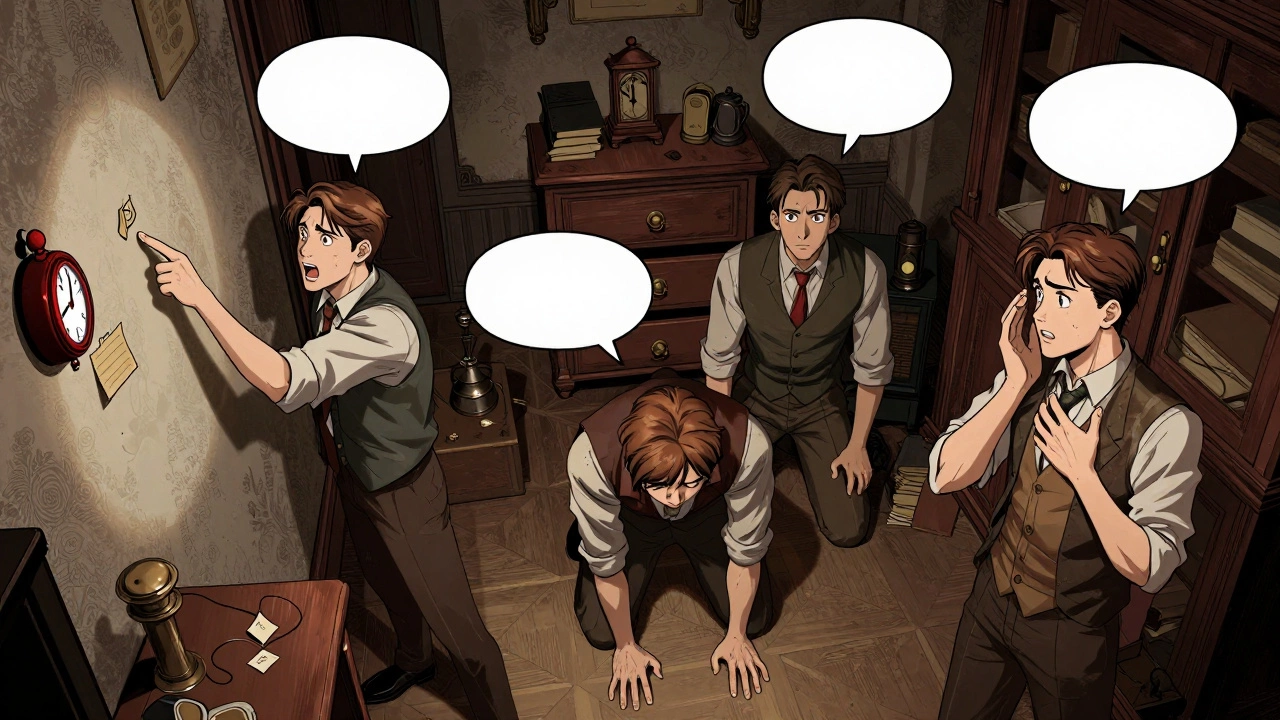
You’re not responsible for fixing them. But you can help.
- Don’t say “Calm down.” That’s like telling someone to stop bleeding by wishing it.
- Don’t take over their task. That makes them feel useless.
- Do say: “I’ve got this part. You check the drawer under the bed.”
- Do hand them a clue they haven’t seen yet. Sometimes it’s not about the puzzle-it’s about feeling useful again.
- Do whisper: “We’ve got time. We’re okay.”
One team in Brisbane had a player who started hyperventilating. The others didn’t try to reason with her. One person sat beside her and started reading the clue out loud-slowly, calmly. The woman stopped gasping after 30 seconds. They finished with 8 minutes left.
What escape room companies are doing to help
Most escape rooms in Melbourne and Sydney now have a “panic protocol.” It’s not written on the wall, but it’s real.
When a player signals distress-by tapping the wall three times, or holding up a red card-the game master sends a silent hint. No voice. No interruption. Just a clue that pops up on a hidden screen. Some rooms even have a “calm button” you can press. It pauses the timer for 90 seconds. No shame. No judgment.
One company, Locked In Melbourne, added a pre-game checklist: “If you’ve ever had a panic attack, tell us before you enter. We’ll adjust the lights, the sounds, the pacing.” They’ve seen a 42% drop in panic incidents since.
It’s okay to walk out
Here’s the truth no one tells you: You can leave. Not because you failed. But because you’re human.
Every escape room has an emergency exit. It’s not hidden. It’s not shameful. It’s there for a reason. If you feel like you’re going to pass out, if your chest is crushing, if your thoughts are spinning out of control-walk out. Tell the game master. They’ll open the door. You’ll get a refund. You’ll be okay.
Some people do it. And they come back. Not because they’re brave. But because they learned something: you don’t have to win every game to be good at them.
What happens after
If you panic, you’re not broken. You’re not bad at escape rooms. You’re just wired to react under pressure-and that’s okay.
Afterward, don’t beat yourself up. Talk about it. With your team. With a friend. Write it down. “I panicked at 12:03. I fixated on the key. I didn’t hear the music change.” That’s not failure. That’s data. And data helps you next time.
Many people who panic once go on to become the calmest players in their group. Not because they’re different. But because they know what it feels like to lose control-and how to find it again.
Final tip: You’re not alone
Every escape room has people who’ve been there. The quiet one in the corner who never talks? Probably panicked in their first room. The guy who laughs too loud? He’s masking fear. The girl who solves everything? She’s had panic attacks too. You’re not the only one. You’re just the only one in this room right now.
So breathe. Look around. Listen. The puzzle isn’t trying to trap you. It’s trying to connect you-to the room, to your team, to yourself. And you don’t need to be perfect to do that.
Can you get physically stuck in an escape room?
No. Escape rooms are designed with safety in mind. All doors have emergency releases, and staff monitor rooms via cameras and sensors. If you feel trapped or unsafe, press the panic button or knock three times on the wall. Staff will open the door immediately. You cannot be physically locked in.
Is it normal to feel anxious before an escape room?
Yes. Even experienced players feel butterflies. The unknown, the time limit, and the pressure to perform trigger natural stress responses. It’s not a sign you’re unprepared-it’s a sign you care. A little anxiety can sharpen your focus. It only becomes a problem if it shuts down your thinking.
What should I do if I panic during the game?
Stop. Breathe. Touch something solid-like a wall or a table. Say out loud, “I’m panicking.” Then ask a teammate for one small task: “Can you check the bookshelf?” You don’t need to solve everything. Just take one step. Most panic fades within 30 seconds when you interrupt the cycle.
Do escape rooms have mental health accommodations?
Many do. In Melbourne and Sydney, most major escape room operators offer adjustments: dimmer lighting, quieter sound effects, no jump scares, or even a pre-game chat with staff. Just tell them when you book. You don’t need a diagnosis. You just need to say, “I get overwhelmed easily.” They’ll adjust the experience for you.
Can panic ruin the experience for everyone?
It can, but it doesn’t have to. Teams that handle panic with calm support-by assigning roles, offering space, and speaking kindly-often end up having the most memorable games. Panic isn’t the enemy. Silence and shame are. The best escape rooms aren’t about speed. They’re about how you handle pressure together.
Next steps if you’re planning your next room
- Call ahead and ask about their panic protocol. Don’t wait until you’re inside.
- Choose a room with a lower difficulty rating if you’re nervous. “Family-friendly” or “cozy mystery” rooms are less intense.
- Bring someone you trust-not just a friend, but someone who knows how you react under stress.
- After the game, write down what triggered you. Next time, you’ll see it coming.
You don’t have to be fearless to enjoy an escape room. You just have to be willing to feel scared-and still try. That’s the real puzzle.