
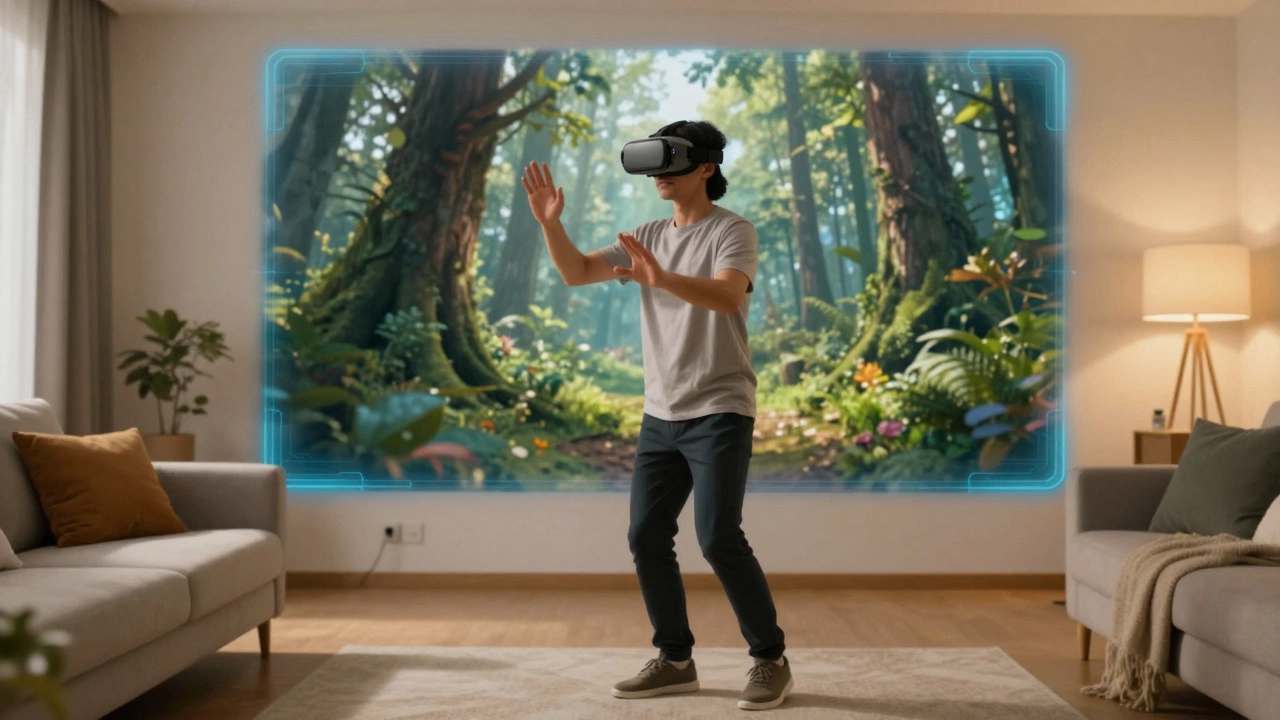
VR Room Size Calculator
Check Your VR Walking Space
Determine if your room meets the minimum requirements for room-scale VR walking.
Space Tips
Minimum recommended space: 6.5ft x 6.5ft (42.25 sq ft).
Use the Guardian System to set boundaries. Clear obstacles before playing.
Smaller spaces require teleportation or joystick movement.
Ever put on a VR headset and tried to take a step forward-only to stay frozen in place? You’re not alone. Many people assume virtual reality means you can roam freely, like stepping into another world. But the truth is more complicated. Can you really walk around in virtual reality? The answer isn’t a simple yes or no. It depends on your gear, your space, and what kind of experience you’re after.
What Walking in VR Actually Means
Walking in VR isn’t just about moving your feet. It’s about making your body’s motion match what you see. When you take a step in the real world and your avatar mirrors that step in the virtual world, that’s called locomotion. It’s the key to feeling like you’re truly there.
Early VR systems made you teleport. You’d point at a spot, press a button, and instantly snap there. It worked-but it broke immersion. Your body knew you hadn’t moved, but your eyes told you otherwise. That disconnect caused nausea for many users.
Modern VR headsets like the Meta Quest 3, Apple Vision Pro, and Pico 4 now support room-scale tracking. That means sensors track your real-world movement and translate it into the virtual space. If you walk five steps to the left in your living room, your avatar walks five steps to the left in the game. That’s the magic.
Space Matters More Than You Think
Walking in VR isn’t possible everywhere. You need physical space. A small bedroom? You might only manage a few steps before hitting a wall. A spare room or garage? That’s ideal. Most VR systems recommend at least 6.5 feet by 6.5 feet of clear floor space for safe, natural movement.
Some apps, like Half-Life: Alyx or Population: One, are built for full-room exploration. You can duck behind cover, climb stairs, or circle around objects. But if you’re stuck in a tiny apartment, you’ll be stuck with hand-based movement-grabbing and pulling yourself forward like you’re in a sci-fi elevator.
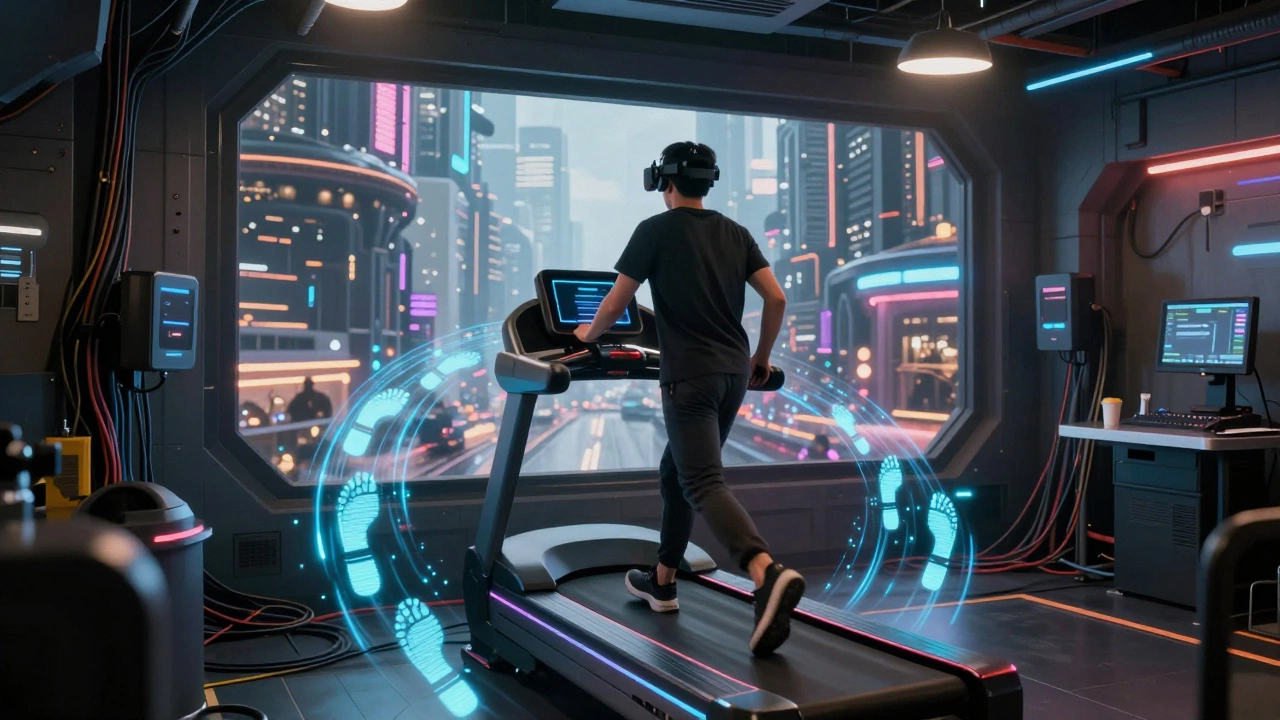
Companies like Treadport and Virtuix make special VR treadmills that let you walk or run in place while the system moves you forward in the game. These cost over $1,000 and are mostly used in arcades or high-end home setups. For most people, walking naturally in a clear room is the sweet spot.
How Tracking Works
VR headsets use cameras and sensors to map your surroundings. Inside-out tracking-where cameras on the headset scan the room-is now standard. The system builds a 3D map of your space, then locks your real-world position to your virtual one.
Controllers also help. They track hand movement, but they don’t track your feet. That’s why some systems use foot trackers-small sensors strapped to your shoes or ankles. These are optional, but they make walking feel even more natural. In games like Boneworks or Blade & Sorcery, foot trackers let you kick objects, stomp on switches, or shuffle sideways to dodge attacks.
Without foot trackers, your legs are invisible or represented by floating blocks. You can still move your body, but you lose the full sense of embodiment. That’s why serious VR users often invest in them-even if it adds $100 to the cost.
What Happens When You Hit a Wall?
Even with room-scale tracking, you can’t walk forever. Real walls don’t disappear just because your VR world does. That’s why every headset has a safety system.
When you get too close to a real-world object, the system shows a translucent grid or outline of your room. It’s called the Guardian System (Meta) or Boundary System (Oculus, Pico). You set it up once-by walking around your play area and tapping corners with the controller. After that, it keeps you safe.
Some users try to cheat it. They clear a huge space, then play in a hallway or narrow corridor. That’s risky. If you turn suddenly and your arm swings into a lamp, you’ll know it fast. Real pain. Real broken things. VR isn’t just a game-it’s physical.
Can You Walk in VR Without a Big Room?
Yes-but it’s not the same. If you don’t have space to walk, you have options:
- Joystick movement: Use the thumbstick on your controller to glide forward. It’s smooth, but unnatural. Many users get motion sick after 10 minutes.
- Arm-swinging: Some apps let you swing your arms like you’re walking. Your avatar moves in sync. It’s weird at first, but it tricks your brain into feeling motion.
- Teleportation: Tap a spot, and you appear there. Great for exploration, bad for immersion. Best for people prone to nausea.
- Seated experiences: Some VR games are designed for sitting. Think Resident Evil 7 or Beat Saber in a chair. No walking needed.
These methods work-but they’re compromises. You’re not walking. You’re simulating it. Your body knows the difference. That’s why the best VR experiences still require real movement.
Why Walking Changes Everything
Walking in VR isn’t just about control. It changes how your brain reacts. Studies from Stanford’s Virtual Human Interaction Lab show that people who walk naturally in VR remember details better, feel more emotionally connected, and report stronger presence than those who teleport or glide.
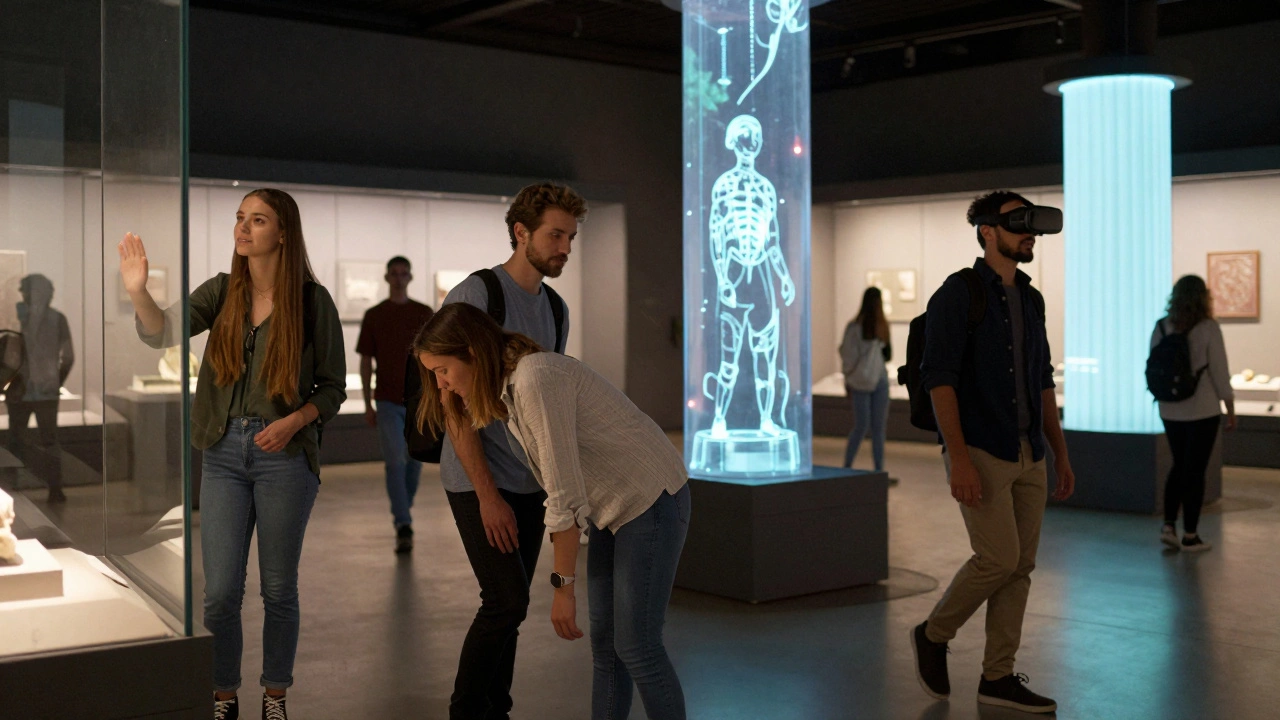
In one test, participants explored a virtual museum. Those who walked remembered 30% more objects than those who used a joystick. They also felt more awe. That’s not just a fun fact-it’s why museums and schools are starting to use VR walking for education.
Walking also helps with fitness. Apps like Supernatural and FitXR turn VR into workouts. You dodge obstacles, punch targets, or dance for 30 minutes. You burn 300-500 calories per session. That’s not a game. That’s cardio.
What’s Next for VR Walking?
Companies are racing to remove the limits. Haptics are getting better-vests that simulate wind or impacts, shoes that vibrate when you step on gravel. Some labs are testing full-body suits with sensors that mimic weight and resistance.
One startup, KAT VR, is building a 360-degree omnidirectional treadmill that lets you walk or run in any direction. It’s still bulky and expensive, but it’s getting smaller every year.
Eventually, VR walking won’t need a clear room. Imagine stepping into your living room, putting on a headset, and walking through a forest, a city, or a spaceship-all without leaving your floor. That’s the goal. And it’s closer than you think.
So, Can You Walk Around in Virtual Reality?
Yes-if you have the space, the right gear, and the patience to set it up. Walking in VR isn’t automatic. It’s a choice. You can stick to teleportation and hand controls. Or you can clear a corner of your home, set up your boundaries, and actually step into another world.
The difference? One feels like watching a movie. The other feels like living it.
Do you need a big room to walk in VR?
You don’t need a huge room, but you need at least 6.5 feet by 6.5 feet of clear floor space for safe, natural movement. Smaller spaces work with teleportation or joystick controls, but you won’t get the full walking experience.
Can you walk in VR without controllers?
Not fully. Controllers track your hands and help set up your play area. Some advanced setups use foot trackers and body suits, but you still need at least one controller for interaction. Fully hands-free walking isn’t available to consumers yet.
Why do some people get sick in VR when walking?
Motion sickness happens when your body feels still but your eyes see movement. This is common with joystick-based movement or fast teleporting. Natural walking reduces this because your inner ear matches what you see. Slower speeds and stable horizons also help.
Are VR treadmills worth it?
For most people, no. They cost over $1,000, take up space, and are loud. They’re great for arcades or hardcore users who want to run through massive VR worlds. For home use, a clear room and good tracking are cheaper and just as effective.
Can you walk in VR if you use a wheelchair?
Yes. Many VR apps support seated or wheelchair-based locomotion. Some let you steer with a joystick, while others simulate movement by tilting your head or using voice commands. Developers are increasingly designing for accessibility, and platforms like SteamVR now include accessibility settings.