
Outdoor Play Activity Finder
Find Your Perfect Outdoor Activity
Recommended Activity
Why this works for you:
Outdoor play activities aren’t just about burning off energy-they’re how kids learn to solve problems, build friendships, and understand the world around them. You don’t need fancy equipment or a big backyard. Just fresh air, a little space, and some imagination. Whether you’re in a city apartment or a rural town, there are plenty of ways to get kids moving outside-and keep them engaged without screens.
Why Outdoor Play Matters
Studies show kids who play outside regularly have better balance, stronger muscles, and improved focus in school. But it’s not just physical. Outdoor play helps kids manage stress, develop creativity, and learn how to take risks safely. A child climbing a tree isn’t just being daring-they’re learning how to judge distance, control their body, and make decisions on the fly. These are skills no video game can teach.
Even 20 minutes a day outside makes a difference. You don’t need to plan a full-day hike. A walk to the park, a game of tag in the driveway, or digging in the dirt behind the house counts. The goal isn’t perfection-it’s presence.
Classic Outdoor Play Activities That Never Get Old
Some of the best outdoor games have been around for generations-and for good reason. They’re simple, cheap, and work for almost any age group.
- Tag - One person is “it.” They chase others until someone gets tagged. Then it’s their turn. Simple, fast, and endless fun.
- Hide and Seek - Perfect for yards, parks, or even neighborhoods. Kids learn spatial awareness and patience while adults get a break from constant supervision.
- Jump Rope - Single or double Dutch, counting rhymes or just swinging. It builds rhythm, coordination, and endurance. All you need is a rope and a patch of pavement.
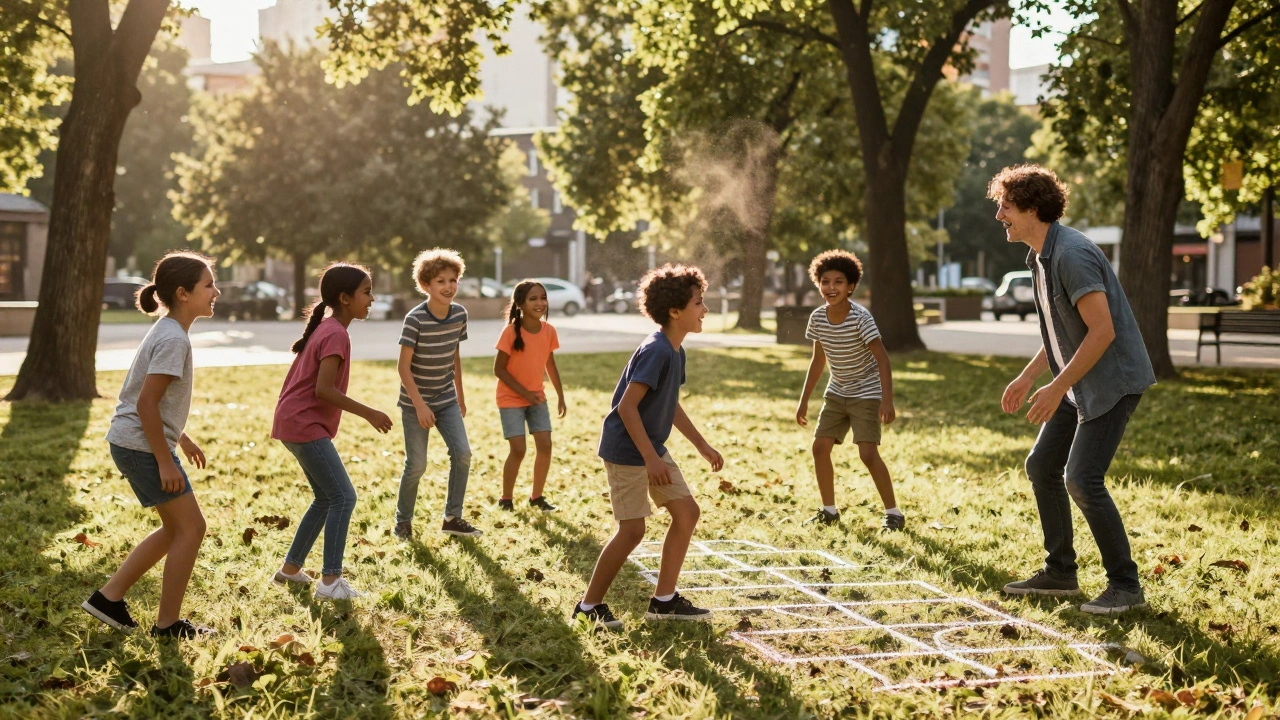
- Hopscotch - Draw squares with chalk and take turns hopping through the pattern. Great for learning numbers and balance.
- Simon Says - A classic listening game. One person gives commands, but only follow them if they start with “Simon says.” Kids learn to focus and control impulses.
These games don’t need batteries. They don’t need apps. They just need space and a few willing players.
Creative Outdoor Play Ideas for Different Ages
Not every kid likes running around. Some prefer building, exploring, or creating. Here are ideas tailored to different interests and ages.
- For Toddlers (1-3 years): Water play with cups and sponges, chasing bubbles, sensory bins filled with leaves or pebbles, and pushing toy cars on sidewalks.
- For Preschoolers (3-5 years): Building forts from blankets and sticks, scavenger hunts with picture cards (find something red, something smooth), and playing with toy tools in a sandbox.
- For School-Age Kids (6-12 years): Nature journaling (draw what they see), planting herbs or flowers, creating obstacle courses with cones and ropes, and inventing their own games like “Dragon Tag” or “Shadow Tag.”
- For Teens: Geocaching (using GPS to find hidden containers), bike trails, skateboarding, or organizing neighborhood sports games. Even just sitting outside with friends talking counts as play.
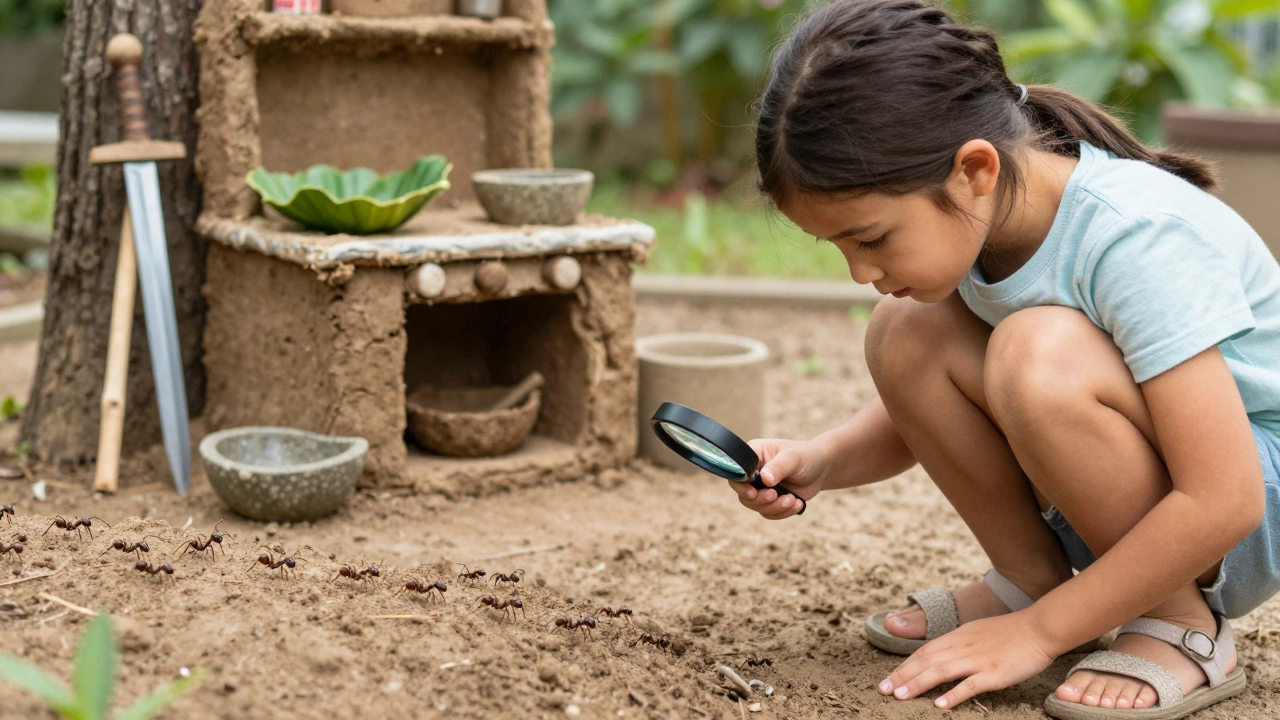
Let kids lead. If they want to spend an hour watching ants crawl across the sidewalk, that’s valid play. Exploration is learning.
Using Nature as a Playground
You don’t need a playground. Trees, dirt, rocks, and water are natural play equipment. A stick becomes a sword, a log becomes a balance beam, and puddles become oceans.
Encourage kids to:
- Collect leaves and sort them by shape or color
- Build small stone towers or cairns
- Listen for birds and try to imitate their calls
- Follow a trail of ants and guess where it leads
- Make mud pies or paint with water on pavement
These aren’t just distractions-they’re science experiments, art projects, and problem-solving challenges wrapped in play. A child who builds a dam out of sticks and mud is learning about flow, gravity, and persistence.
Outdoor Play Without a Yard
Living in an apartment? No problem. Outdoor play doesn’t require grass or a swing set.
- Visit a local park-even a small one with a sandbox or climbing structure.
- Use sidewalks for chalk drawings or hopscotch.
- Try “shadow tracing” - lie on the ground and trace the outline of your body with chalk.
- Go on a “sound walk”-walk quietly and write down every sound you hear.
- Bring a blanket to a rooftop or balcony and stargaze at night.
Even a fire escape or courtyard can become a play zone with a little creativity. The key is shifting your mindset: outdoor play isn’t about location-it’s about engagement.

How to Get Started Today
Starting is easier than you think. You don’t need a plan. Just go outside.
- Put on shoes and step out the door. Even if it’s just for five minutes.
- Ask your kid: “What do you want to do outside right now?” Then let them choose.
- Bring water, a snack, and maybe a notebook or a ball. Nothing else.
- Let them lead. Don’t correct. Don’t direct. Just watch.
- Try one new thing this week: a scavenger hunt, a puddle jump, or a rock collection.
The magic happens when adults stop trying to control the play. Kids don’t need structured activities. They need time, space, and the freedom to get messy, get curious, and get lost in their own world.
What Outdoor Play Isn’t
It’s not about checking off a list of “activities.” It’s not about taking photos for Instagram. It’s not about making sure every minute is productive.
Outdoor play is messy. It’s loud. It’s unpredictable. Kids might come home with muddy knees, torn pants, or a pocket full of dirt. That’s not a problem-that’s proof they were really out there.
It’s okay if they don’t “do” anything fancy. Sometimes the best play is just lying on the grass staring at clouds.
Are outdoor play activities only for young kids?
No. While younger kids benefit most from unstructured outdoor play, teens and even adults can enjoy it too. Games like tag, scavenger hunts, and nature walks work for all ages. For teens, outdoor play might mean skateboarding, biking, or just hanging out with friends outside. The goal is movement, connection, and mental reset-not age-specific rules.
Do I need special equipment for outdoor play?
Not at all. Most outdoor play needs nothing more than shoes, clothes you don’t mind getting dirty, and a bit of space. A stick, a rock, a puddle, or chalk on the sidewalk can spark hours of creativity. Fancy toys often distract more than they help. Let nature and imagination be your tools.
How much outdoor play time do kids need each day?
Experts recommend at least 60 minutes of physical activity daily for children, but it doesn’t have to be one long session. Three 20-minute bursts-after school, before dinner, and after dinner-add up. Even 10 minutes outside helps reset focus and mood. Consistency matters more than duration.
What if my child doesn’t want to go outside?
Start small. Don’t force it. Invite them to join you for something simple: watering plants, looking for worms after rain, or walking the dog. Make it low-pressure. Sometimes kids resist because they’re tired, overwhelmed, or anxious. Let them see you enjoying the outdoors-it’s contagious. And remember: even sitting outside with a book counts.
Can outdoor play help with behavior problems or anxiety?
Yes. Research shows that time spent in green spaces reduces stress hormones and improves emotional regulation. Kids who play outside regularly are less likely to show signs of anxiety or ADHD symptoms. Nature doesn’t cure everything, but it gives kids space to breathe, move, and reset-something screens and indoor routines rarely offer.
Outdoor play isn’t a luxury. It’s a necessity. It’s how kids become curious, confident, and connected to the world. You don’t need to be a perfect parent. Just show up, step outside, and let them lead. The rest will follow.