
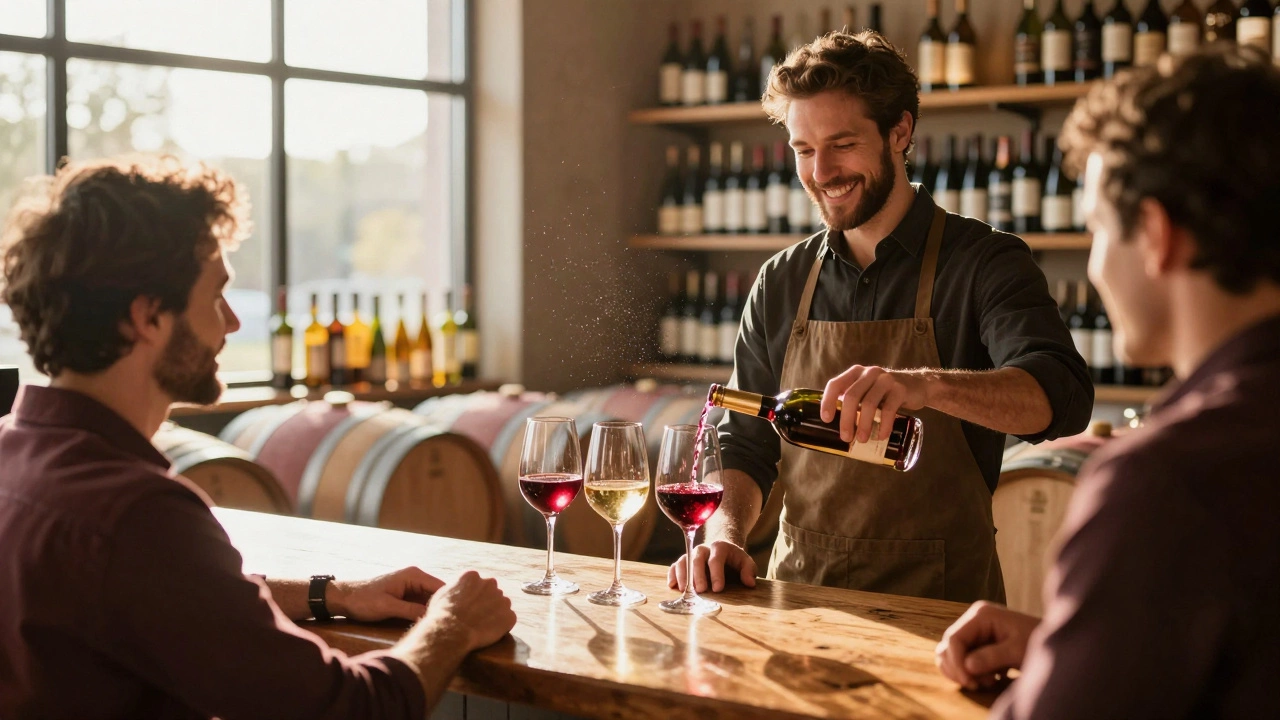
Winery Tipping Calculator
Recommended Gratuity
Select your experience details and click calculate to see the recommended tip amount.
Total Suggested Tip
Quick Summary
- Tipping is generally expected for guided tours and tastings with a host, usually $5-$10 per person.
- Walk-in tastings without personal service often do not require a tip, though rounding up is polite if you buy bottles.
- Always tip your transportation driver separately from the tasting room staff.
- If you purchase wine, the tip should reflect the quality of the experience, not just the sale.
You walk into a beautiful winery in Napa or Sonoma. The air smells like oak and ripe fruit. A friendly face greets you, pours four samples, and explains the history of the estate. You enjoy every sip. Then comes the awkward moment: handing over your card. Do you add a gratuity? If so, how much? It’s a question that trips up even seasoned travelers because there isn’t one universal rule written in stone. Unlike restaurants, where 20% is standard, the wine world operates on a mix of hospitality norms, regional customs, and the specific type of service you received.
The short answer is yes, you usually should tip when wine tasting involves personalized service. But the amount and expectation depend heavily on whether you’re doing a quick walk-in pour or a guided barrel room tour. Let’s break down exactly when to tip, how much to give, and how to handle those tricky situations where the rules feel blurry.
Understanding the Service Model at Wineries
To figure out if you need to tip, you first have to understand what you’re paying for. In many cases, the tasting fee itself is not a cover charge; it’s a pre-payment for the education and hospitality provided by the staff. When you pay $25 for a tasting, that money goes toward covering the cost of the wine poured and the labor of the person pouring it. However, unlike retail stores where cashiers are paid hourly wages unrelated to sales commissions, Sommeliers and tasting room hosts who provide detailed explanations, food pairings, and personalized recommendations often rely on tips to supplement their income, especially during slower seasons.
Think about the difference between buying a bottle of wine at a grocery store and having a sit-down tasting at a boutique vineyard. At the grocery store, no tip is expected. At the vineyard, you are receiving a service similar to dining out. The staff member is curating an experience. They are answering questions about terroir, vintage variations, and food pairings. This level of engagement warrants recognition. If the interaction feels transactional-just pouring liquid into a glass without conversation-a tip might be less critical. But if they are educating you, they are performing a skilled service.
When Is Tipping Expected?
Not all wine tastings are created equal. Here is how to categorize your visit to determine if a tip is appropriate.
Guided Tastings and Tours
If you book a reservation for a guided tasting, a barrel room experience, or a full vineyard tour, tipping is almost always expected. These experiences involve significant time investment from the staff. A guide might spend 45 minutes to two hours with your group, walking you through production facilities, explaining fermentation processes, and leading you through multiple wines. In this scenario, treat the tip like you would for a tour guide in a museum or a private chef. The standard range here is higher than a simple counter pour.
Counter Tastings with Hosts
This is the most common scenario. You walk up to the bar, order a flight, and a host serves you. If the host engages with you, answers questions, and provides commentary, a tip is polite. Even if the tasting fee is non-refundable, the tip rewards the individual’s effort. If the host is busy and barely speaks to you, a smaller tip or rounding up the total is acceptable. The key metric is the level of personal attention you received.
Self-Service or Walk-In Bars
Some modern wineries operate more like bars. You scan a QR code, pay via an app, and pick up your glasses from a shelf. There is no human interaction involved in the service. In these cases, tipping is not expected. However, if a staff member cleans your glass, refills water, or assists with a spill, a small tip left in a jar or handed directly is a nice gesture, though not mandatory.
How Much Should You Tip?
Since there is no fixed percentage like in restaurants, use these guidelines based on the type of service. These amounts are per person, unless you are part of a large group where splitting the tip makes sense.
| Service Type | Tip Amount (Per Person) | Notes | |
|---|---|---|---|
| Basic Counter Pour (Minimal Interaction) | $1 - $2 | Optional. Round up the bill or leave spare change. | |
| Standard Tasting with Host (Good Conversation) | $5 - $10 | Standard expectation for personalized service. | |
| Premium/Reserve Tasting | $10 - $20 | Higher complexity wines and longer duration. | |
| Guided Tour + Tasting | $10 - $25 | Depends on group size and length of tour. | |
| Private Event/VIP Experience | 15% - 20% of total bill | Treat like a restaurant or private event service. |
Notice that the tip is not tied strictly to the price of the tasting fee. A $50 tasting fee doesn’t automatically mean a $10 tip is required if the service was poor. Conversely, a free tasting (often found in regions like Bordeaux or parts of Italy) might still warrant a small tip if you receive exceptional hospitality. Always consider the quality of the interaction.
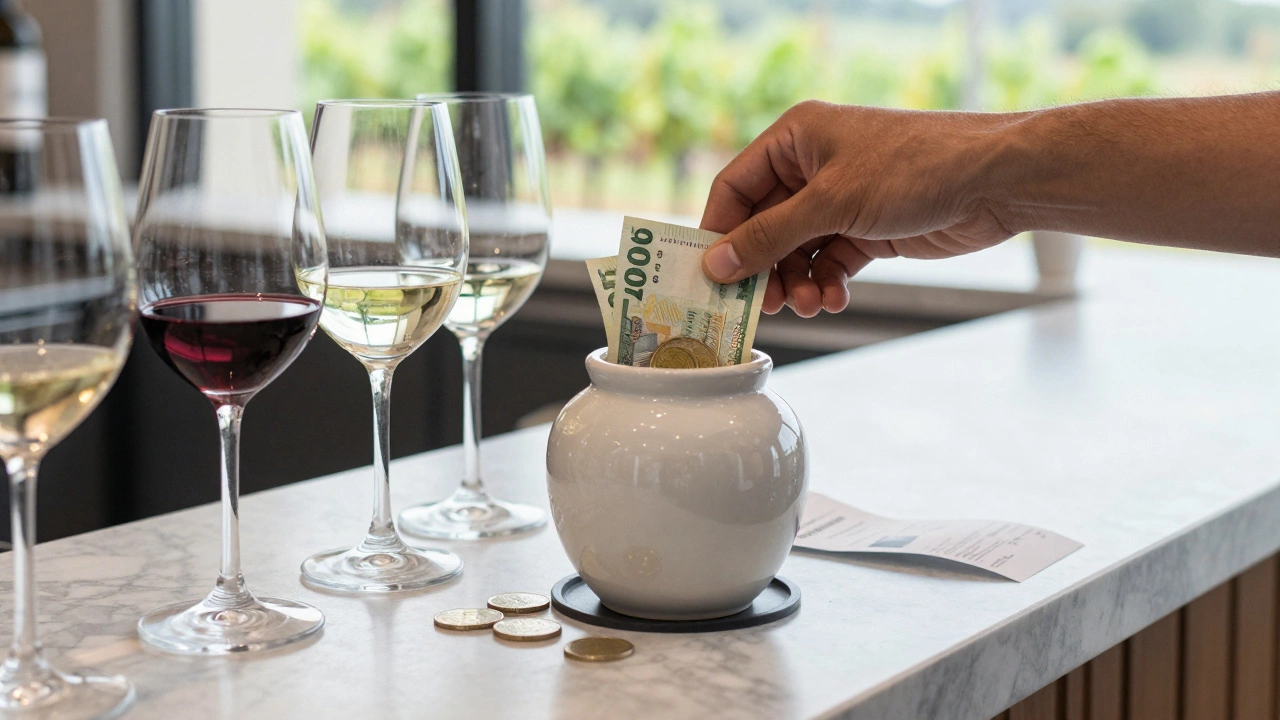
Does Buying Wine Change the Rules?
A common misconception is that purchasing bottles negates the need to tip. This is incorrect. The tasting fee pays for the samples; the tip pays for the service. If you buy six bottles of wine after a fantastic tasting, the staff member likely helped you choose them. That advice has value. In fact, many sommeliers view bottle sales as a success of their educational service, making a tip even more meaningful. Don’t think of the tip as a commission on your purchase. Think of it as a thank-you for helping you discover a new favorite wine.
If you don’t buy any wine, you should still tip if you enjoyed the service. The staff did their job by providing a pleasant experience. Withholding a tip because you didn’t make a purchase can come across as stingy, especially if you spent 30 minutes chatting with the host. A modest $5 tip shows appreciation for their time and expertise, regardless of your shopping cart contents.
Regional Differences: Old World vs. New World
Where you are tasting matters significantly. Tipping culture varies wildly between countries.
In the United States: Tipping is ingrained in the service industry. Whether you are in Napa Valley, Willamette Valley, or Finger Lakes, expect to tip. The amounts listed above apply broadly across US wine regions.
In Europe (France, Italy, Spain): Service charges are typically included in the price. Tipping is not expected for basic tastings. However, leaving a few euros or dollars in a tip jar, or rounding up the bill, is appreciated for exceptional service. In high-end châteaux in Burgundy or Bordeaux, a small tip for a private tour guide is becoming more common among international visitors, but it is never mandatory.
In Australia and New Zealand: Similar to Europe, service is included. Tipping is rare and not expected. If you want to show extra gratitude, buying a bottle or simply saying thank you is sufficient. Some premium venues may have tip jars, but they are truly optional.
In South America (Argentina, Chile): Tipping is less formalized. Leaving 10% of the bill or some loose change is a nice gesture, but again, not strictly required. Focus on being polite and engaging rather than worrying about exact percentages.
Who Gets the Tip?
It’s important to direct your gratuity to the right person. If a single host served you throughout the tasting, hand the tip directly to them or specify “for the server” when paying by card. If multiple people were involved-one person pouring, another explaining the history-it’s best to leave the tip in a communal jar or ask the manager how tips are distributed. Many wineries pool tips among the tasting room staff, which ensures everyone benefits from the hard work.
Don’t forget the drivers. If you hired a shuttle, limo, or private car service to get around the wine country, tip the driver separately. The standard for chauffeurs is 15-20% of the fare. This is completely separate from the winery staff. Confusing the two can lead to awkward moments where the driver gets nothing or the sommelier gets a driver’s tip.

Common Pitfalls to Avoid
- Under-tipping on large groups: If you bring five friends, don’t just leave $5 total. Split the responsibility or leave a larger amount ($25-$50) for the host managing your group.
- Tipping for bad service: If the host was rude, inattentive, or pressured you to buy expensive bottles, you are not obligated to tip. In this case, speaking to the manager is more effective than leaving a negative review online immediately.
- Confusing tasting fees with tips: Never assume the tasting fee covers the gratuity. Unless explicitly stated (“service included”), the fee is for the product and venue access.
- Using old bills: While not offensive, crisp bills or digital tips via credit card machines (if available) are preferred. Avoid leaving crumpled, dirty cash if possible.
What If the Tasting Was Free?
Free tastings are becoming rarer in premium regions due to rising costs, but they still exist, particularly in Europe or at smaller family-run estates. Does free mean no tip? Not necessarily. If you receive a detailed explanation and warm hospitality, a small token of appreciation ($5-$10) is a classy move. It acknowledges that while the wine was complimentary, the staff’s time was not. It also sets a positive tone if you decide to purchase bottles later.
Final Thoughts on Winery Etiquette
Tipping at wine tastings is ultimately about recognizing human effort. The wine industry relies on passionate individuals who share their knowledge with strangers. When you tip, you’re not just paying for a pour; you’re validating the educator’s role. Keep it simple: assess the level of service, consider the region, and act generously within your means. A well-placed tip enhances your reputation as a respectful guest and often leads to warmer interactions next time you visit. After all, wine is about connection, and gratitude is the best way to deepen that bond.
Is it rude not to tip at a wine tasting?
In the United States, it can be perceived as rude if you received personalized service from a host. For basic, transactional pours with no interaction, it is less noticeable. In Europe and Australia, not tipping is completely normal and not considered rude.
Do I tip if I don't buy any wine?
Yes, if you received good service. The tip compensates the staff for their time and expertise, not just for driving sales. A small tip ($5-$10) is appropriate even if you only sample and leave.
Should I tip the winery owner?
If the owner is personally serving you and acting as the host, a tip is a kind gesture but not strictly required since they own the business. If they are supervising while others serve, tip the staff instead.
Can I tip with wine?
While creative, it’s not practical. Staff prefer cash or credit card tips they can use immediately. If you really want to give a gift, a small basket of local goods or a heartfelt thank-you note is better than giving them more inventory.
How do I tip if paying by credit card?
Most modern POS systems at wineries allow you to add a tip before signing. If not, ask the host for a pen to write the tip amount on the receipt slip, or hand cash directly to the server before leaving.