
Escape Room Success Predictor
Industry data suggests a baseline failure rate of ~60%. Adjust the sliders below to see how specific factors impact your odds of winning.
Your Estimated Odds
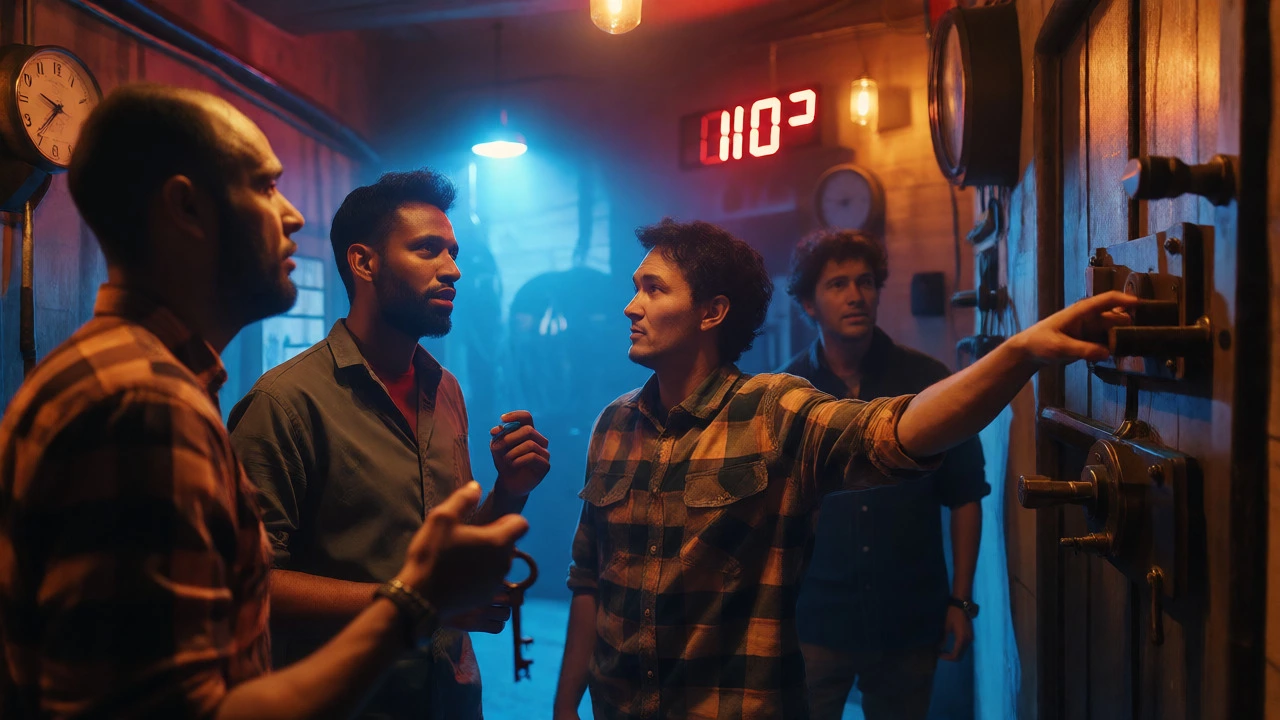
You walk in feeling confident. You’ve watched the trailers, you’ve briefed your team, and you’re ready to crack the code. But then the clock starts ticking, the lights dim, and suddenly that simple lock feels like a fortress. It’s a common scenario, but how common is failure? If you’re wondering what percentage of people fail escape rooms, you’re not alone. The short answer might surprise you: most teams actually lose.
While every venue tracks its own stats, industry averages suggest that between 50% and 70% of groups fail to escape within the allotted time. That means for every two teams that celebrate their victory with high-fives and photos, one or two others leave scratching their heads, wondering what they missed. This isn’t because the puzzles are impossible; it’s because escape rooms are designed to push human cognitive limits under pressure. Let’s break down why this happens, what factors influence your odds, and how you can tip the scales in your favor.
The Real Numbers Behind Escape Room Wins
Escape Room Success Rate is a metric used by operators to gauge difficulty and player satisfaction. Unlike video games where you can retry instantly, an escape room offers a single, high-stakes window of opportunity. Most reputable venues aim for a "sweet spot" win rate of around 30% to 40%. Why so low? If everyone won easily, the challenge would feel cheap. If no one ever won, players would feel cheated. Operators carefully calibrate difficulty to ensure that winning feels earned, not given.
Data from major chains like Room Escape Games and independent boutique venues often show similar trends. In highly rated rooms with a 4.8-star average, you might see a higher failure rate simply because experienced players seek out these harder challenges. Conversely, family-oriented rooms often boast win rates closer to 60% or 70%, as they prioritize engagement over intense mental strain. So, if you look at global aggregates, the average escape room failure rate hovers right around the 60% mark. Don’t let that discourage you-it just means you have work to do.
Why Do So Many Teams Fail?
It’s rarely about intelligence. I’ve seen PhD candidates struggle while a group of teenagers breezed through a complex logic puzzle. The primary culprit is usually communication breakdown. When stress rises, people tend to hoard information. One person finds a key, pockets it, and keeps searching without telling the rest of the team. Meanwhile, three other members are stuck trying to force open a door that needed that exact key twenty minutes ago.
Another major factor is tunnel vision. Humans are wired to focus on immediate problems. If you’re staring at a cipher, you might miss the obvious clue taped to the wall behind you. Escape rooms exploit this cognitive bias. They place critical hints in plain sight but require peripheral awareness to notice them. When teams fail, it’s often because they were too focused on the "hard" puzzle to solve the "easy" one sitting right next to it.
Time management plays a huge role, too. Many teams spend the first ten minutes exploring frantically, turning over cushions and opening drawers, only to realize they haven’t solved a single puzzle. By minute 40, panic sets in. The brain shifts from analytical thinking to reactive scrambling, which is terrible for logical deduction. This phenomenon, known as "analysis paralysis," causes teams to freeze up when faced with multiple unsolved tasks simultaneously.

Factors That Influence Your Odds of Winning
Your chance of escaping depends heavily on variables outside your control. Understanding these can help you choose the right room for your skill level.
| Factor | Impact on Win Rate | Pro Tip |
|---|---|---|
| Team Size | Ideal is 4-6 players. Too few leads to bottlenecks; too many causes chaos. | Assign roles early (e.g., searcher, decoder, organizer). |
| Experience Level | First-timers have a ~40% lower win rate than veterans. | Start with a medium-difficulty room, not the hardest one. |
| Communication Style | Shy teams struggle significantly more than vocal ones. | Use a "clue dump" system: shout out anything unusual immediately. |
| Hint Usage | Teams using hints strategically win 2x more often. | Don’t wait until the last minute. Ask for help after 5 minutes of stagnation. |
| Theme Familiarity | Niche themes (e.g., quantum physics) may confuse casual players. | Read the synopsis beforehand to align expectations. |
Notice how Team Dynamics outweigh raw IQ. A cohesive unit of average thinkers will beat a disjointed group of geniuses every time. Communication is the oxygen of an escape room. Without it, the fire dies out quickly.
How Difficulty Levels Are Calculated
Venues don’t just guess difficulty; they measure it. Most use a star rating system based on actual play data. A 1-star room might have a 90% win rate, while a 5-star room drops below 20%. But here’s the catch: these ratings are dynamic. As players get better at recognizing tropes-like UV lights revealing hidden text or magnets unlocking doors-operators tweak puzzles to maintain the challenge.
In Melbourne, for example, venues like Breakout Melbourne and Enigma Escape publish live win rates on their websites. Checking these before booking gives you a realistic expectation. If a room has a 15% win rate, expect to fail unless you’re a seasoned pro. It’s not a reflection of your worth; it’s a testament to the design.
Also, consider the type of puzzles. Some rooms rely heavily on physical dexterity (finding small objects), while others demand abstract reasoning (decoding languages). If you know your team struggles with spatial awareness, avoid rooms heavy on hidden object mechanics. Match the challenge to your strengths.

Strategies to Beat the Statistics
If you want to move from the failing majority to the winning minority, adopt these tactics. First, establish a "brain trust." Before entering, agree that no clue is too small to share. If you find a blue triangle, say "I found a blue triangle!" even if you don’t know what to do with it yet. Someone else might be holding a matching shape.
Second, manage your resources. Divide the room logically. Assign one person to organize clues once they’re found. This prevents duplication of effort. If two people are decoding the same Morse code message, you’re wasting time. Centralizing information allows the team to see connections faster.
Third, embrace the hint system. Many players feel embarrassed asking for help, viewing it as cheating. But gamemasters exist to facilitate fun, not judgment. If you’re stuck on a puzzle for more than five minutes, ask for a nudge. It’s better to finish with a hint than to fail with pride. Statistically, teams that use hints moderately have a significantly higher completion rate.
Finally, keep an eye on the clock. Set internal milestones. At 30 minutes, you should have solved at least half the initial puzzles. If you’re still stuck on the first lock, reassess your approach. Maybe you’re missing something obvious in the environment rather than in the puzzle itself.
What Happens When You Fail?
Failing doesn’t mean the experience was bad. In fact, many players report having more fun losing because the tension creates memorable stories. Did someone accidentally trigger a secret passage? Did you misinterpret a riddle hilariously? These moments bond teams. Plus, some venues offer discounts on your next visit if you fail, encouraging you to return and conquer the challenge.
However, if you consistently fail, consider scaling back. Try a different venue or a lower-difficulty theme. Sometimes, switching genres helps. If horror-themed rooms overwhelm you due to adrenaline spikes, try a sci-fi or mystery room where the pacing is slower. Adjusting the context can reset your mental state and improve performance.
Is it true that most people fail escape rooms?
Yes, statistically speaking. Industry data suggests that approximately 50-70% of teams fail to escape within the time limit. This is intentional, as operators design rooms to be challenging enough to make victory feel rewarding.
Does team size affect the win rate?
Absolutely. The optimal team size is usually 4-6 people. Smaller teams lack manpower to cover all areas, leading to bottlenecks. Larger teams often suffer from poor communication and duplicated efforts, which lowers efficiency and increases the likelihood of failure.
Are escape rooms harder for beginners?
Yes, first-time players typically have a lower success rate. Experienced players recognize common puzzle mechanics (like UV lights, magnets, or book ciphers) and know how to communicate effectively. Beginners often waste time figuring out basic conventions.
Should we ask for hints?
Definitely. Using hints strategically improves your chances of winning significantly. Gamemasters provide nudges to keep the flow going. Waiting too long to ask for help often results in running out of time, whereas moderate hint usage keeps the momentum alive.
Do win rates vary by location?
Yes, win rates vary by venue and region. Competitive markets like Melbourne or London may have slightly higher difficulty standards due to experienced local players. Always check the specific venue's published win rate before booking to gauge the expected challenge level.
Ultimately, the goal isn’t just to escape; it’s to enjoy the process. Whether you beat the clock or not, you’ve shared a unique problem-solving experience with friends. And hey, if you fail, you now know exactly what to fix for round two.