
Scavenger Hunt Generator
Create Your Custom Nature Hunt
Generate age-appropriate scavenger hunts using items from your neighborhood. Perfect for backyard adventures, park explorations, or sidewalk discoveries.
There’s no magic formula for the best outdoor activity for kids, but there is one simple truth: kids don’t need fancy gear or expensive tickets to thrive outside. They need space, freedom, and a little bit of mess. The most effective outdoor activities aren’t the ones that look perfect on Instagram-they’re the ones that leave them tired, muddy, and asking to go back tomorrow.
Why Outdoor Play Matters More Than Ever
Kids today spend more time staring at screens than they do playing outside. A 2024 study from the Australian Institute of Health and Welfare found that nearly 60% of children aged 5-12 get less than 60 minutes of moderate to vigorous physical activity per day. That’s half the recommended amount. Meanwhile, rates of childhood anxiety and poor motor skills have climbed steadily over the last decade.
Outdoor play fixes this. Not because it’s "good for you," but because it’s unavoidable. When kids climb trees, chase bugs, or build forts, they’re learning balance, problem-solving, and risk assessment-all without a single worksheet. They’re also burning energy in ways that indoor games simply can’t match.
What Makes an Activity Truly "Best"?
"Best" doesn’t mean the most popular. It doesn’t mean the most structured. The best outdoor activity for kids checks these boxes:
- Requires no special equipment (or uses things you already have)
- Can be done alone or with friends
- Adapts to different ages and abilities
- Encourages creativity, not just physical movement
- Works in a backyard, park, or even a sidewalk
With those rules in mind, one activity stands out-not because it’s new, but because it’s timeless: nature scavenger hunts.
Nature Scavenger Hunts: The Simple Game That Does It All
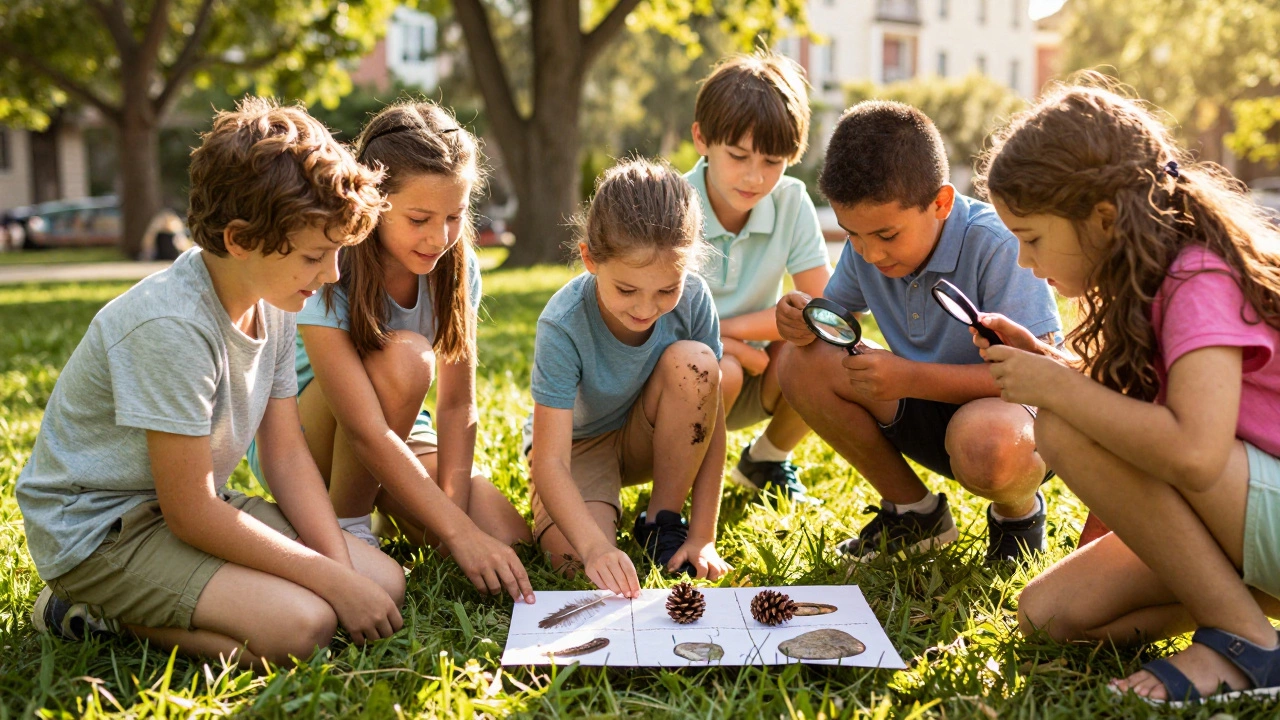
Grab a piece of paper, a pencil, and head outside. That’s it. No app, no subscription, no batteries needed.
For younger kids (3-7), draw simple pictures: a smooth rock, a red leaf, a feather, a pinecone, a spiderweb. For older kids (8+), make it a challenge: "Find something that makes a sound," or "Find something that used to be alive but isn’t anymore."
Here’s how it works in practice:
- Write or draw 8-10 items on a list. Keep it local-what’s actually in your yard or nearby park.
- Give them 20-30 minutes to find them.
- Let them collect small items (no picking flowers or disturbing nests).
- When they’re done, sit down together and talk about what they found.
Why this works better than soccer or bike riding? Because it turns observation into play. Kids aren’t just moving-they’re thinking. They’re comparing textures, noticing patterns, asking questions like, "Why is this leaf green but that one’s brown?" That’s science. That’s curiosity. That’s learning without realizing it.
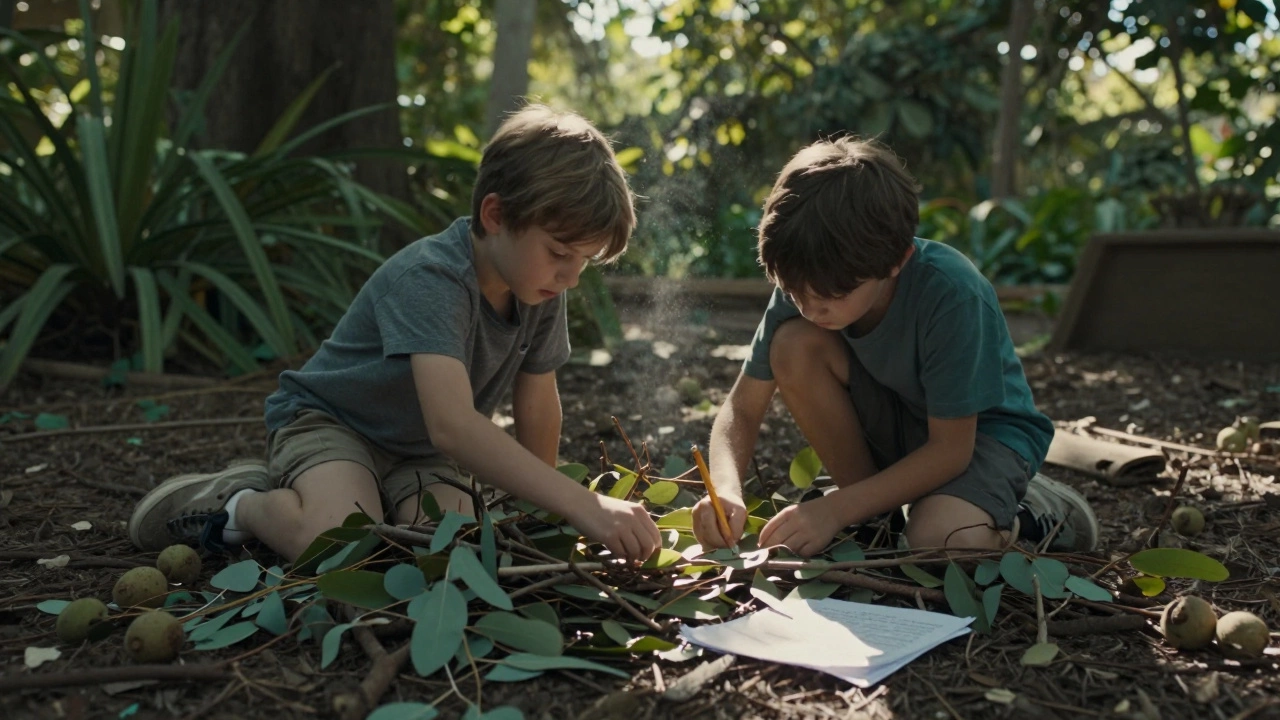
In Melbourne, families have been doing this for generations. In Royal Botanic Gardens, kids hunt for eucalyptus pods. In Albert Park, they track bird feathers. In local reserves, they find interesting bark patterns. It’s free, it’s flexible, and it works even in winter.
What Other Activities Come Close?
Scavenger hunts win because they’re adaptable. But other outdoor activities deserve a mention:
- Water play-Splashing in puddles, filling buckets, or using a hose for "painting" the driveway. Great for hot days and sensory development.
- Building forts-Using sticks, blankets, and cardboard. Teaches engineering basics and teamwork.
- Trail walking-Not hiking, just walking. Let kids lead. They’ll notice things adults miss: ants carrying crumbs, strange shapes in clouds, the sound of wind through grass.
- Bike or scooter rides-Good for coordination, but only if kids get to explore, not just follow a route.
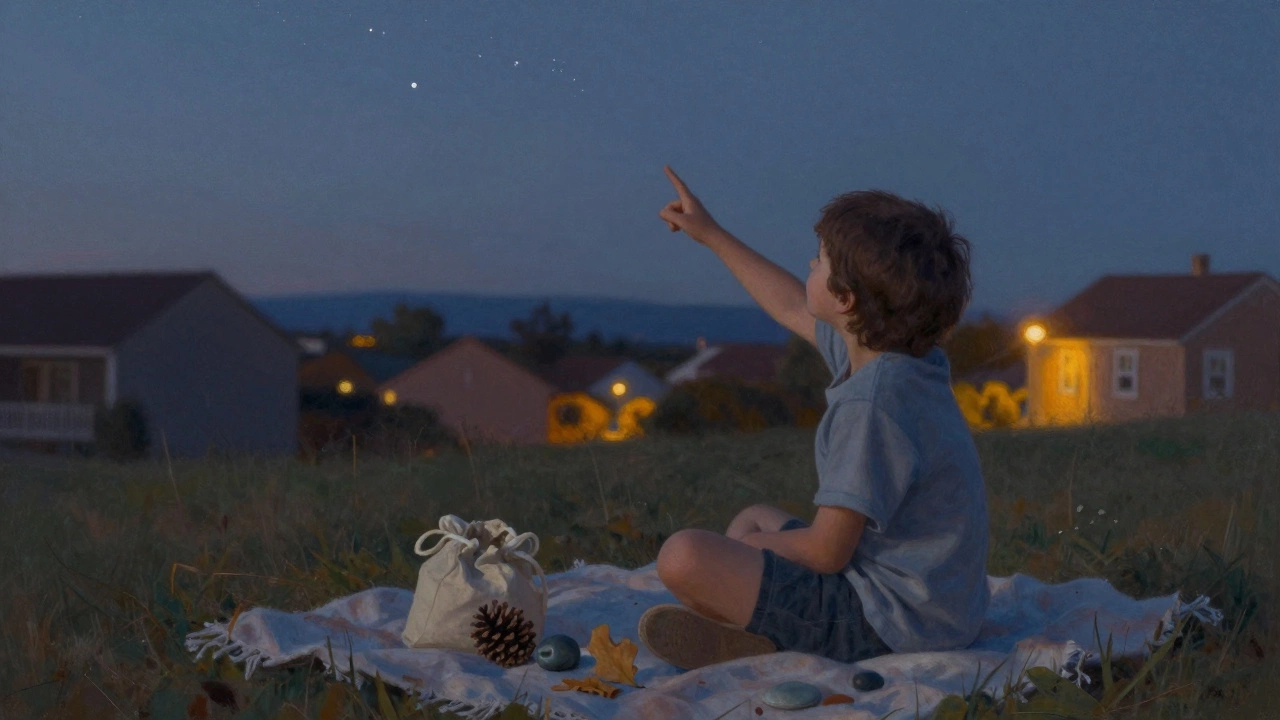
- Stargazing-On clear nights, lie on a blanket and name what you see. No telescope needed. Just patience.
These are all great. But none of them combine creativity, observation, movement, and low cost as well as a scavenger hunt.
How to Make It Stick
One scavenger hunt won’t turn your child into a nature lover. But five? Ten? That’s how habits form.
Here’s how to keep it going:
- Keep a small bag in the car or by the door with paper, pencils, and a magnifying glass.
- Let kids make their own lists. They’ll pick weirder things-and that’s better.
- Turn it into a seasonal game: "Find the first spring flower," or "Find something that glows in the dark."
- Don’t correct them. If they say a rock is "magic," let it be magic.
One family in Box Hill started a "Scavenger Hunt Jar"-every weekend, someone pulls out a new theme: "Find something that smells good," or "Find something that used to be part of a tree." Now their 6-year-old can name every type of gum tree in the neighborhood.
What About Safety?
Outdoor play isn’t risk-free. But overprotecting kids creates more problems than it solves.
Here’s how to balance safety and freedom:
- Teach them to check for poison ivy or sharp objects before touching.
- Set boundaries: "You can go to the big oak tree, but not past the fence."
- Don’t hover. Stand back. Let them climb. Let them fall. Let them get up.
- Use sunscreen and hats in summer. Wear layers in winter.
- Always carry water. Dehydration hits kids faster than adults.
The goal isn’t to eliminate risk-it’s to teach kids how to manage it. That’s a skill they’ll use for life.
What If My Kid Doesn’t Like Outside?
Some kids resist. That’s normal. Maybe they’re shy. Maybe they’ve had a bad experience. Maybe they’ve never been given the chance to explore on their own.
Start small. Five minutes. Just sit outside with them. No devices. No talking. Just listen to the birds. Let them notice the wind.
Then try a single-item hunt: "Find one thing that’s green." That’s it. No pressure. No checklist. Just one thing.
One parent in Footscray tried this with her 8-year-old, who refused to go outside for months. She started by sitting on the porch with a cup of tea and saying nothing. After a week, her son came out with a leaf and said, "This one’s weird." That was the start. Three months later, he was leading family scavenger hunts.
Final Thought: It’s Not About the Activity
The best outdoor activity for kids isn’t about what they do. It’s about what they become.
They become observers. Problem-solvers. Adventurers. They learn that the world doesn’t need to be controlled to be understood. That curiosity is its own reward. That mud doesn’t ruin clothes-it tells stories.
So skip the expensive camps. Skip the organized sports for now. Grab a piece of paper. Head outside. Let them lead. And watch what happens.
What’s the best outdoor activity for a 4-year-old?
For a 4-year-old, simple sensory play works best. Try a nature scavenger hunt with picture cards-find a smooth rock, a feather, a red leaf. Or let them splash in puddles, dig in the dirt, or build tiny forts with sticks and leaves. Keep it short, fun, and free of pressure. Their attention span is still developing, so focus on exploration, not completion.
Can outdoor activities help with ADHD or anxiety in kids?
Yes. Multiple studies, including one from the University of Melbourne in 2023, show that unstructured outdoor play reduces symptoms of ADHD and anxiety in children. Being outside lowers cortisol levels and gives kids space to move without judgment. Activities like scavenger hunts or nature walks provide gentle structure without the pressure of rules or competition, which helps kids regulate their emotions.
Do I need special gear for outdoor play?
No. Kids don’t need expensive boots, backpacks, or gadgets. A pair of old sneakers, weather-appropriate clothes, and a willingness to get dirty are enough. A small bag with a pencil, paper, and a magnifying glass can turn any outing into an adventure. The best tools for outdoor play are curiosity and imagination.
How often should kids be playing outside?
Experts recommend at least 60 minutes of physical outdoor play per day, but even 15-20 minutes makes a difference. The key is consistency. Five 15-minute sessions spread through the week are better than one long session on Saturday. Make it part of your routine-after school, before dinner, or on weekend mornings.
What if I don’t have a yard or park nearby?
You don’t need a big space. A sidewalk, a balcony, or even a rooftop can work. Try a "window scavenger hunt"-find things you can see from your window: a red car, a bird, a cloud shaped like an animal. Or turn your hallway into an obstacle course with pillows and blankets. The goal isn’t the location-it’s the freedom to explore.