
Escape Room Strategy Simulator
Session Timer
ReadyCurrent Phase Strategy
Press Start to begin your 60-minute simulation. Remember: Divide zones, communicate loudly, and don't hoard clues!
Team Action Checklist
Check off actions as your team completes them. This helps prevent "loud leader syndrome" and ensures coverage.
You’re locked in a room. The clock is ticking down from sixty minutes. Your friends are staring at you, waiting for a plan. What now? If you’ve never played before, the idea of being trapped with strangers or coworkers while trying to solve riddles sounds stressful. But here’s the truth: escape rooms are not about being scared. They are interactive physical adventure games where players use elements of the room such as clues, codes, and puzzles to achieve a specific goal within a set time limit. You don’t need to be a genius. You just need to look closely, talk loudly, and work together.
The core loop of an escape room is surprisingly simple once you break it down. It’s a cycle of observation, communication, and deduction. You find something weird, you tell your team, someone else connects it to a different object, and you unlock a new area or get a code. Rinse and repeat until the door opens. Let’s walk through exactly what happens inside those walls, step by step, so you know precisely how to spend those precious minutes.
The First Five Minutes: Chaos and Control
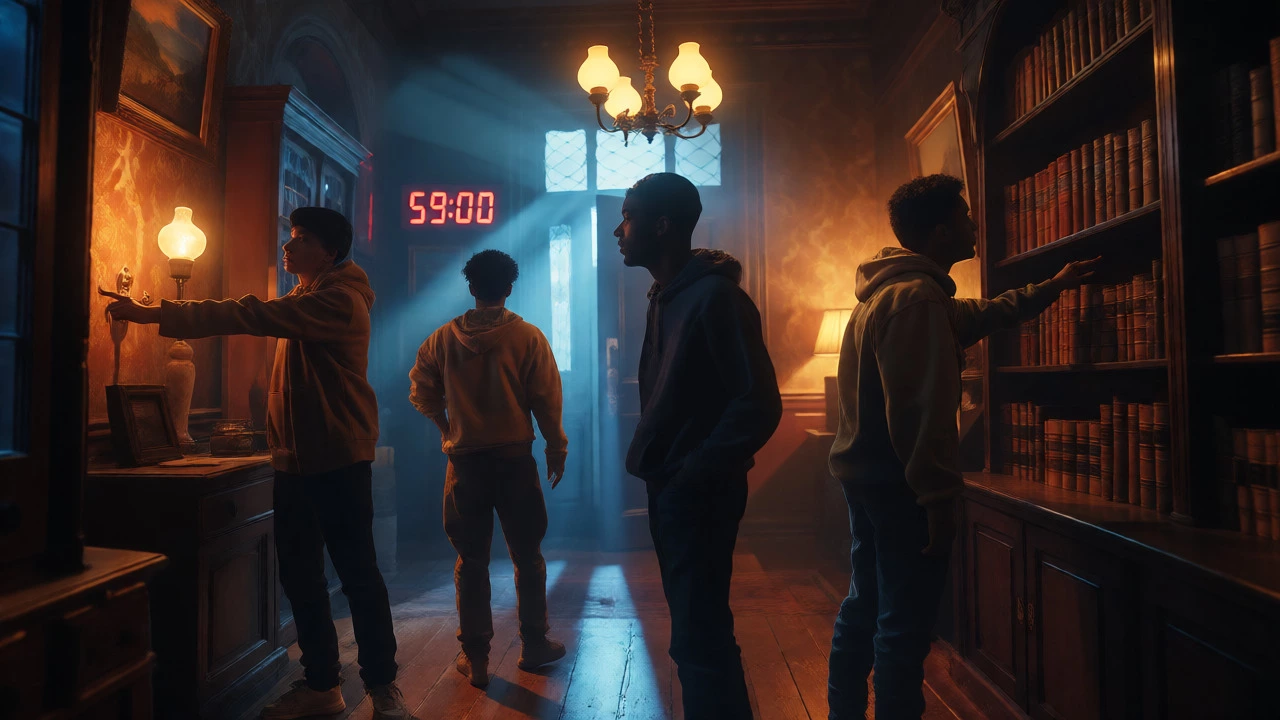
When the door locks behind you, panic usually sets in for the first thirty seconds. This is normal. The best teams treat this initial phase as a systematic sweep rather than a frantic grab-everything moment. Don’t start pulling drawers open immediately if there are no visible handles or locks; you might miss subtle details on the walls.
Instead, divide the space. If there are four of you, assign zones. One person checks the left wall, another the right, one takes the furniture, and the last one inspects the ceiling or high shelves. Look for anomalies. Does that painting hang slightly crooked? Is there a bookshelf with books that look glued shut? Are there numbers written on the back of a chair?
- Visual Scanning: Look for color-coded items. Red keys often go with red locks. Blue symbols often match blue hints.
- Tactile Checking: Feel for weight differences in objects. A hollow sound when tapping a box means something is inside.
- Text Hunting: Read everything. Labels, instructions, warnings, and even graffiti can hold the key.
Communication is your most powerful tool here. If you see a strange symbol, shout it out. "Hey, does anyone see a triangle with three dots?" Even if no one answers immediately, you’ve planted a seed in their brains. When they eventually look at that spot, they’ll recognize the connection faster because you primed them.
Decoding the Puzzles: Types You Will Encounter
Not all puzzles are created equal. Game designers mix different types to keep your brain switching gears. Understanding these categories helps you identify which part of your brain needs to wake up.
| Puzzle Type | What You Do | Skill Required |
|---|---|---|
| Locks & Keys | Find physical keys hidden in compartments to open padlocks. | Observation & Patience |
| Logic Puzzles | Deduce patterns, sequences, or mathematical relationships. | Analytical Thinking |
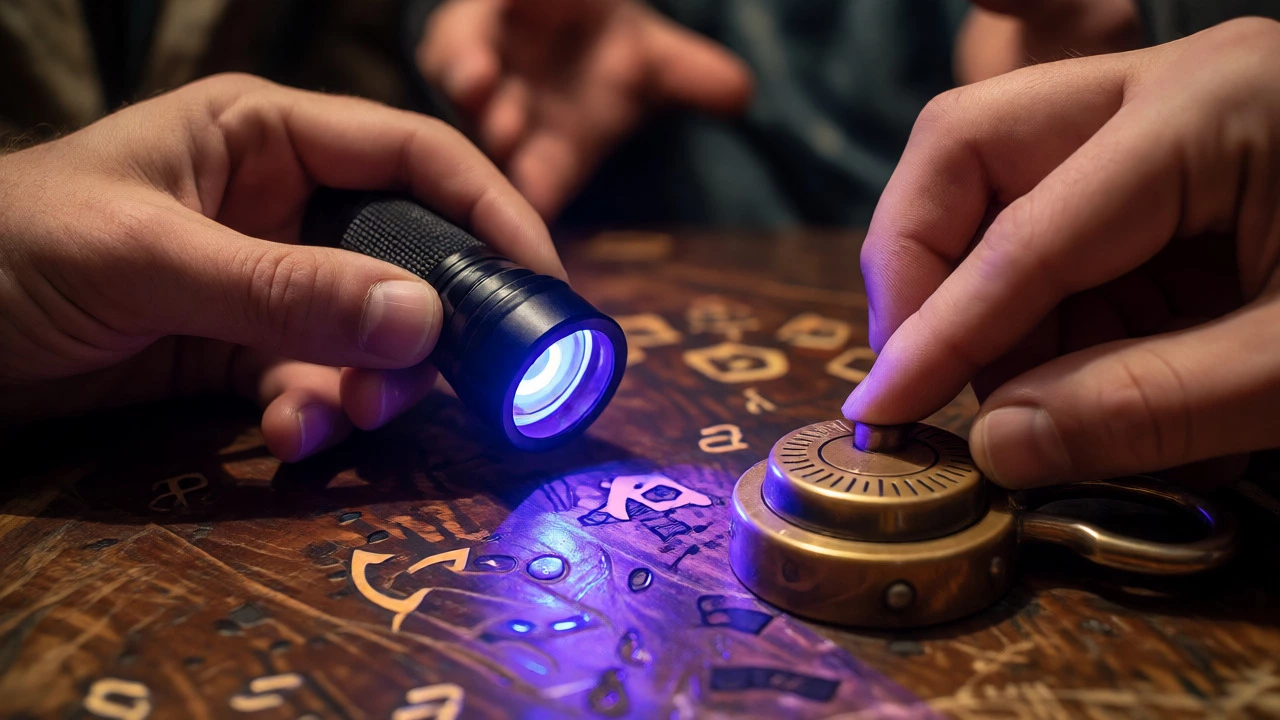
| Sensory Puzzles | Use sight, sound, smell, or touch to find clues (e.g., UV light). | Perception |
| Physical Tasks | Manipulate objects, assemble pieces, or balance items. | Dexterity & Coordination |
| Narrative Clues | Read story elements to understand context or passwords. | Reading Comprehension |
Let’s say you find a map with coordinates. That’s a logic puzzle. You need to cross-reference those numbers with a legend found elsewhere in the room. Or perhaps you find a blacklight flashlight. That’s a sensory puzzle. You shine it around the room to reveal invisible ink messages on the walls. Each type requires a different approach, but all require sharing information.
A common mistake is hoarding clues. Player A finds a piece of paper with numbers. Player B has a lock requiring numbers. If Player A doesn’t speak up, Player B wastes five minutes guessing random combinations. In my experience playing dozens of rooms in Melbourne, the fastest teams are the ones who act like a hive mind. Every clue belongs to everyone.
Using Props and Technology
Modern escape rooms aren’t just boxes with padlocks anymore. Many venues integrate technology to create seamless interactions. You might encounter RFID sensors, magnetic locks, or digital interfaces.
For example, placing a specific statue on a pedestal might trigger a sensor that opens a hidden compartment automatically. There’s no keyhole to turn. You just place the object and wait for the click. Other rooms use tablets or computers where you input codes. If you’re stuck on a digital puzzle, ask for a hint early. Hint systems are usually tiered. The first hint is vague, pointing you in the right direction. The second gives a specific nudge. The third tells you exactly what to do.
Don’t let pride stop you from asking for help. Game masters want you to succeed. They monitor cameras and microphones. If you’re spinning your wheels for ten minutes on a single puzzle, request a hint. It keeps the momentum going. Remember, the goal is to finish, not to prove you can do it without assistance.
Team Dynamics: Who Does What?
Escape rooms are social experiences disguised as games. Your success depends heavily on how well you collaborate. Some people are natural leaders; others are better listeners. Neither role is superior. You need both.
Ideally, your group should have a mix of skills. Someone good at spotting details, someone comfortable with math or logic, someone who isn’t afraid to climb or reach high places, and someone who can stay calm under pressure. If you’re going with a group of colleagues, assign roles based on strengths, not hierarchy. The junior employee might be the best at spatial reasoning, while the manager might excel at reading narrative text.
Watch out for the "loud leader" syndrome. This happens when one person dominates the conversation, shouting orders while others shut down. Effective teams rotate leadership. If you’re stuck on a puzzle, pass it to someone else. Fresh eyes often see what tired eyes miss. Stand back. Take a breath. Listen to your teammates. Sometimes the solution comes from the quietest person in the corner who noticed a pattern everyone else ignored.
Time Management Strategies
Sixty minutes feels long until you realize half of it disappears while you’re arguing about whether a picture frame is upside down. Time management is critical. Here’s a rough breakdown of how a successful run looks:
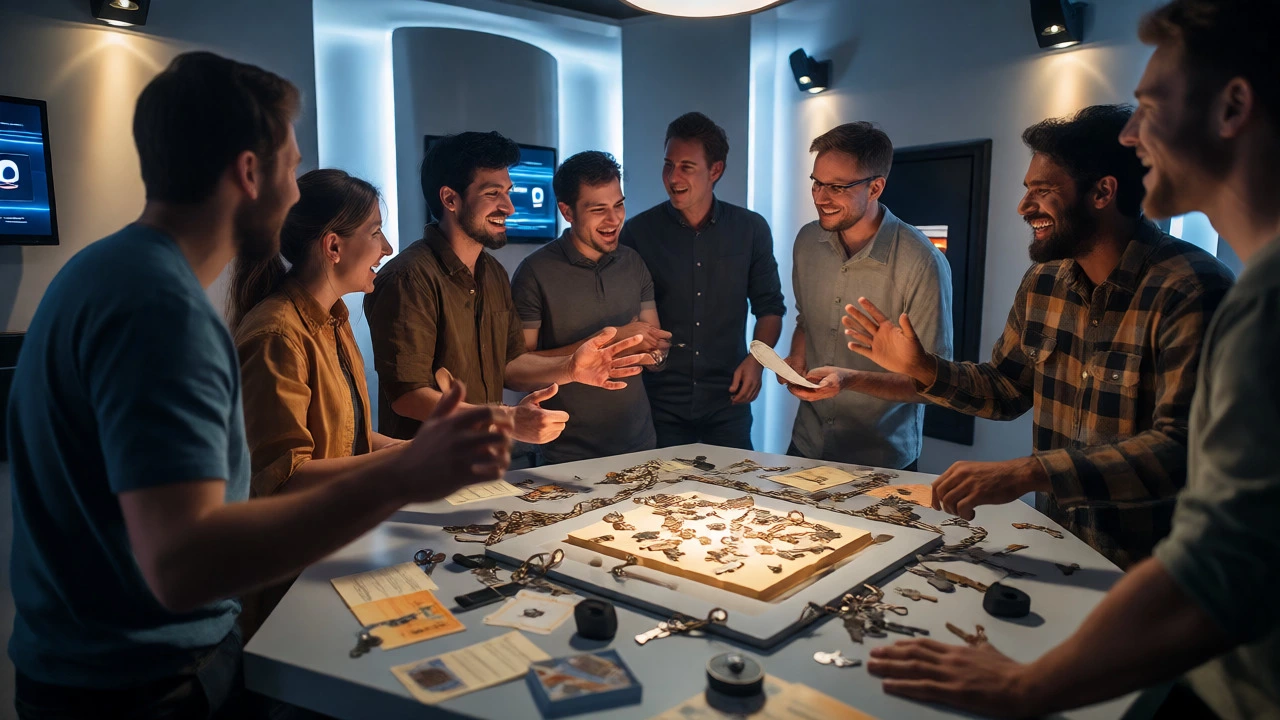
- 0-10 Minutes: Exploration and gathering. Collect every possible clue into a central table.
- 10-40 Minutes: Solving phase. Work on multiple puzzles simultaneously. Divide and conquer.
- 40-50 Minutes: Final assembly. Put together the last few components needed for the exit.
- 50-60 Minutes: Execution. Enter final codes, pull levers, and escape.
If you hit the 30-minute mark and still haven’t unlocked the second room or major section, you’re moving too slowly. Reassess. Are you focusing on one difficult puzzle while ignoring easier ones nearby? Often, unlocking a secondary puzzle provides the key to the primary one. Don’t tunnel vision on the hard stuff. Clear the easy wins to build confidence and free up mental bandwidth.
Common Pitfalls to Avoid
Even experienced players make mistakes. Here are the big ones I see regularly:
- Ignoring Instructions: Always read the briefing carefully. Game masters often drop crucial hints in the intro speech that you forget later.
- Overthinking: Not every shadow is a clue. Not every number matters. If a puzzle seems impossible, you’re probably looking for complexity that isn’t there.
- Hoarding Items: Keep found items in a shared pile. Don’t stick a key in your pocket where no one else knows it exists.
- Fighting the Environment: Don’t force things. If a drawer won’t open, it’s likely locked or needs a specific mechanism, not more muscle.
Also, respect the props. These rooms are expensive to maintain. Don’t rip pages out of books unless instructed. Don’t unscrew light bulbs unless necessary. Treat the environment with care, and it will reward you with smooth gameplay.
After the Game: Debriefing
Once you escape-or fail-the game master will walk you through the solutions. This is arguably the most fun part. You’ll hear stories like, "Oh, that book was actually a safe," or "I had the key the whole time!" Take photos if allowed. Share the experience. Escape rooms spark great conversations because everyone saw the same problem but solved it differently.
If you failed, don’t take it personally. Many teams miss the final minute by seconds. The satisfaction comes from the journey, not just the outcome. You worked together, laughed, got frustrated, and solved problems. That’s the value.
Do I need special skills to play an escape room?
No. Escape rooms are designed for general audiences. While some puzzles involve basic math or wordplay, they rarely require specialized knowledge like calculus or foreign languages. The main requirements are curiosity, teamwork, and attention to detail. Venues usually rate difficulty levels, so beginners can choose 'Easy' or 'Medium' rooms to start.
What should I wear to an escape room?
Wear comfortable clothes you don’t mind getting slightly dirty. You might kneel, crawl, or reach into dusty corners. Closed-toe shoes are recommended for safety. Avoid wearing large bags or accessories that could get caught on props. Since rooms can vary in temperature, layering is a smart choice.
Are escape rooms scary?
It depends on the theme. Most standard escape rooms are adventurous or mysterious but not horror-themed. However, many venues offer specific 'Horror' or 'Thriller' experiences with actors and jump scares. Check the venue description beforehand if you are sensitive to fear. Standard rooms focus on puzzles, not fright.
How many people are ideal for an escape room?
Most rooms are optimized for 4 to 6 players. Fewer than 4 can feel slow because you lack enough hands to search multiple areas simultaneously. More than 6 can lead to crowding and confusion, with some players standing around doing nothing. Check the specific room's capacity limits when booking.
What happens if we get stuck?
You can request hints from the game master. Usually, you press a button or raise your hand to signal you need help. Hints are progressive, starting with gentle nudges and ending with direct instructions. Using hints does not disqualify you from winning, though some competitive leagues may penalize excessive hint usage.