
Play Opening Analyzer
Are you confused by the start of a play? Use this tool to analyze the opening moments. Answer the questions below to identify the primary narrative device being used.
Analysis Result
You walk into a darkened auditorium in Melbourne. The house lights dim, the curtain rises, and suddenly you are dropped into a living room, a battlefield, or a spaceship. But before that first line of dialogue hits your ear, something has already happened. You might be wondering: what is the first scene of a play called? It’s a question that trips up many newcomers to theatre, partly because the answer isn’t always a single word. Sometimes it’s an Act One, Scene One. Other times, it’s a Prologue. And occasionally, it’s just... silence.
The confusion stems from how we consume stories. In movies, we get cold opens. In books, we get chapter one. In theatre, the structure is rigid yet fluid, depending entirely on the playwright’s intent. If you’re writing a play, studying for a drama exam, or just trying to sound smarter at intermission drinks, understanding the anatomy of the opening moments is crucial. It sets the rules of engagement for everything that follows.
The Short Answer: It Depends on the Structure
Let’s cut through the noise. There is no universal name for the very first moment of a performance. However, there are specific terms used when the opening serves a distinct narrative function. If the opening is a standalone address to the audience, it is likely a Prologue. If it is part of the main action, it is simply Act One, Scene One.
Think of it like this: A prologue is like a trailer attached to the front of the movie, but performed live. Act One, Scene One is the actual start of the film. Most modern plays skip the prologue entirely. They trust you to figure out who these people are as they speak. But classical works, Shakespeare included, often use a prologue to give you the cheat codes.
The Prologue: Breaking the Fourth Wall
A Prologue is a speech or section delivered before the main action begins. Its primary job is to provide context that would otherwise take too long to reveal naturally. Imagine watching Romeo and Juliet without knowing the families are feuding. You’d spend half the time confused about why everyone is yelling. The Prologue fixes that instantly.
This device is ancient. Greek tragedians used it heavily. Shakespeare used it in several plays, most famously in Henry V, where the Chorus asks the audience to "piece out our imperfections with your thoughts." This is a direct request for suspension of disbelief. When a character steps forward and speaks directly to you, the fourth wall doesn't just break; it dissolves.
Why do writers still use them? Because sometimes you need to set the stakes immediately. In musicals like Hamilton, Alexander Hamilton himself introduces the story. He tells us he is "a bastard, orphan, son of a whore" before we see him survive a hurricane. This frames every subsequent event through his voice. Without that opening monologue, the emotional weight of the entire show shifts.
Exposition: The Invisible Engine
If there is no prologue, the first scene relies on Exposition. Unlike a prologue, which is often separate from the plot, exposition is woven into the dialogue and action of the first scene. It is the information the audience needs to understand the current situation.
Bad exposition feels like two people telling each other things they already know. "As you know, Bob, our father died ten years ago," sounds clunky. Good exposition reveals character while delivering facts. In Arthur Miller’s Death of a Salesman, we learn about Willy Loman’s exhaustion and financial ruin not through a narrator, but through his erratic behavior and arguments with his wife Linda. The setting-a crumbling Brooklyn home-does half the work. The props, the lighting, and the actors' body language communicate the backstory before a word is spoken.
Here is a quick checklist to spot effective exposition in a first scene:
- Conflict: Is someone wanting something right now? Exposition should emerge from tension, not idle chat.
- Specificity: Are the details concrete? "I’m broke" is weak. "I can’t pay the electric bill" is strong.
- Subtext: What are they not saying? Often, the real history is hidden beneath polite conversation.

Structural Terms: Acts, Scenes, and Beats
To fully grasp what happens at the start, you need to know the container it lives in. Theatre scripts are divided into hierarchical units. Understanding these helps you navigate any script.
| Unit | Definition | Function in Opening |
|---|---|---|
| Act | A major division of a play, usually separated by an intermission. | Sets the broad phase of the story (e.g., Setup). |
| Scene | A subdivision within an act, typically marked by a change in location or time. | Establishes the immediate physical environment. |
| Beat | The smallest unit of dramatic action; a shift in tactic or emotion. | Creates rhythm and momentum in dialogue. |
So, technically, the first scene is always "Act One, Scene One" unless a Prologue precedes it. But don’t let the dry terminology fool you. The content of that scene determines whether you stay awake. A well-crafted first scene establishes the "status quo"-the normal world-before disrupting it. If nothing changes in the first ten minutes, the play is failing its basic contract with the audience.
The Inciting Incident vs. The Opening Image
Screenwriting theory has bled into modern playwriting. Many contemporary dramas follow a structure similar to Joseph Campbell’s Hero’s Journey. In this framework, the first scene often contains the Inciting Incident. This is the event that disrupts the protagonist’s life and forces them to act.
Consider A Doll’s House by Ibsen. The play opens with Nora Torvald entering with Christmas gifts. It seems mundane. But the inciting incident-the secret loan she took to save her husband-is revealed through her anxiety and her interaction with Krogstad later in the act. The opening image is domestic bliss; the underlying reality is debt and deception. The gap between the two creates the dramatic tension.
In contrast, absurdist plays like Beckett’s Waiting for Godot defy this logic. The first scene features two tramps waiting for someone who never arrives. There is no traditional inciting incident because the point is the stasis. The "action" is the lack of action. Recognizing these different approaches helps you appreciate why some openings feel urgent while others feel meditative.
Practical Tips for Writers and Directors
If you are crafting a new piece or directing a classic, here is how to handle the opening moments effectively.
1. Start Late. Don’t begin the scene twenty minutes before the interesting thing happens. Cut the pleasantries. Enter the scene when the conflict is already simmering. If two characters are arguing about money, start mid-argument, not when one walks in the door.
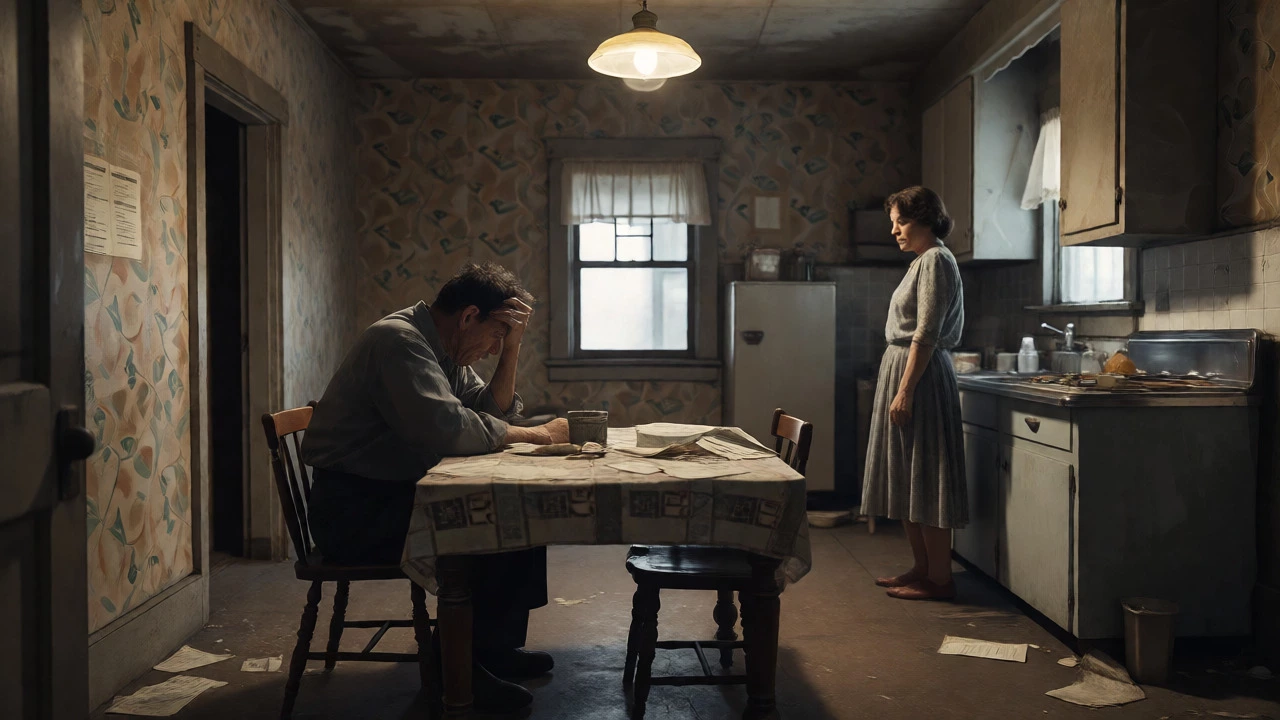
2. Use Visual Storytelling. Before anyone speaks, the set design tells a story. A pristine kitchen suggests control. A messy one suggests chaos. Let the visual cues do the heavy lifting so the dialogue can remain sharp.
3. Avoid the "As You Know" Trap. Read your first scene aloud. If a character explains their relationship status or past trauma directly to another character who obviously knows it, rewrite it. Find a way to reveal that info through action or subtext.
4. Hook the Audience Sensory-wise. Sound design and lighting are powerful tools in the first minute. A sudden blackout, a loud crash, or an eerie silence can grab attention faster than a witty line. At the Melbourne Arts Centre, directors often use pre-show atmospherics to blur the line between lobby and stage, priming the audience before the curtain even lifts.
Frequently Asked Questions
Is a prologue always spoken by a character?
Not necessarily. While often delivered by a character stepping out of role (like the Chorus in Greek tragedy), a prologue can also be a recorded voiceover, a projection on a screen, or even a silent mime sequence. The defining feature is that it occurs before the main dramatic action and addresses the audience directly or indirectly to provide context.
Can a play have multiple prologues?
Yes, though it is rare. Some epic plays or episodic structures might use brief introductory segments before each major act to recap previous events or introduce new settings. These are often called "interludes" if they appear between acts, but if they serve the same contextual function as an opening prologue, they share the same DNA.
What is the difference between a prologue and an epilogue?
A prologue comes before the main action to set the stage or provide backstory. An epilogue comes after the main action concludes. Epilogues often resolve loose ends, offer moral reflections, or tease future events. Think of them as bookends: the prologue opens the book, the epilogue closes it.
Do all plays have an Act One, Scene One?
Most traditionally structured plays do. However, experimental theatre may ignore standard formatting. A play might be continuous without breaks, or structured in vignettes without clear act divisions. In these cases, the concept of "Scene One" becomes metaphorical rather than literal, referring simply to the beginning of the performance.
How long should the first scene be?
There is no hard rule, but pacing matters. For a full-length play, the first scene should typically establish the protagonist, the central conflict, and the tone within 5 to 10 minutes. If it drags beyond 15 minutes without raising the stakes, audiences tend to disengage. In shorter plays, this timeframe compresses significantly.