
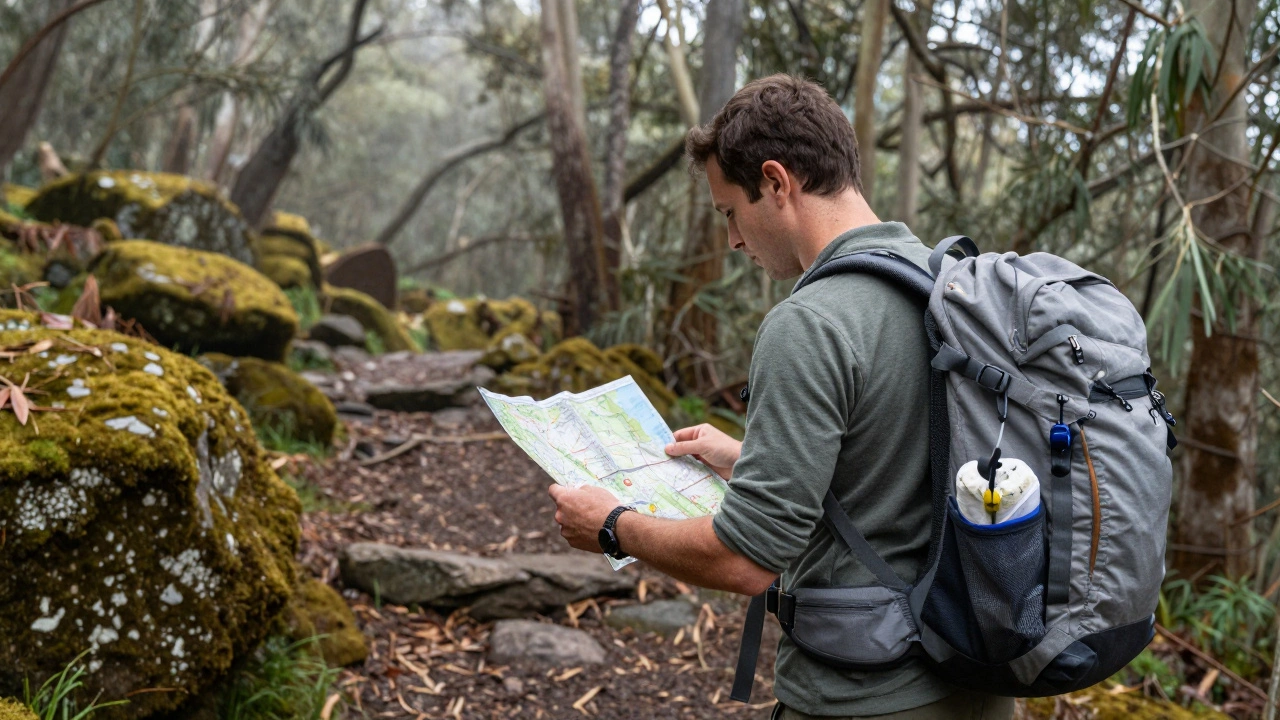
When you step outside for a hike, a bike ride, or a weekend camping trip, what’s the one thing that makes the difference between a great day and a disaster? It’s not the gear. It’s not the trail map. It’s not even the weather forecast. It’s safety. Not the kind of safety you think about once, then forget. Real safety. The kind that sticks with you before you leave the house, through every step of the trip, and long after you get back.
People talk about gear a lot. New boots, fancy backpacks, waterproof jackets. But I’ve seen too many well-equipped hikers get into trouble because they didn’t stop to think about what could go wrong. A sudden storm. A twisted ankle. Getting lost because the trail marker faded. These aren’t rare accidents. They happen every weekend in parks around Melbourne, in the Dandenongs, the Grampians, even in the city’s own Royal Botanic Gardens.
Here’s the truth: the most important thing in outdoor activities is knowing how to manage risk. Not avoiding it entirely - that’s impossible - but having a plan when things shift. That means checking the forecast, not just for rain, but for wind gusts, heat index, and sudden temperature drops. It means telling someone where you’re going and when you’ll be back. It means carrying a basic first aid kit, even if you’re only heading out for an hour. And it means knowing when to turn around.
I remember a friend who insisted on climbing Mount Donna Buang last winter. The weather app showed a 20% chance of rain. He didn’t check the Bureau of Meteorology’s detailed alpine forecast. By midday, the cloud cover dropped to zero visibility. No trail markers. No phone signal. He was fine - he had a whistle, a thermal blanket, and had told his partner his route. That’s what safety looks like: small habits that add up.
Preparation Isn’t Just Packing a Backpack
Preparation isn’t about how many snacks you pack or whether your water filter is the latest model. It’s about understanding your limits. If you’ve never hiked more than five kilometers, don’t try a 15-kilometer loop with 800 meters of elevation on your first try. That’s not bravery - it’s a recipe for exhaustion, injury, or worse.
Start with trails that match your fitness. Use apps like AllTrails or the Parks Victoria website to read recent trail reports. Look for comments like “slippery after rain” or “trail overgrown.” These aren’t warnings - they’re real-time data from people who just walked it. If three people mention the same issue, it’s not a fluke. It’s a pattern.
And don’t ignore the basics. A fully charged phone doesn’t help if you’re in a valley with no signal. A power bank is useless if you forget to charge it. Always carry a paper map - even a simple one - and know how to read it. GPS fails. Batteries die. Maps don’t.
Weather Is Not a Suggestion
People treat weather like a recommendation: “It might rain, so bring a jacket.” That’s not how it works. Weather is a condition you adapt to - or avoid. In Victoria, temperatures can swing 15 degrees in a single afternoon. Wind can pick up fast on ridgelines. Heatstroke isn’t just for deserts. I’ve seen people collapse on the trails near Mount Baw Baw in early spring because they thought “cool” meant comfortable.
Check the forecast for your exact location, not the nearest city. The Bureau of Meteorology has hyperlocal forecasts for parks and mountain areas. Look for “apparent temperature,” not just air temperature. That includes wind chill and humidity. If the forecast says “feels like 3°C” and you’re wearing a t-shirt? You’re already behind.
Carry layers. Not three shirts. One moisture-wicking base layer, one insulating mid-layer, and one wind- and water-resistant shell. That’s all you need. Too many layers trap sweat. Too few leave you cold. The right mix keeps you dry and stable.
Know Your Limits - and When to Quit
One of the biggest mistakes people make is pushing through discomfort. A sore knee? Keep going. A headache from dehydration? Push harder. A feeling that something’s off? Ignore it. That’s how accidents happen.
There’s a simple rule I follow: if you’re asking yourself whether you should turn back, you already should. That hesitation? It’s your body’s alarm system. Listen to it. You can always come back tomorrow. You can’t undo a broken leg or heatstroke.
Learn the signs of hypothermia, dehydration, and altitude sickness - even if you’re not climbing mountains. Hypothermia can happen at 15°C if you’re wet and windy. Dehydration doesn’t always mean thirst. It can mean confusion, dizziness, or sudden fatigue.
Carry electrolyte tablets or even a pinch of salt and sugar in a small bag. A quick fix for early signs of imbalance can keep you moving safely.
Group Dynamics Matter More Than You Think
If you’re going with others, safety isn’t just about you. It’s about the group. One person falling behind. One person ignoring the trail. One person saying “I’m fine” when they’re clearly not.
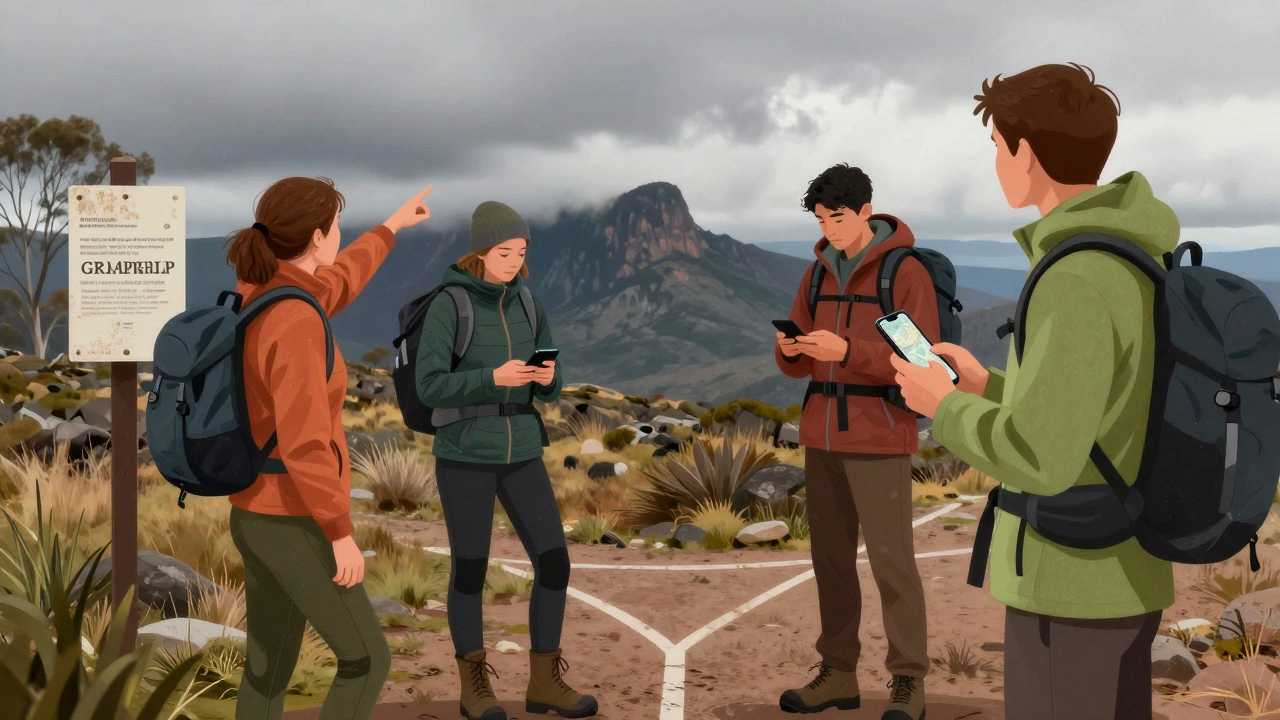
Set a pace everyone can keep. Don’t let the fastest person set the rhythm. Wait at trail junctions. Use a buddy system - even in a group of four, pair up. If someone gets hurt, one person stays with them, the other goes for help. Never split up unless you have a plan.
And always, always, tell someone not on the trip where you’re going and when you expect to return. Text them when you’re back. If they don’t hear from you, they’ll know to call for help. That simple step has saved lives in the Dandenongs, the Otways, and the High Country.
What You Carry Matters - But Not What You Think
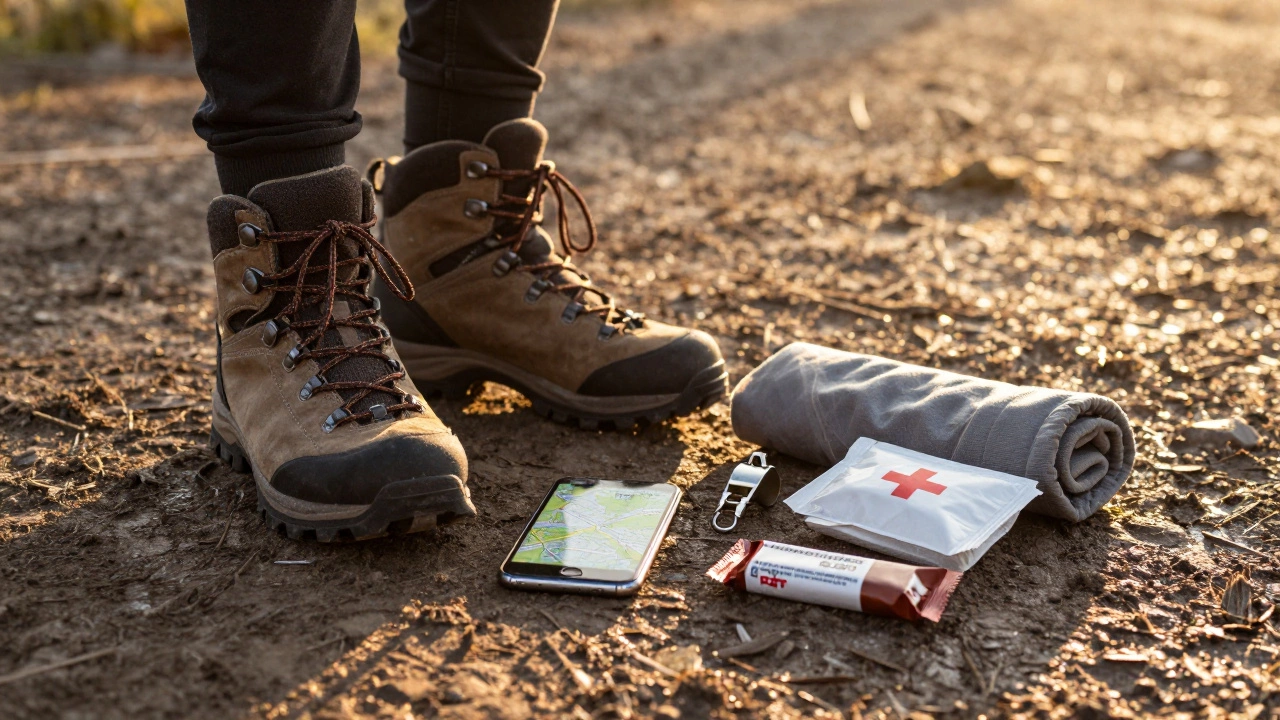
You don’t need a survival kit with 20 items. You need five essentials:
- A fully charged phone (with offline maps downloaded)
- A lightweight emergency blanket (they weigh less than a bar of soap)
- A whistle (louder than yelling, uses no batteries)
- A small first aid kit with blister pads, antiseptic wipes, and pain relievers
- Extra food - not snacks. A protein bar or trail mix that lasts 2+ hours if you’re delayed
That’s it. No compass if you have a map. No fire starter if you’re not camping overnight. Keep it light. Keep it simple. Keep it in a pocket you can reach without stopping.
It’s Not About Adventure - It’s About Coming Home
Outdoor activities are supposed to be fun. Not risky. Not heroic. Just enjoyable. The most important thing isn’t how far you went, how high you climbed, or how many photos you posted. It’s that you came back. Whole. Alert. Ready to do it again.
Safety isn’t boring. It’s smart. It’s the quiet confidence that comes from knowing you’ve thought ahead. It’s the peace of mind that lets you enjoy the view, the breeze, the silence - without wondering if you’re one wrong step away from trouble.
So next time you lace up your shoes, ask yourself: What’s the one thing I’m not ready for? Then fix it before you go.