

Musical Viewership & Revenue Comparator
Select a metric to visualize how different musicals perform. Note that high revenue does not always equal high viewership.
You might think The Lion King is the king of the box office because it made more money, but if we are talking about sheer volume-how many human eyes actually sat in a dark room and watched it-the answer changes completely. The title of the most watched musical ever belongs to Andrew Lloyd Webber's The Phantom of the Opera, which has been seen by over 145 million people worldwide since its debut.
This distinction matters because "watched" and "grossed" are two different metrics. One measures reach; the other measures wallet share. As someone who spends way too much time analyzing theatre data from Melbourne to New York, I can tell you that understanding this difference helps you appreciate why certain shows survive while others vanish after one season. If you're trying to figure out what makes a musical truly universal, or if you just want to brag at your next dinner party, here is the breakdown of the numbers, the history, and the few contenders that might steal the crown.
The Undisputed Champion: The Phantom of the Opera
Let’s get the big number out of the way first. Since opening on London’s West End in 1986 and Broadway in 1988, The Phantom of the Opera is a romantic musical composed by Andrew Lloyd Webber with lyrics by Charles Hart and Richard Stilwell. It didn’t just run for a long time; it ran for an impossibly long time. By the time it closed its original Broadway production in April 2023, it had played nearly 14,000 performances.
Why so many viewers? Simple math. A show running seven times a week for 35 years accumulates audiences faster than any touring production or film adaptation. While movies have billions of views, they are passive. Theatre requires commitment. You buy a ticket, you sit down, you watch. That theatre audience is counted differently. The 145 million figure includes ticket sales across all international productions, not just Broadway and the West End. From Tokyo to Toronto, if there was a chandelier falling, people were watching it.
Is it still running? Yes, but the landscape has shifted. The original Broadway production ended, but new revivals and tours keep the number ticking up. However, the rate of growth has slowed compared to its peak in the 1990s. This raises a valid question: Can anything catch up?
The Closest Rival: Cats
If Phantom is the marathon runner, Cats is the sprinter who kept going forever. Based on T.S. Eliot’s poetry collection, Cats held the record for the longest-running show on Broadway before Phantom surpassed it in 2006. Before that, it dominated the late 80s and early 90s.
Cats attracted roughly 74 million viewers during its initial run. That is half of Phantom’s total, but remember, Cats ran for 18 years on Broadway compared to Phantom’s 35. When you adjust for time, Cats was arguably more efficient at pulling crowds per year. It relied heavily on spectacle and family appeal, making it a staple for school trips and tourist itineraries. Even today, Cats tours constantly, adding millions to its tally, though it hasn't reached the cumulative heights of Webber’s ghost story.
The Modern Contender: Hamilton
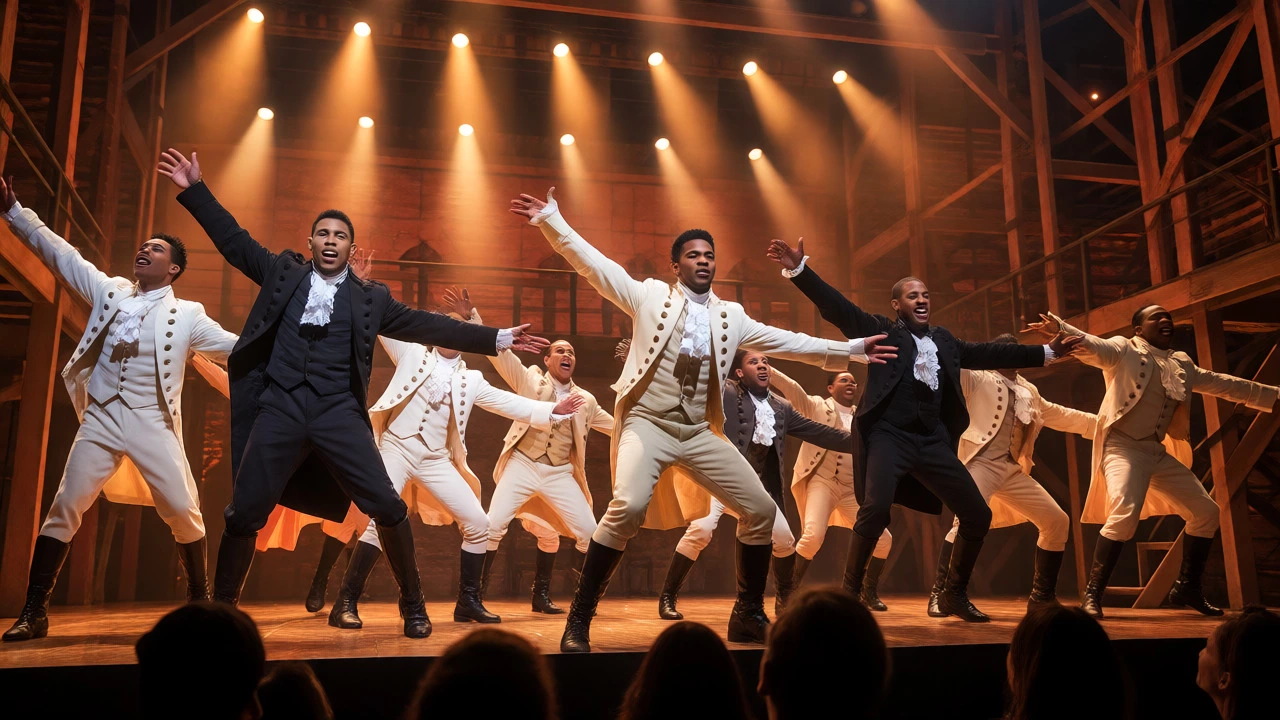
Here is where things get interesting for younger readers. Hamilton is often cited as the biggest musical of the current era. Lin-Manuel Miranda’s hip-hop biography of Alexander Hamilton broke every social media metric in existence. But does it have the raw viewer count of Phantom? Not yet.
As of late 2025, Hamilton has been seen by approximately 15-20 million people live. Compare that to Phantom’s 145 million, and you see the gap. Why? Because Hamilton started in 2015. It simply hasn’t had the time. To beat Phantom, Hamilton would need to maintain its current popularity levels for another 30 years without a drop-off. Given how fast cultural trends change, that is a steep hill to climb. However, Hamilton has a massive advantage: streaming. The Disney+ release added hundreds of millions of views, but those don’t count toward the "most watched musical" title in the traditional theatrical sense. We are talking about stage views.
Budget vs. Box Office: The Lion King Paradox
You might be wondering, "Isn't The Lion King bigger?" Financially, yes. The Lion King has grossed more revenue globally than almost any other stage production. It sells out stadiums and arenas with ease. Its puppetry and branding make it a global phenomenon that transcends language barriers.
But in terms of pure attendance numbers, it trails behind Phantom. Why? Partly due to ticket pricing strategies. Lion King often commands higher average ticket prices, meaning fewer tickets sold for the same dollar amount. Also, Lion King opened in 1997, eight years after Phantom. In the theatre world, an eight-year head start is a lifetime. By the time Lion King hit its stride, Phantom had already cemented itself as a must-see event.
| Musical | Debut Year | Estimated Live Viewers | Status |
|---|---|---|---|
| The Phantom of the Opera | 1986 | 145,000,000+ | Active (Tours/Revivals) |
| Cats | 1981 | 74,000,000+ | Active (Tours) |
| Les Misérables | 1985 | 60,000,000+ | Active (Global) |
| The Lion King | 1997 | 50,000,000+ | Active (Global) |
| Wicked | 2003 | 30,000,000+ | Active (Global) |
| Hamilton | 2015 | 20,000,000+ | Active (Broadway/Tours) |
Why Les Misérables Matters
We cannot ignore Les Misérables. It is the third pillar of the mega-musical trinity alongside Phantom and Cats. With over 60 million viewers, it holds a solid position. What makes Les Mis unique is its adaptability. Unlike Phantom, which relies heavily on specific set pieces like the chandelier, Les Mis can be staged in smaller venues with simpler sets. This allows it to penetrate markets that Phantom might skip.
In Australia, for example, Les Mis tours regularly to regional centres, whereas Phantom usually sticks to major capital cities like Sydney and Melbourne. This wider geographic reach contributes significantly to its total viewer count. If you are looking for a musical that has truly traveled everywhere, Les Mis is a strong candidate for the "most widely seen" award, even if Phantom wins on total aggregate numbers.
How Do They Count Viewers?
It is not always exact. There is no central database that logs every single ticket stub from every village hall performance. Estimates come from producers, unions, and industry reports like those from the Society of London Theatre or the Broadway League.
- Ticket Sales: The primary method. Producers report sold seats.
- Capacity Assumptions: For older shows where records are lost, analysts use average capacity multiplied by the number of performances.
- Audience Turnover: Some shows allow re-entry or have high turnover rates, which can skew counts slightly.
- International Variance: Reporting standards differ between countries. A sold-out show in Shanghai might be reported differently than one in Sheffield.
Because of these variables, treat the 145 million figure for Phantom as a highly accurate estimate rather than a precise census. Still, the margin of error isn't large enough to let Cats or Lion King catch up anytime soon.

Will Anything Break the Record?
For a new show to beat Phantom, it needs three things: longevity, broad appeal, and consistent demand. Hamilton has the buzz, but sustaining interest for decades is hard. Wicked is doing well, but it lacks the historical footprint of the 80s giants.
Consider Dear Evan Hansen or Six. These are popular, but their runs are shorter. The trend in modern theatre is towards shorter runs with higher frequency of new openings. The era of the 20-year uninterrupted Broadway run is ending. Instead, we see limited engagements and national tours. This model generates money quickly but doesn't accumulate viewers at the same slow, steady pace as Phantom did in its prime.
Unless a new musical becomes a permanent fixture in theme parks or educational curricula worldwide, Phantom’s record looks safe for the next 20 years. It benefited from a golden age of theatre tourism that hasn't fully returned post-pandemic.
Key Takeaways
- The Winner: The Phantom of the Opera is the most watched musical ever with ~145 million live viewers.
- The Runner-Up: Cats follows with ~74 million viewers.
- The Money Maker: The Lion King earns more revenue but has fewer total viewers (~50 million).
- The Modern Hit: Hamilton is hugely popular but has only ~20 million live viewers due to its recent start.
- The Metric: "Most watched" refers to live theatre attendance, not film or streaming views.
Frequently Asked Questions
Does movie adaptations count towards the most watched musical?
No. When theatre historians talk about the "most watched musical," they strictly mean live stage performances. Movie adaptations, like the 2012 Les Mis film or the Phantom movie, add hundreds of millions of viewers, but they are categorized separately under cinema. Including them would distort the comparison between stage works.
Why did The Phantom of the Opera close on Broadway?
It closed in April 2023 due to rising operational costs and declining ticket sales relative to newer hits. Maintaining a 35-year-old production is expensive. While it remains profitable in tours and international markets, the Broadway venue became less economically viable compared to launching new shows.
Is Wicked more popular than Hamilton?
In terms of total viewers, yes. Wicked has been running longer (since 2003) and has accumulated more than double the live audience of Hamilton. However, Hamilton generated more immediate cultural impact and social media engagement upon its release. Popularity depends on whether you measure by total reach or cultural intensity.
Can a new musical beat Phantom's record?
It is unlikely in the near future. The theatre business model has shifted away from ultra-long runs. Most successful new shows aim for 5-10 years before closing or moving to touring. To beat 145 million, a show would need unprecedented longevity and consistent sell-outs for decades, which is rare in today's fast-paced entertainment market.
Which musical has the highest grossing revenue?
The Lion King typically holds the top spot for highest grossing revenue globally, followed closely by Wicked and Hamilton. Revenue differs from viewership because ticket prices vary significantly. Lion King charges premium prices, generating more cash per viewer than some older classics.