
Diverse Casting Simulator
Explore how casting diverse actors as historical figures reimagines America's founding story. Inspired by Hamilton's revolutionary approach.
Select a Historical Figure
Select an Actor
Results
Select a historical figure and actor to see how this casting reimagines America's story.
Hamilton didn’t just become a hit-it became a phenomenon. When it opened off-Broadway in 2015, no one expected a rap-heavy retelling of America’s founding fathers to break box office records, win 11 Tony Awards, and inspire a nationwide obsession. But here we are. Six years later, it’s still selling out, streaming on Disney+, and being taught in high school history classes. So what makes Hamilton so popular? It’s not just one thing. It’s a mix of bold storytelling, cultural timing, and a sound that changed musical theatre forever.
It Rewrote the Rules of Musical Theatre
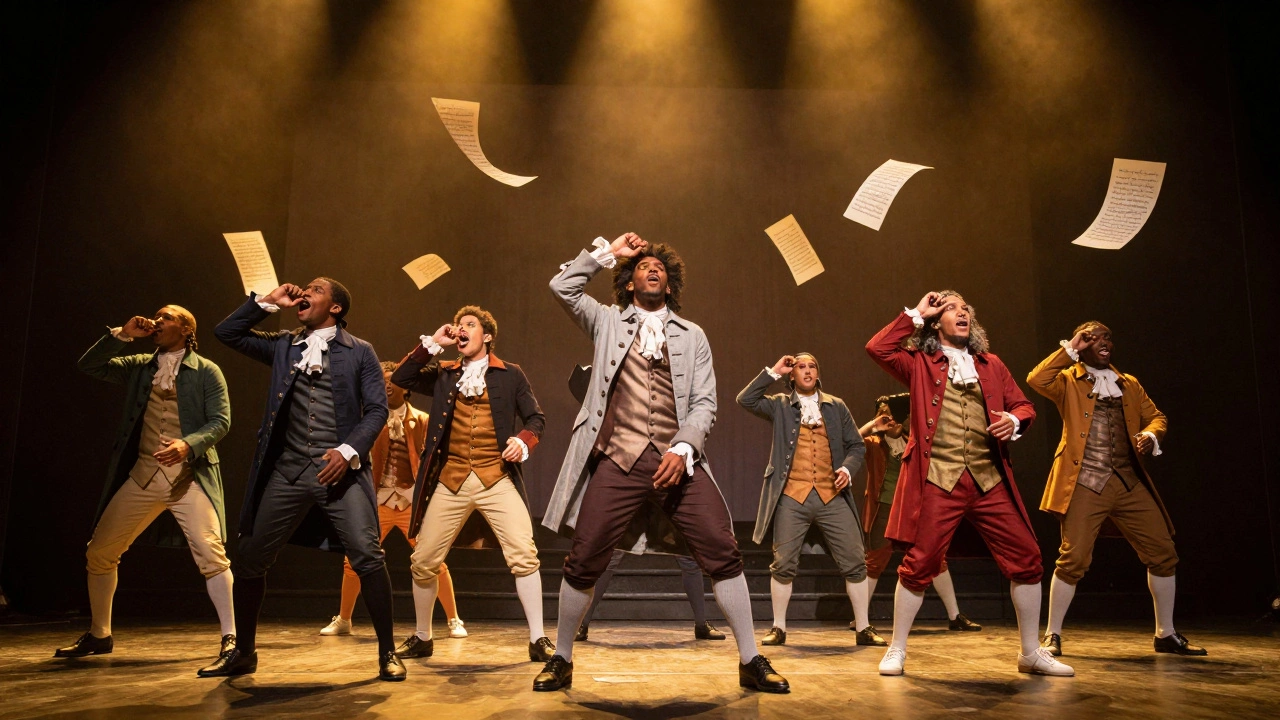
Before Hamilton, most Broadway shows stuck to traditional formulas: big orchestras, ballads, and characters who sang like opera singers. Hamilton threw that out. Instead, it used hip-hop, R&B, pop, and jazz to tell the story of Alexander Hamilton, America’s first Treasury Secretary. The lyrics moved like rap battles-fast, dense, and packed with wordplay. Songs like "My Shot" and "Cabinet Battle #1" turned political debates into high-energy performances. You didn’t need to know the history to feel the rhythm. The music made history feel alive.
Lin-Manuel Miranda didn’t just write the show-he reimagined how a musical could sound. He proved that a cast rapping about tariffs and debt could be just as emotional as a soprano singing a love ballad. The show’s score is now studied in music schools. College students analyze its rhyme schemes like poetry. It wasn’t just entertainment-it was innovation.
The Casting Changed Everything
Hamilton’s cast is made up almost entirely of Black, Latino, and Asian actors playing white historical figures. At first, that choice seemed like a gimmick. But it wasn’t. It was a statement. By casting people of color as the founders of America, the show forced audiences to ask: Who gets to own history? Who gets to be a hero?
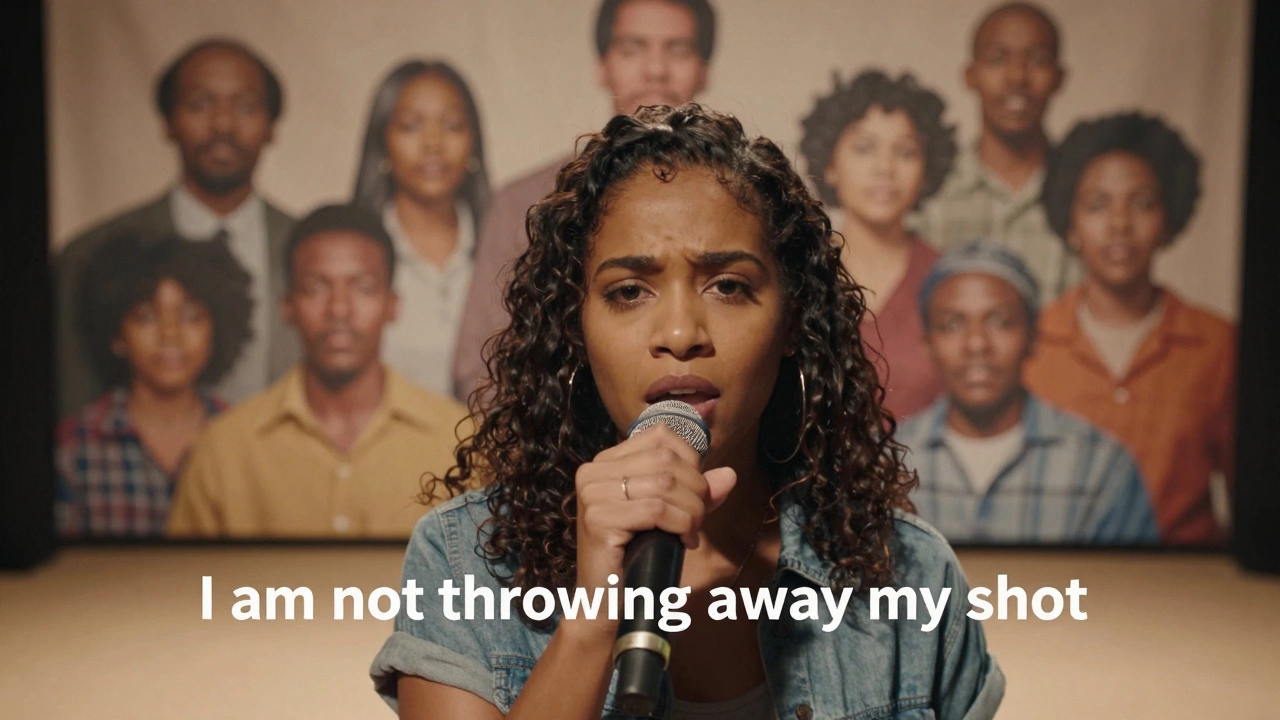
The decision wasn’t just symbolic-it was practical. It opened the door for talent that had long been ignored on Broadway. It made the story feel urgent and modern. When a Black actress sings "I am not throwing away my shot," it lands differently than if a white actor sang it. The casting didn’t distract from history-it recentered it around the people who were left out of it.
This wasn’t just diversity for the sake of it. It was a deliberate act of reclamation. The show said: This is your story too. And audiences responded because it felt true.
The Story Wasn’t Just About History-It Was About Ambition
Hamilton’s story isn’t about battles or treaties. It’s about a man who came from nothing and refused to stay there. Alexander Hamilton was an immigrant. He was poor. He was brilliant. He worked himself up from nothing. That’s not just American history-that’s a universal story.
People see themselves in Hamilton because his drive feels familiar. In a world where so many feel stuck, his relentless hustle speaks to anyone who’s ever worked two jobs, stayed up late studying, or fought to be heard. The show doesn’t glorify him-it shows his flaws. His pride. His temper. His mistakes. But it never lets you forget why he mattered.
That’s why it resonates beyond Broadway. A teenager in Ohio, a nurse in Texas, a student in Manila-they all find something in Hamilton that feels personal. It’s not about the past. It’s about the fight to build something better.
The Soundtrack Became a Cultural Event
Before Hamilton, musical theatre soundtracks rarely topped the Billboard charts. Hamilton changed that. The original cast recording hit #1 on the Billboard Rap Albums chart. That’s never happened before. It stayed in the Top 10 for months. People who never set foot in a theatre were singing "Wait for It" on TikTok. High school choirs performed "The Schuyler Sisters" at talent shows. College a cappella groups covered "Helpless".
The music didn’t just support the show-it became the show. You didn’t need to see Hamilton to know it. The soundtrack was the gateway. And once you heard it, you wanted to know more. The lyrics were so sharp, so layered, that people listened over and over, discovering new references each time. It turned listeners into historians.
Even now, five years after its debut, the soundtrack still gets millions of streams every month. That kind of staying power doesn’t happen by accident.
It Turned History Into a Conversation
Hamilton didn’t just tell a story-it started a debate. Teachers started using it in classrooms. History professors debated whether it was accurate. Critics argued about how it portrayed slavery, Thomas Jefferson, and Aaron Burr. But that’s the point. The show didn’t want you to accept history as fact. It wanted you to question it.
For the first time, a Broadway show made history feel personal, messy, and alive. It didn’t give you answers. It gave you questions. Who gets remembered? Who gets erased? Who gets to write the story?
That’s why Hamilton is still talked about today. It’s not just a musical. It’s a mirror. And people keep looking into it because they keep seeing themselves in it.

The Timing Was Perfect
Hamilton opened in 2015, right after the Black Lives Matter movement gained national attention. It was a time when people were asking hard questions about race, power, and who gets to be a hero in American history. The show arrived like a lightning bolt. It didn’t just reflect the moment-it shaped it.
At the same time, social media was exploding. Fans could share clips, lyrics, and reactions instantly. The show’s creators leaned into that. They released the soundtrack early. They encouraged fan covers. They made the show feel like a community project, not just a product.
And then, in 2020, Disney+ released the filmed version of the original cast. Suddenly, millions who’d never seen it live could watch it from their couches. It became the most-watched show on the platform. For a few weeks, it was the only thing people talked about.
Hamilton didn’t just ride the wave of culture-it helped create it.
It Made Theatre Feel New Again
Before Hamilton, many people thought theatre was for older audiences or rich elites. Hamilton changed that. It was loud. It was fast. It was young. It didn’t ask you to sit quietly. It demanded you move with it.
Ticket prices went up. But so did demand. People who’d never been to Broadway bought tickets. Teens brought their parents. Grandparents brought their grandchildren. It became a shared experience across generations.
And it proved that theatre could be relevant again. You don’t need fancy costumes or slow ballads to make people care. You just need a story that matters-and a way to tell it that feels real.