
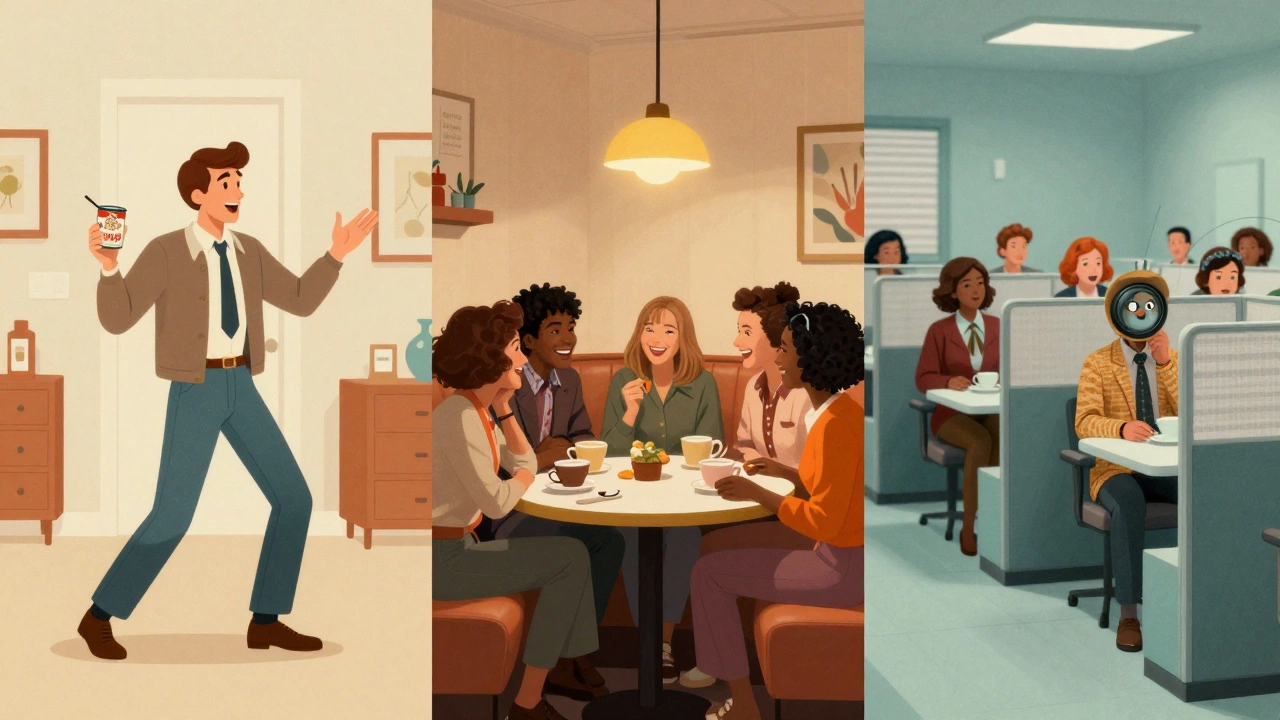
Sitcom Royalty: Who Holds the Crown?
Select the show that best resonates with your sense of humor, or take the quick poll below to see where you stand.
Seinfeld
The Show About Nothing
For those who love sharp wit, social infractions, and characters who don't learn lessons.
Friends
The Cultural Phenomenon
For fans of emotional connection, iconic catchphrases, and hanging out in Central Perk.
The Office (US)
Modern Mockumentary
For lovers of awkward silences, workplace dynamics, and relatable human flaws.
Frasier
Critical Darling
For those who appreciate high-brow humor, clever dialogue, and artistic merit.
I Love Lucy
Historical Pioneer
For fans of universal themes, slapstick humor, and TV history foundations.
Your Sitcom Match:
Ask ten people what the best sitcom ever is, and you’ll likely get ten different answers. Some will swear by the couch-bound chaos of Friends, a 1990s American sitcom centered on six friends living in New York City. Others will defend the "show about nothing" that changed television forever. And then there are those who argue that modern workplace comedies have surpassed their predecessors in wit and character depth.
The debate isn’t just about nostalgia; it’s about what makes a sitcom work. Is it the laugh track? The ensemble cast? The way it captures a specific era of culture? Defining the "best" requires looking at ratings, cultural impact, critical acclaim, and longevity. Let’s break down the heavyweights to see who truly deserves the title.
The Case for Seinfeld: The Show About Nothing
If we’re talking about influence, Seinfeld, created by Jerry Seinfeld and Larry David, stands alone. Premiering in 1989, it didn’t just entertain; it reinvented the genre. Before Seinfeld, sitcoms were often moralistic or family-centric. Seinfeld gave us characters who were largely unlikable, selfish, and petty-and we loved them for it.
The show’s genius lies in its structure. It treated mundane observations-like double-dipping a chip or standing in line-as high-stakes drama. This approach, known as observational humor, resonated deeply because everyone recognizes these tiny social infractions. By the time it ended in 1998, it was the most-watched show on television, pulling in over 76 million viewers for its finale. That number is staggering even by today’s standards, where audiences are fragmented across streaming platforms.
Critically, it holds up too. It introduced the concept of the "no hugging, no learning" rule, which meant characters didn’t grow morally from episode to episode. They stayed stuck in their ways, creating endless comedic potential. This structural innovation influenced countless shows that followed, proving that comedy doesn’t need heartwarming lessons to be successful-it just needs sharp writing.
Friends: The Cultural Phenomenon
While Seinfeld deconstructed the sitcom, Friends perfected the ensemble dynamic. Running from 1994 to 2004, it became a global brand. You don’t need to watch TV to know who Ross, Rachel, Monica, Chandler, Joey, and Phoebe are. Their names are part of the global lexicon.
What made Friends the best for many viewers was its emotional core. Unlike Seinfeld’s cynicism, Friends offered warmth. It captured the transition from college life to adulthood, dealing with breakups, career struggles, and finding your place in the world. The chemistry between the six leads was undeniable, creating a sense of intimacy that made viewers feel like they were hanging out in Central Perk themselves.
From a commercial standpoint, it’s hard to beat. The finale drew 52.5 million viewers, but more importantly, it spawned an entire industry of merchandise, theme park attractions, and endless memes. It defined 90s fashion and music. If "best" means "most culturally pervasive," Friends has a strong claim. It wasn’t just a show; it was a shared experience for millions of people worldwide.
The Modern Contenders: The Office and Parks and Recreation
As we moved into the 2000s, the style of comedy shifted. The multi-camera setup with live audiences gave way to single-camera mockumentary styles. The Office (US), based on the British original, led this charge. Aired from 2005 to 2013, it brought a new kind of realism to sitcoms. There were no punchlines shouted over laughter; instead, there were awkward silences and cringe-worthy moments that felt painfully real.
The Office succeeded because it humanized the workplace. We’ve all had a boss like Michael Scott or a coworker like Dwight Schrute. The show balanced absurdity with genuine emotion, particularly in relationships like Jim and Pam. Its success proved that audiences could connect with flawed, ordinary people in boring settings. It also revitalized interest in office dynamics, leading to spin-offs and imitators globally.
Similarly, Parks and Recreation took the mockumentary format and added optimism. While The Office leaned into cynicism, Parks and Rec celebrated public service and community. Leslie Knope became an icon of competence and enthusiasm. These shows demonstrated that the "best" sitcom could evolve beyond traditional structures while maintaining deep audience engagement.

Critical Acclaim vs. Popular Appeal
When determining the best sitcom, we must distinguish between what critics love and what audiences watch. Frasier, which ran from 1993 to 2004, won 37 Emmy Awards, making it one of the most awarded programs in television history. Critics praised its sophisticated dialogue, clever wordplay, and high production values. It appealed to an older, more affluent demographic and set a standard for verbal comedy.
However, Frasier never achieved the same mass appeal as Friends or Seinfeld. It was elite in its humor, sometimes alienating casual viewers. On the other end of the spectrum, shows like I Love Lucy dominated the 1950s with physical comedy and universal themes of marriage. While its cultural relevance has faded compared to modern hits, its technical innovations in filming techniques still influence how sitcoms are shot today.
This divide highlights a key challenge in defining "best." Do we prioritize awards and artistic merit, or do we prioritize viewership numbers and cultural staying power? A show can be critically adored but forgotten by the general public, or massively popular but dismissed by critics as lowbrow. The true best sitcom likely sits somewhere in the middle, balancing quality with accessibility.
| Sitcom | Years Active | Key Innovation | Average Viewership (Peak) | Cultural Impact |
|---|---|---|---|---|
| Seinfeld | 1989-1998 | Observational humor, anti-hero characters | ~76M (Finale) | Redefined sitcom structure |
| Friends | 1994-2004 | Ensemble chemistry, global branding | ~52M (Finale) | Defined 90s pop culture |
| The Office (US) | 2005-2013 | Mockumentary style, cringe comedy | ~15M (Regular) | Revitalized workplace comedy |
| Frasier | 1993-2004 | Sophisticated dialogue, high-brow humor | ~20M (Peak) | Most awarded sitcom in history |
Why I Love Lucy Still Matters
We cannot discuss the best sitcom without acknowledging I Love Lucy. Debuted in 1951, it was revolutionary not just for its comedy, but for its business model. Lucille Ball and Desi Arnaz owned the syndication rights, creating a revenue stream that allowed the show to remain profitable for decades after its initial run. This financial model paved the way for modern television economics.
Technically, it was ahead of its time. Using three cameras simultaneously allowed for naturalistic acting and editing, rather than the stiff, stage-play feel of earlier sitcoms. Lucy Ricardo’s physical comedy transcended language barriers, making it accessible to international audiences long before dubbing was common. While its themes may feel dated to some modern viewers, its foundational role in television history is undeniable. It taught the industry how to make money and how to film comedy effectively.

The Role of Streaming in Reviving Classics
In 2026, the definition of "best" is being reshaped by streaming services. Shows like Better Call Saul (though a dramedy) and Ted Lasso have found massive second lives online. But for traditional sitcoms, streaming has allowed younger generations to discover classics. Netflix’s algorithm often pushes Friends and The Office to new audiences who might never have seen them on broadcast TV.
This accessibility changes the conversation. A show doesn’t need to dominate weekly ratings anymore; it just needs to remain relevant in the cultural zeitgeist through clips, memes, and binge-watching sessions. The Office, for example, saw a surge in popularity years after it ended, driven by its availability on Peacock and other platforms. This longevity suggests that the "best" sitcom is one that continues to entertain decades later, not just during its original run.
How to Judge Your Favorite
So, which one is actually the best? It depends on what you value. If you want sharp, intellectual humor that challenges social norms, Seinfeld is your pick. If you crave comfort, friendship, and iconic catchphrases, Friends wins. For relatable workplace anxiety and character-driven stories, The Office takes the crown. And if you appreciate historical significance and technical mastery, I Love Lucy remains unmatched.
There is no single objective answer. The best sitcom is the one that resonates with your personal experiences and sense of humor. However, if forced to choose based on a combination of innovation, viewership, and lasting cultural impact, Seinfeld and Friends stand as the twin pillars of the genre. They changed how we watch TV, and they continue to shape how comedy is written today.
Is Seinfeld really the best sitcom ever?
Seinfeld is widely considered the best due to its innovative "show about nothing" concept and massive ratings success. It redefined sitcom structure by focusing on observational humor and unlikable characters, influencing countless shows that followed. While subjective, its cultural footprint and critical acclaim support this claim.
Why do people think Friends is the best sitcom?
Friends is often cited as the best because of its immense global popularity and emotional resonance. The chemistry between the six main characters created a warm, relatable dynamic that appealed to a wide audience. Its cultural impact, including fashion, music, and phrases entering everyday language, solidifies its status.
Does The Office (US) deserve to be in the top 3?
Yes, The Office (US) is a top contender due to its unique mockumentary style and enduring popularity. It brought a new level of realism and cringe comedy to television, resonating with viewers through relatable workplace scenarios. Its continued growth in streaming viewership demonstrates its lasting appeal.
What makes I Love Lucy historically significant?
I Love Lucy is historically significant for its technical innovations, such as using three cameras for filming, and its business model, where Lucille Ball and Desi Arnaz owned the syndication rights. This allowed the show to generate revenue for decades, setting a precedent for modern television economics.
How does streaming affect which sitcom is considered the best?
Streaming allows older sitcoms to reach new audiences, extending their lifespan and cultural relevance. Shows like The Office and Friends gain new fans through binge-watching and social media clips, challenging traditional metrics like weekly ratings. This shifts the definition of "best" toward longevity and ongoing engagement.