
Hamilton Ticket Cost Breakdown Calculator
Understand the real costs behind Broadway's biggest hit. Input a face value price to see how production overhead, royalties, and resale markups impact the final cost.
You click "Buy Now" for a show at the Richard Rodgers Theatre, and your heart sinks. A single seat in the orchestra isn't just $100 or $200. It’s often double that, sometimes triple. For a production that has been running since 2015, you might wonder: why are Hamilton tickets so expensive? Is it just greed? Or is there actual math behind the madness?
It’s not one thing. It’s a perfect storm of massive demand, high production costs, and a secondary market that thrives on scarcity. To understand the price tag, you have to look under the hood of Broadway economics.
The Demand Side: More Fans Than Seats
First, let’s talk about supply and demand. This is the oldest rule in economics, and it applies heavily here. Hamilton is a musical by Lin-Manuel Miranda that tells the story of American founding father Alexander Hamilton through hip-hop, jazz, R&B, and Broadway music. Since its debut on Broadway in August 2015, it hasn't just been popular; it has become a cultural phenomenon.
The Richard Rodgers Theatre holds roughly 1,319 seats. That number doesn’t change. But the number of people who want to see the show? That number explodes every time there is an award season, a presidential election, or even a trending TikTok video featuring a clip from the show. When millions of people compete for 1,300 seats eight times a week, prices naturally skyrocket. Basic economics dictates that when demand outstrips supply, the price goes up to balance the scale.
This isn't unique to Hamilton, but the intensity is higher because the audience skews younger and more digitally connected than traditional Broadway crowds. These fans don't just buy tickets; they hunt them. They refresh pages. They set alerts. This hyper-active buyer pool ensures that almost no ticket goes unsold at face value for long.
The Cost of Production: It’s Not Just Singing
People often think of a musical as just actors singing songs. In reality, it is a complex industrial operation. Producing a show like Hamilton requires a massive upfront investment and ongoing daily expenses that far exceed those of a standard play.
- Talent: You aren't paying for just any cast. You are paying for actors who can sing, dance, rap, and act simultaneously at a professional level. The lead roles command top-tier salaries. Plus, the ensemble is large, requiring rigorous training and rehearsal time.
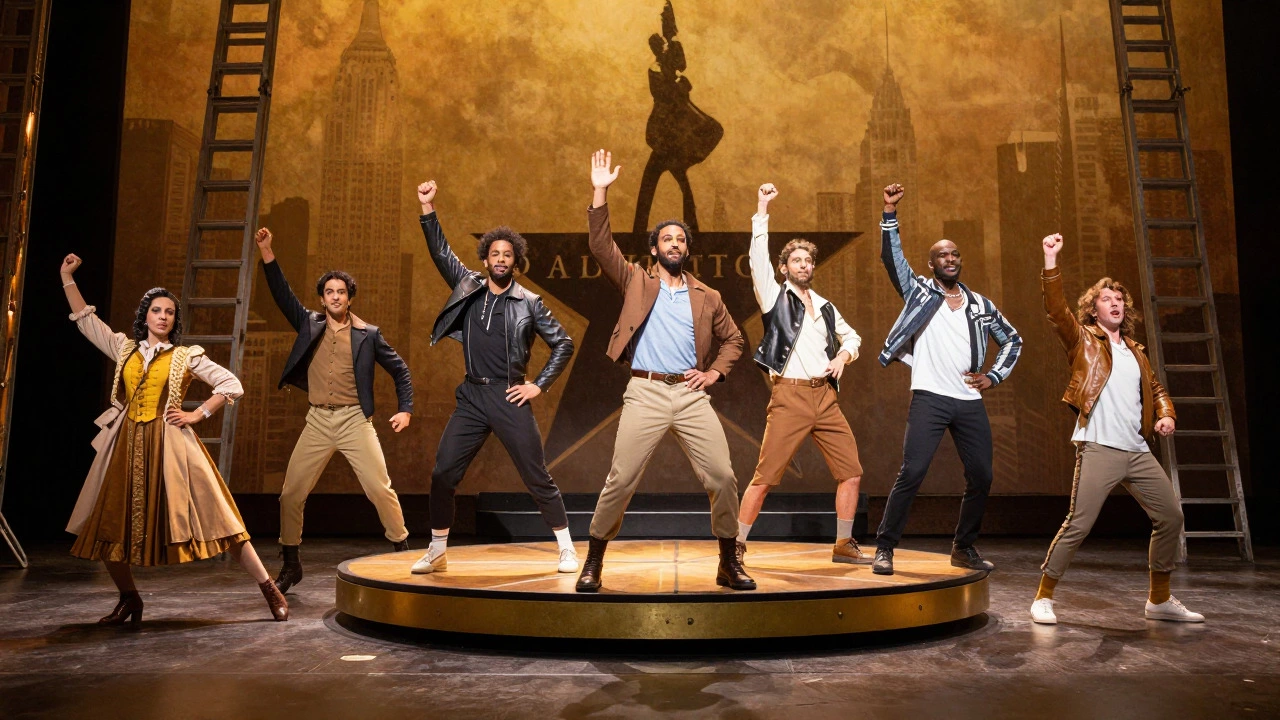
- Technical Complexity: The stage features a rotating turntable and a ladder system that moves constantly. Maintaining these mechanical systems requires specialized engineers and technicians working around the clock. If the turntable stops, the show stops. That reliability costs money.
- Licensing and Royalties: Every time the show plays, a percentage of the gross revenue goes back to the creators, including Lin-Manuel Miranda, the producers, and the writers. This is non-negotiable contractually.
- Venue Costs: Renting a theater on Broadway (41st Street between West 46th and 47th Streets) is incredibly expensive. The Richard Rodgers Theatre lease alone is a significant monthly overhead.
To break even, a Broadway show needs to sell a certain percentage of its seats at specific price points. Given Hamilton's high fixed costs, the break-even point is higher than for smaller productions. Therefore, the base ticket prices must be set higher to cover these operational realities.
The Resale Market: Where Prices Really Spike
If you check the official box office or Ticketmaster, you will see "face value" prices. However, most buyers do not get tickets at this price. Why? Because the secondary market-also known as the resale market-has taken over.
Websites like StubHub, Vivid Seats, and SeatGeek operate like stock exchanges for events. Sellers list their tickets at whatever price the market will bear. If a Tuesday night performance has low demand, prices might drop below face value. But for Friday nights, weekends, and holidays, scalpers and bots buy up available inventory instantly after release.
These resellers know that fans are desperate. They hold onto tickets, driving up urgency. By the time you find an available seat, it is likely listed by a third party who bought it weeks ago for $150 and is now selling it for $450. This markup is pure profit for the reseller, not the theatre. It creates a perception that the show itself is expensive, when in reality, the theatre is losing out on that extra $300 per ticket.
This dynamic is exacerbated by algorithms. Resale sites use dynamic pricing models similar to Uber or airlines. As more people search for tickets, the algorithm predicts higher willingness to pay and adjusts prices upward in real-time. You are literally racing against a computer designed to extract maximum value from your desire to see the show.
Dynamic Pricing at the Box Office
Interestingly, the official box office has started mimicking the resale market. In recent years, many Broadway shows, including Hamilton, have adopted dynamic pricing. This means the price of a ticket changes based on demand, day of the week, and time until the performance.
A matinee on a rainy Wednesday might cost significantly less than a premiere-night gala. The goal is to maximize revenue by charging what people are willing to pay at that specific moment. While this helps fill seats during slow periods, it also means that "cheap" tickets are increasingly rare. The lowest-priced seats are often snapped up within minutes of going on sale, leaving only premium-priced options for latecomers.
Comparison: Face Value vs. Resale Reality
| Factor | Impact on Price | Who Benefits? | |
|---|---|---|---|
| Production Costs | High fixed costs raise base prices | Theatre & Creators | |
| Broadway Rent | Expensive venue leases increase overhead | Landlords | |
| Resale Markup | Prices can double or triple face value | Scalpers & Resellers | |
| Dynamic Pricing | Fluctuates based on demand peaks | Theatre Management |
How to See Hamilton Without Breaking the Bank
So, is seeing Hamilton impossible for the average person? No. But it requires strategy. Here are practical ways to navigate the pricing landscape:
- Use the Official Lottery: Many Broadway shows, including Hamilton, offer digital lotteries via platforms like TodayTix. For a small entry fee, you have a chance to win discounted tickets (often around $89-$100) for a specific performance. This is the most reliable way to get face-value or near-face-value seats.
- Rush Tickets: On the day of the performance, a limited number of tickets may be released at a discount. You usually need to stand in line early or check online at a specific time. These sell out fast but are priced fairly.
- Matinees and Weekdays: Demand is lower on Tuesdays, Wednesdays, and Thursday matinees. Both resale prices and dynamic box office prices tend to dip during these times.
- Be Patient with Resale Sites: If you must use a resale site, wait until closer to the performance date. Sometimes, if a section isn't selling well, resellers will drop prices to ensure they make some money rather than none. However, this is risky for peak dates.
Is It Worth It?
Despite the cost, Hamilton continues to sell out nightly. Why? Because the experience delivers value. The energy of the live performance, the intricate choreography, and the emotional resonance of the score create a memory that streaming cannot replicate. For many, it is a once-in-a-lifetime event. People are willing to pay a premium for cultural moments that feel historic.
However, understanding the economics helps manage expectations. You are not just paying for two hours of entertainment. You are paying for a highly complex machine, a star-studded cast, a prime Manhattan location, and the intense competition of thousands of other fans. The high price is a reflection of its status as the most valuable intellectual property in modern theatre.
What is the cheapest way to get Hamilton tickets?
The cheapest reliable method is entering the official digital lottery via TodayTix or checking for Rush tickets on the day of the performance. These methods offer tickets at or near face value, avoiding the massive markups found on resale websites.
Why are Hamilton tickets more expensive than other Broadway shows?
Hamilton commands higher prices due to its unparalleled demand, higher production costs involving complex staging and large casts, and its status as a cultural phenomenon. The scarcity of seats relative to the global fanbase drives up both primary and secondary market prices.
Do I have to use a resale site like StubHub?
Not necessarily. While resale sites offer immediate availability, they come with high fees and markups. Using the official box office, lotteries, or rush sales can save you hundreds of dollars, though it requires more planning and flexibility with dates.
Are Hamilton tickets worth the high price?
For most fans, yes. The show offers a unique blend of historical narrative, innovative music, and high-energy performance that is rarely matched. The live experience provides emotional impact and communal energy that recordings cannot duplicate, justifying the investment for many attendees.
When are Hamilton tickets the least expensive?
Tickets are typically least expensive during weekday matinees (Tuesday-Thursday) and during off-peak seasons like January or February. Avoiding holidays, summer vacation periods, and award seasons will also help you find lower prices on both official and resale markets.