
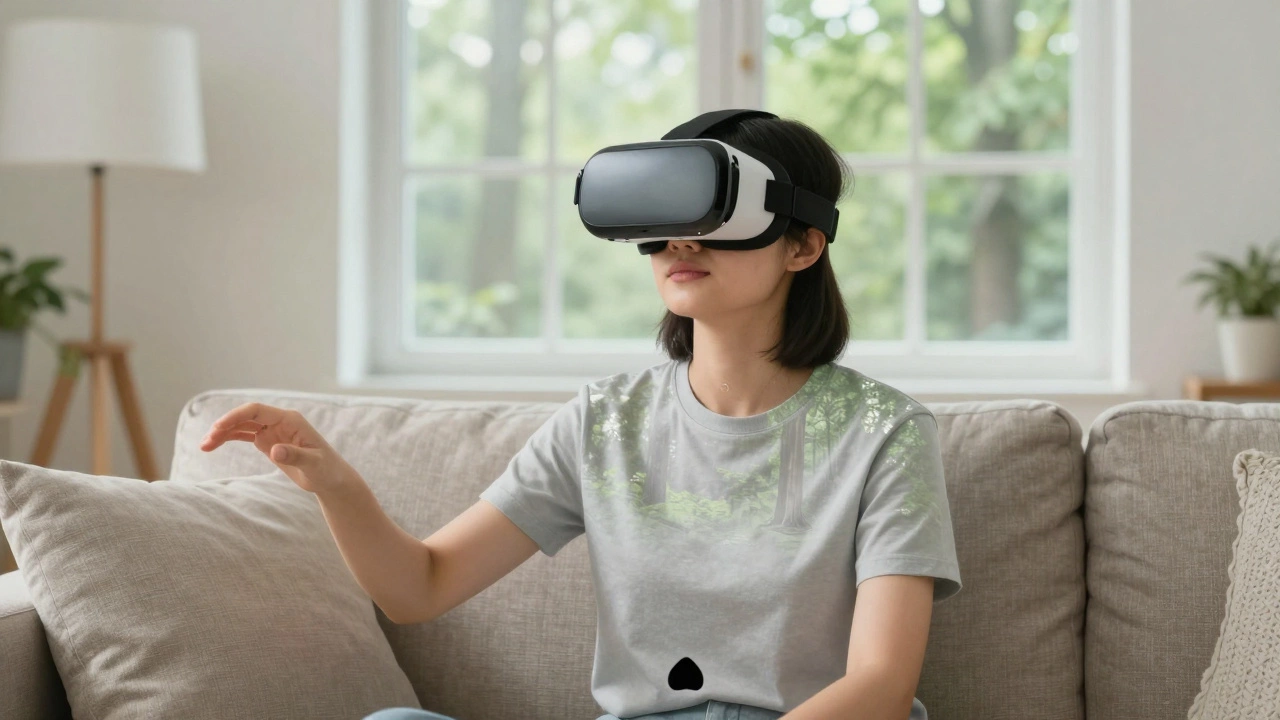
Ever put on a VR headset, started exploring a virtual world, and within minutes felt dizzy, nauseous, or like your stomach was doing backflips? You’re not alone. Millions of people experience this exact thing - and it’s not just "your body not getting used to it." There’s real science behind why VR makes you feel sick, and knowing the why helps you fix it.
What’s Actually Happening in Your Body?
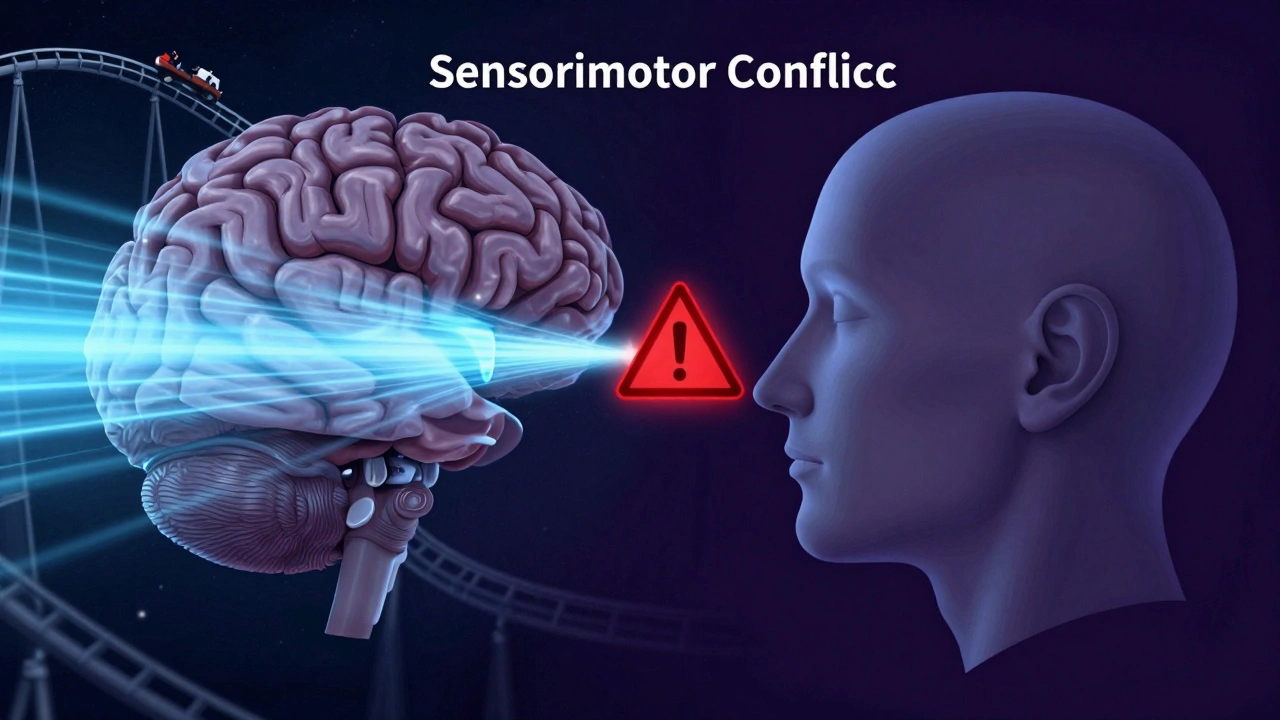
Your brain gets confused. That’s the short answer. When you’re in VR, your eyes see motion - like flying through a forest or speeding down a rollercoaster. But your inner ear (the vestibular system) and your body sensors tell your brain you’re sitting still. This mismatch between what your eyes see and what your body feels is called sensorimotor conflict. It’s the same reason some people get car sick: your eyes say you’re moving, but your body says you’re not. This confusion triggers your brain’s ancient survival system. Thousands of years ago, this kind of mismatch often meant you’d eaten something toxic. So your brain’s solution? Throw up. It’s not your fault. Your body is just overprotective.Why Some People Get Sick and Others Don’t
Not everyone reacts the same way. Some people can play VR for hours without a problem. Others feel sick after five minutes. Why? It comes down to three things: sensitivity, hardware, and experience. First, some people are just more sensitive to sensory mismatch. Studies show women and younger people tend to report VR sickness more often, though it’s not universal. Genetics likely play a role too. Second, the quality of the headset matters. Older headsets had low refresh rates (60Hz or 75Hz), which caused lag and motion blur. Modern headsets like the Meta Quest 3 or Apple Vision Pro run at 90Hz or 120Hz, which reduces the delay between head movement and screen update. Less lag = less sickness. Third, experience helps. People who’ve used VR before often adapt faster. It’s like learning to ride a bike - your brain gets better at reconciling the signals.What Makes VR Sickness Worse?
Certain VR experiences are basically designed to trigger nausea. Here’s what to watch out for:- Artificial locomotion - like using a thumbstick to move forward while sitting still. Your body says "stop," your eyes say "go."
- Wide field of view with no fixed reference - flying through space with no horizon line confuses your balance system.
- Low frame rates - anything under 90Hz feels choppy and unnatural.
- Head tracking delay - if your head turns and the image takes a half-second to catch up, your brain rebels.
- Playing in a dark room - without visual cues from your real environment, your brain has nothing to anchor to.
How to Stop Feeling Sick (Real Fixes, Not Just "Take a Break")
You don’t have to give up VR. Here’s what actually works:- Start short - 10 to 15 minutes max on your first few sessions. Build up slowly. Don’t push through discomfort.
- Use teleportation, not smooth movement - Instead of sliding around, pick a spot and instantly "jump" there. This removes the motion your body doesn’t feel.
- Add a virtual nose - Yes, really. Some games let you enable a static nose or nose-like object in your field of view. It gives your brain a fixed point to focus on, reducing the mismatch.
- Keep your real environment visible - Play in a well-lit room. If you can see your couch or a wall, your brain has a reference point. Some headsets now offer passthrough mode with a faint overlay of your real room.
- Take breaks every 20 minutes - Look away from the headset. Focus on something 20 feet away for 20 seconds. This resets your eye focus.
- Stay hydrated and avoid heavy meals - Drink water before and after. Skip greasy food or alcohol before playing.
- Try ginger or motion sickness bands - Ginger supplements or acupressure wristbands (like Sea-Bands) have helped many users. Not magic, but backed by real studies.
Is It Just in Your Head?
No. VR sickness is a real physiological reaction. It’s not laziness. It’s not "being weak." It’s your nervous system doing its job - even if it’s overreacting. Some people think, "I’ll just force myself through it until I get used to it." That’s risky. Pushing through nausea can make your brain associate VR with discomfort, making future sessions harder. It’s better to adjust your setup and habits than to tough it out.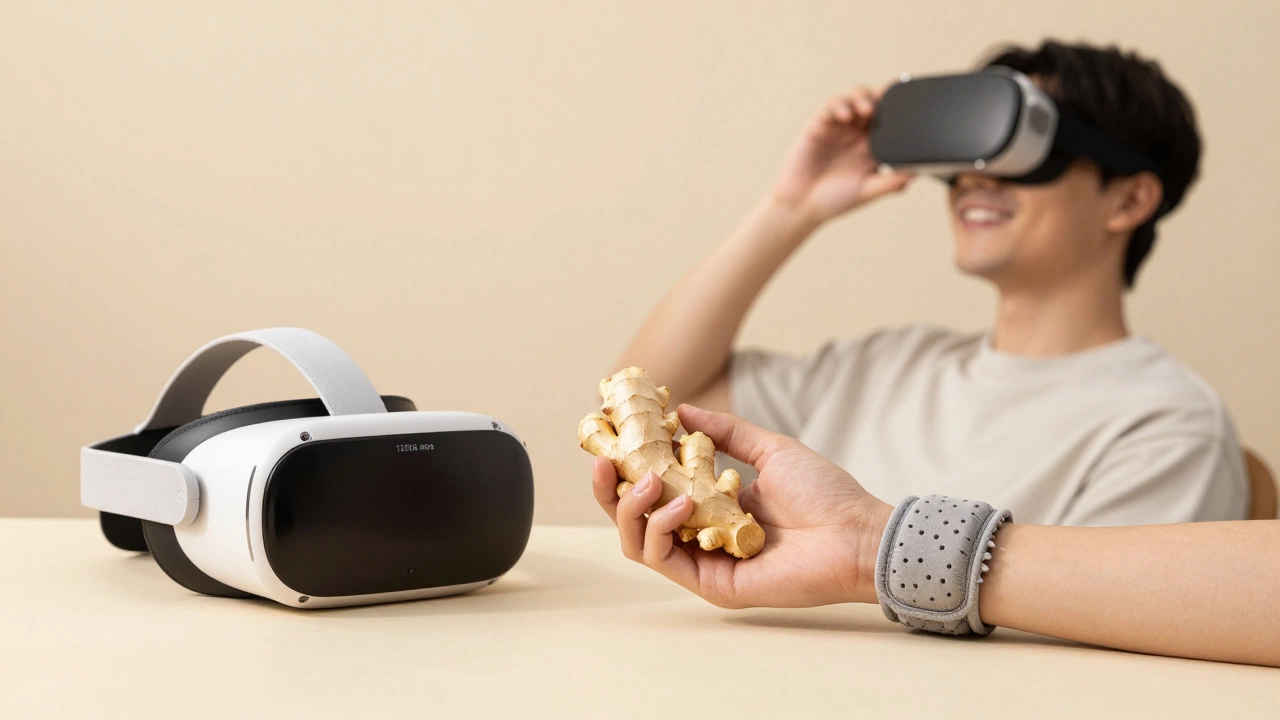
When to See a Doctor
Most VR sickness goes away after you take off the headset. But if you feel dizzy, nauseous, or unbalanced for hours - or if it happens even when you’re not using VR - talk to a doctor. It could be an underlying issue like vestibular migraines, inner ear problems, or even anxiety. Also, if you’re getting sick from non-gaming VR (like virtual meetings or educational apps), that’s a sign the technology isn’t optimized for your body. Ask for better settings or try different software.The Future Is Better
VR tech is improving fast. New headsets use eye-tracking to adjust focus dynamically. Some are testing variable refresh rates that match your head movement. Others are experimenting with haptic feedback that mimics motion - like vibrating your seat when you "fly." In five years, we’ll look back at early VR sickness like we look at early smartphones with 3G speeds - slow, clunky, and unnecessarily uncomfortable. For now, the key is patience and smart habits. You don’t need to suffer to enjoy virtual worlds. Adjust your settings, respect your body, and give yourself time. The right experience is out there - you just need to find the version that works for you.Can VR sickness be permanent?
No, VR sickness is not permanent. Symptoms usually fade within minutes to hours after removing the headset. In rare cases, people report lingering dizziness for a day or two, especially after long sessions. But there’s no evidence that VR causes lasting damage to the vestibular system. If symptoms persist beyond 48 hours or occur outside VR use, consult a medical professional.
Does VR sickness get better with time?
Yes, for most people. Your brain learns to adapt to the sensory mismatch over repeated, controlled exposure. This is called habituation. People who start with 10-minute sessions and gradually increase their time often notice fewer symptoms after 5-10 sessions. But this only works if you don’t push through nausea - taking breaks is key.
Are some VR games worse than others for sickness?
Absolutely. Games with constant motion, no fixed reference points, or artificial locomotion (like flying or driving) are the worst offenders. First-person shooters with smooth movement, space simulators, and rollercoaster sims are common triggers. Games that use teleportation, room-scale movement, or stationary environments (like puzzles or painting apps) are much gentler on the body.
Can children use VR safely?
Most manufacturers recommend VR for ages 13 and up. Children’s visual and vestibular systems are still developing, and their brains are more sensitive to sensory mismatch. Short sessions (under 10 minutes) with breaks and low-motion content are safest. Always supervise kids during use and watch for signs of discomfort like dizziness, headaches, or eye rubbing.
Do VR glasses or lenses help with sickness?
Prescription VR lenses don’t reduce motion sickness - they only correct vision. If you’re nearsighted or farsighted, wearing the right lenses inside the headset can help reduce eye strain, which may indirectly lessen discomfort. But they won’t fix the core issue: sensory mismatch. For that, you need better motion design and habits, not lenses.
Is VR sickness the same as motion sickness?
They’re very similar. Both involve a mismatch between visual input and inner ear signals. The difference is the cause: motion sickness comes from real movement (cars, boats), while VR sickness comes from fake movement shown on a screen. The symptoms - nausea, sweating, dizziness - are nearly identical. That’s why many of the same remedies work for both.