
VR Stress Reduction Estimator
How Your VR Time Reduces Stress
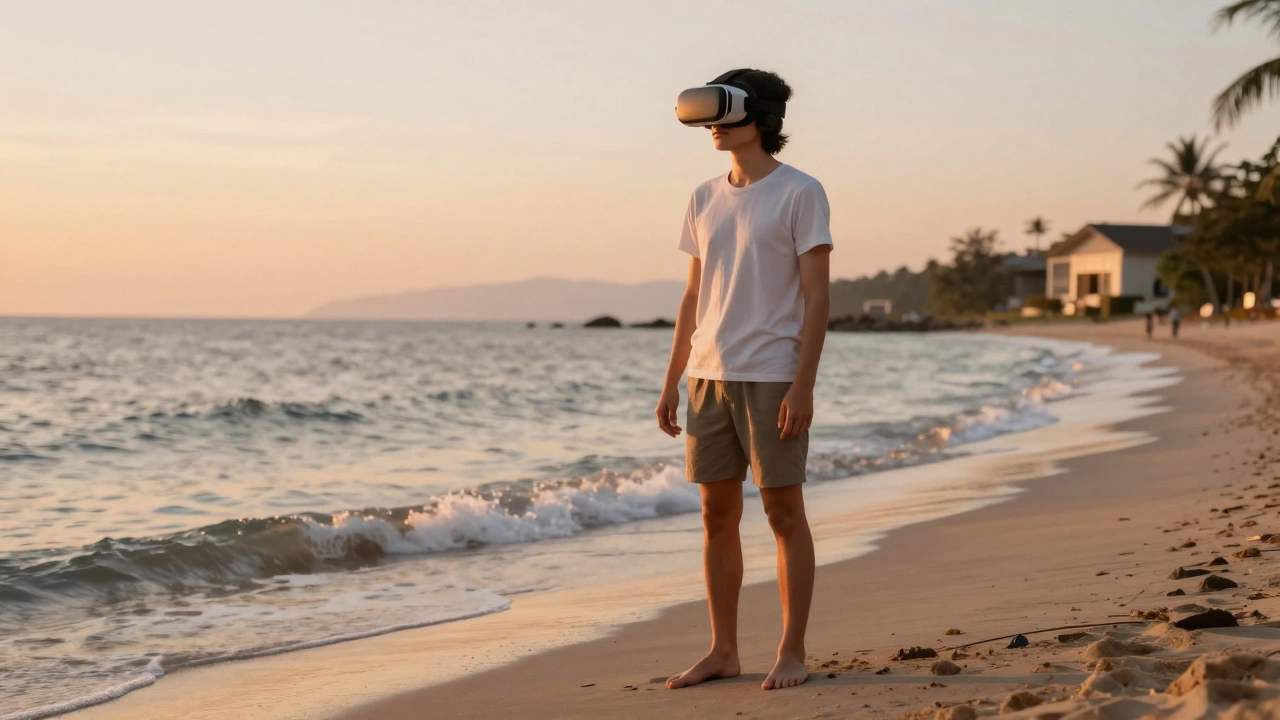
Based on Stanford's 2024 Virtual Human Interaction Lab study: 68% of users reported reduced stress after just 15 minutes in virtual nature environments.
Your Estimated Benefits
Estimated Stress Reduction: 0%
That's equivalent to 0 minutes of real-world relaxation.
- Reduced cortisol levels
- Lowered heart rate
- Increased sense of calm
- Improved focus after experience
People aren’t using VR just because it’s new. They’re using it because it does things no other technology can. You don’t need a fancy headset to understand why. Think about the last time you felt truly present somewhere - not just watching, but there. That’s what VR delivers. It’s not about games or gimmicks. It’s about immersion that changes how people learn, heal, connect, and play.
Escape Reality Without Leaving Home
After a long day at work, some people slip on a VR headset and find themselves standing on a quiet beach in Bali, hiking through the Swiss Alps, or floating above the Grand Canyon. These aren’t videos. They’re fully interactive 360-degree environments where you can turn your head, reach out, and even feel wind or vibrations through haptic gear. For people living in cities with no access to nature, or those with physical limitations, VR offers a lifeline. A 2024 study from Stanford’s Virtual Human Interaction Lab found that 68% of regular VR users reported reduced stress levels after just 15 minutes in a natural virtual environment - more than they got from watching nature documentaries.
Training That Actually Sticks
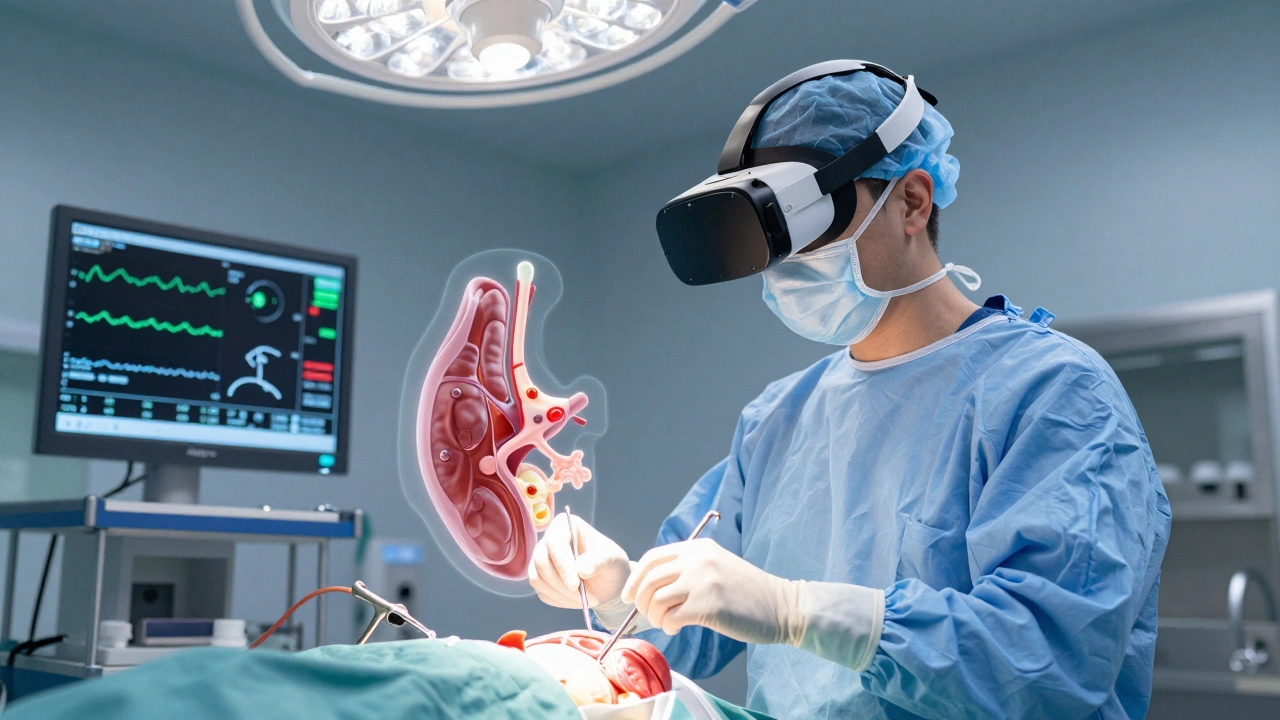
Surgeons don’t practice on real patients anymore. They use VR simulators that replicate every cut, stitch, and bleed. Firefighters train for burning buildings without risking their lives. Airlines train pilots in full-motion cockpits that mimic engine failures, storms, and system crashes. The key? Muscle memory. In VR, your body learns by doing, not by watching. A 2023 report from PwC showed that VR-trained employees learned 4x faster than those in classroom settings and were 275% more confident applying what they learned on the job. That’s why Walmart trains over a million employees in VR each year - not because it’s cool, but because it works.
Therapy That Heals
People with PTSD, anxiety, or phobias are using VR as a safe space to face their fears. A veteran with combat trauma can walk through a virtual street in Kabul, controlled by a therapist who adjusts the noise, lighting, and crowd density in real time. Someone terrified of flying can board a virtual plane, feel the takeoff, and hear the cabin announcements - all while sitting in a quiet office. The American Psychological Association now lists VR exposure therapy as an evidence-based treatment for specific phobias. It’s not science fiction. It’s clinical practice. Hospitals in the U.S., Canada, and the UK have added VR headsets to their mental health departments. The results? Up to 80% of patients show measurable improvement after 6-8 sessions.
Learning That Feels Real
Students don’t just read about the human heart - they shrink down and swim through it. History classes don’t just show pictures of ancient Rome - students walk its streets, hear the market chatter, and watch gladiators train. In VR, abstract concepts become tangible. A 2025 meta-analysis of 42 studies across 15 countries found that students using VR for STEM subjects scored 22% higher on retention tests than those using textbooks or videos. Schools in Finland and Japan have made VR part of their core curriculum. It’s not about replacing teachers. It’s about giving them a tool to make learning unforgettable.
Connecting in a Disconnected World
Imagine having coffee with a friend who lives across the world - not through a screen, but in a virtual living room where you can see each other’s facial expressions, hear the clink of mugs, and even pass a virtual book across the table. That’s what Meta’s Horizon Worlds and spatial apps like Spatial are offering. People are holding virtual weddings, birthday parties, and even funerals in VR. For the elderly, the disabled, or those grieving lost loved ones, it’s not a substitute for real life - it’s a bridge. A 2025 survey by the University of Michigan found that 54% of older adults using VR to connect with family reported feeling less lonely than they had in years.

Creating and Sharing in 3D Space
Artists, architects, and designers are ditching flat screens. They’re sculpting in mid-air, painting with light, and building entire worlds inside VR. Tools like Tilt Brush, Quill, and Gravity Sketch let creators work in three dimensions, with no limits from gravity or material. A sculptor in Berlin can collaborate with a musician in Tokyo - both standing inside the same virtual gallery, adjusting lighting and sound in real time. VR isn’t just a viewing tool anymore. It’s a studio, a stage, and a canvas. Major museums now host VR exhibitions where visitors don’t just look at art - they step inside it.
It’s Not About the Tech - It’s About the Feeling
People don’t buy VR headsets because they’re the latest gadget. They buy them because they finally feel something they couldn’t before. Whether it’s the calm of a mountain trail, the adrenaline of a spacewalk, or the comfort of holding a loved one’s virtual hand - VR gives people experiences that stick. It’s not about replacing the real world. It’s about expanding it. The headset is just the tool. The real magic is what happens inside your mind when you’re somewhere you’ve never been, doing something you’ve never done - and feeling like you were there.
Is VR only for gamers?
No. While gaming is one use, most VR users today aren’t playing games. A 2025 report from Statista shows that only 31% of VR headset owners use them primarily for gaming. The rest use VR for therapy, education, training, socializing, and creative work. The fastest-growing segment is professionals using VR for work-related tasks - not entertainment.
Do you need expensive gear to use VR?
Not anymore. Entry-level VR headsets like the Meta Quest 3 start under $500 and work without a PC. You can even use a smartphone-based headset for under $50 - though the experience is more limited. The real cost isn’t the hardware. It’s the time and content. Many free apps offer high-quality experiences in nature, meditation, and learning. You don’t need a $2,000 rig to feel the benefits.
Can VR make you sick?
Some people get motion sickness, especially with older headsets or poorly designed apps. But modern devices have improved dramatically. Newer headsets use 90Hz+ refresh rates, better tracking, and reduced latency - cutting nausea by over 70% compared to 2016 models. Most users adapt within a few sessions. Starting with short 5-10 minute sessions helps. If you feel dizzy, take a break. It’s not a sign of failure - it’s your body adjusting.
Is VR just a passing trend?
No. VR adoption has grown steadily since 2020, with over 200 million active users worldwide in 2025. It’s not growing because of hype - it’s growing because people keep using it. Companies are investing billions because VR solves real problems: training costs, mental health access, remote collaboration, and education gaps. The tech is still evolving, but the demand isn’t fading. It’s becoming essential.
Can kids use VR safely?
Yes, with limits. Most headset manufacturers recommend VR for ages 13+, but many schools use modified versions with younger students under supervision. The key is time: sessions should be under 20 minutes for kids under 12. Content matters too - avoid fast-moving or intense scenes. VR can help kids with autism learn social cues or help children with learning disabilities visualize math concepts. When used thoughtfully, it’s a powerful educational tool.
What’s the future of VR?
The future is mixed reality - where virtual objects blend with your real environment. Glasses that overlay instructions while you fix a sink, or virtual coworkers appearing at your real desk. Companies like Apple and Sony are pushing this. But the bigger shift is in accessibility: lighter headsets, longer battery life, and AI-generated content that adapts to your needs. In five years, VR won’t be something you ‘put on’ - it’ll be something you just use, like a phone.
What to Try Next
If you’ve never tried VR, start simple. Download a free app like ‘Nature Treks VR’ or ‘Tilt Brush’ on a Quest headset. Spend 10 minutes walking through a forest or drawing in 3D space. Notice how your body reacts. Do you breathe slower? Do you forget you’re sitting in a chair? That’s the point. You don’t need to buy anything. Just try it. The reason people use VR isn’t because they have to - it’s because once they do, they can’t imagine living without it.